






What began as a routine moment—waiting for an Uber on a busy San Francisco sidewalk—transformed into a life-altering tragedy for Vanessa Oliveira. In 2019, while standing outside a downtown hotel renovation project, the physician’s assistant was struck by a falling metal wall stud. What initially appeared to be a minor workplace-adjacent mishap, characterized by a brief hospital visit and no immediate signs of severe trauma, eventually unspooled into a complex, seven-year legal battle.
On July 22, a 12-person state superior court jury delivered a landmark verdict, awarding Oliveira $20.7 million in damages. The decision brought a definitive, albeit controversial, end to a saga that highlights the precarious intersection of construction site safety, corporate liability, and the long-term, often invisible, consequences of traumatic brain injuries (TBI).
The Incident and the Immediate Aftermath
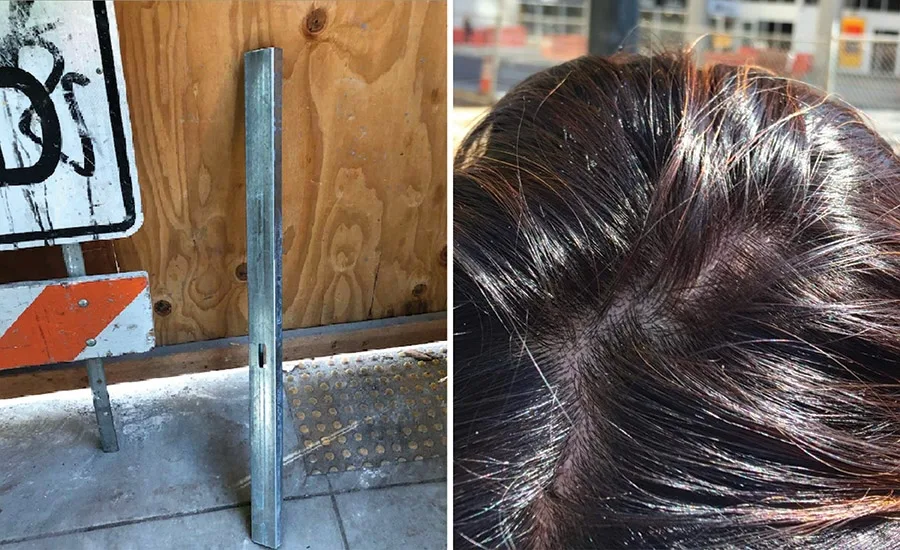
The incident occurred at a hotel renovation site where safety protocols regarding overhead protection were scrutinized under a microscope. As Oliveira stood on the sidewalk, a heavy metal wall stud fell from the second level of the construction zone, striking her on the head.
At the time, the incident seemed relatively contained. Oliveira was transported to an emergency room, where she was evaluated, cleared, and discharged in less than an hour. She did not require stitches, nor did she exhibit significant bleeding. However, as the weeks turned into months, the narrative of a "minor bump" began to shift. Oliveira began to experience a cascade of neurological and cognitive symptoms, leading her to seek consultation with various medical specialists.
Her legal team eventually argued that the blow had triggered a traumatic brain injury with lifelong implications, fundamentally altering her capacity to work, travel, and maintain her social and professional life.
Chronology of a Seven-Year Legal Battle
The path to the $20.7 million verdict was far from straightforward. The litigation spanned seven years, marked by shifting alliances, pretrial maneuvers, and a significant mistrial.
- 2019: The accident occurs at a downtown San Francisco construction site.
- 2020–2022: Initial discovery reveals systemic failures in site safety, specifically concerning the installation of toeboards and protective webbing on scaffold guardrails.
- 2023: A mistrial is declared after a breakdown in legal representation. Initially, all three defendants—Scaffold Solutions, Skanska US Builders, and DMS Drywall & Interior Systems—were represented by the same law firm. As the trial progressed, Skanska and DMS split from Scaffold Solutions, necessitating a reset of the proceedings.
- 2024 (July): Judge Victor Hwang approves an 11th-hour settlement between Oliveira, Skanska, and DMS.
- July 22, 2024: A jury finds Scaffold Solutions negligent and determines the total damages at $20.7 million, with the remaining liability attributed to the non-trial defendants.
The Disputed Settlement: A Strategic Maneuver
One of the most contentious aspects of the case was the "11th-hour" settlement reached between Oliveira and two of the three original defendants: Skanska and DMS.
As the trial loomed, Skanska and DMS entered into a settlement agreement totaling $3 million. The mechanics of this deal were complex: the payment would be drawn from DMS’s $6 million insurance limit, effectively shielding Skanska from direct out-of-pocket costs due to existing indemnification clauses in their contracts with the subcontractor.
Scaffold Solutions vehemently objected to the settlement, arguing that it was a strategic attempt by Skanska and DMS to offload their liability. In court filings, Scaffold Solutions noted that if liability were split equally among the three parties, the settlement represented only 15% of the total potential recovery, a figure they argued was grossly disproportionate to the defendants’ actual exposure. Despite these protests, Judge Victor Hwang approved the settlement, effectively isolating Scaffold Solutions as the sole defendant for the remainder of the trial.
The Battle of Medical Experts
Central to the trial was the "hidden" nature of Oliveira’s injury. Because TBI symptoms are often subjective—ranging from brain fog and headaches to diminished social capacity—the defense mounted a rigorous challenge to the severity of the damage.
Attorneys for the defense pointed to Oliveira’s own digital footprint as evidence against the severity of her claims. They presented social media posts depicting her hiking, attending a Beyoncé concert, and traveling on a cruise—activities they argued were inconsistent with the debilitating cognitive impairment she claimed. Furthermore, they pointed to medical records suggesting that some of her symptoms predated the 2019 incident. They argued that despite her claims of cognitive decline, Oliveira had continued to work as a physician’s assistant, providing care to patients throughout the years following the accident.
Oliveira’s experts countered this, arguing that her ability to perform certain tasks did not negate the presence of a TBI or the long-term prognosis of her medical care. They emphasized that her quality of life had been irreversibly compromised, justifying the multi-million dollar estimate for lifelong medical support and lost earnings.
Corporate Responses and Institutional Responsibility
Following the verdict, the companies involved took divergent paths in their public communications.
Skanska, having exited the trial via the settlement, issued a brief statement: "Skanska was no longer a party to the case at the time of the trial. Safety continues to be a core value of our company, and we remain committed to protecting the communities where we work." The company declined to comment on the specific legal outcome or the details of the settlement agreement.
The verdict highlights a significant "gap" in accountability often found in multi-party construction litigation. While the jury assigned approximately $14 million in responsibility to Skanska and $2.7 million to Scaffold Solutions, the reality of the settlement means the financial burden—and the final distribution of costs—is governed by private contract law rather than the jury’s specific assessment of fault.
Implications for Construction Safety
The case serves as a stark reminder of the importance of overhead protection on urban construction sites. The investigation into the incident focused heavily on why standard safety measures—specifically the toeboards and webbing meant to catch debris—were absent or failed.
For the construction industry, the $20.7 million award acts as a warning regarding the "long-tail" risks of workplace accidents. Construction firms often prioritize immediate safety metrics, such as lost-time injuries or recordable incidents. However, this case demonstrates that even a "minor" incident involving a falling object can result in massive, multi-million dollar litigation if the medical outcomes are not fully understood or if the liability chain is poorly managed.
Moreover, the case highlights the growing role of "digital discovery" in personal injury litigation. The use of social media posts by defense teams to challenge the validity of health claims is becoming a standard tactic, forcing plaintiffs to navigate a new landscape where their private lives are scrutinized for contradictions to their medical testimony.
Conclusion
The Vanessa Oliveira case concludes with a substantial financial award, but it leaves behind lingering questions about the effectiveness of current construction safety oversight and the challenges of litigating invisible injuries. For Scaffold Solutions, the verdict represents a significant financial blow and a reminder of the risks of being the "last one standing" in a complex, multi-party liability suit. For the broader construction industry, the case underscores that in the high-stakes world of urban development, the cost of a single missing safety guardrail can eventually be measured in the tens of millions of dollars, and a moment’s lapse in judgment can haunt a firm for years to come.