





In an era where e-commerce giants seem to dominate the retail landscape, the physical storefront has undergone a profound metamorphosis. Rather than succumbing to the rise of online shopping, brick-and-mortar retailers are fighting back by evolving into "smart" destinations. Today’s consumers demand a frictionless experience that bridges the gap between digital convenience and physical presence. They expect lightning-fast checkouts, personalized interactions, and a sense of safety that only a well-monitored environment can provide.
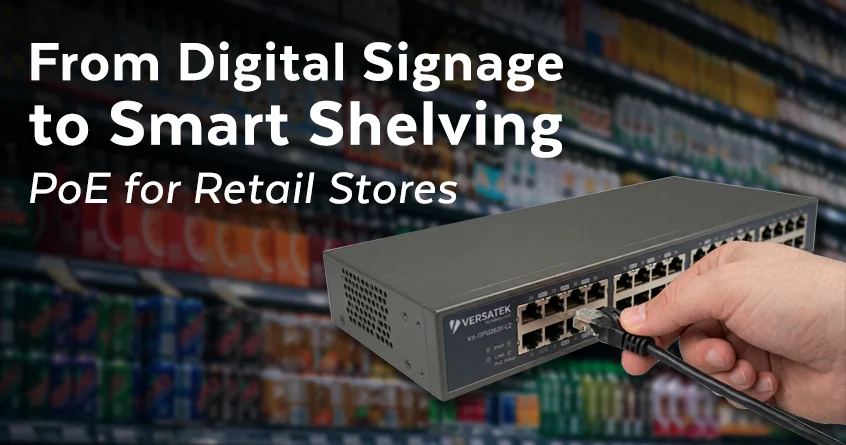
To meet these high-stakes expectations, retailers are increasingly turning to a foundational technology that often works behind the scenes: Power over Ethernet (PoE). By delivering both power and data over a single cable, PoE is not merely a utility upgrade—it is the architectural backbone of the storefront of the future.
The Evolution of Retail Infrastructure: From Cables to Connectivity
The transition toward intelligent retail did not happen overnight. To understand the current shift, one must look at the chronology of retail infrastructure development.
Historically, store environments relied on disparate systems: high-voltage electrical wiring for lighting and power, and separate, often proprietary, cabling for security and point-of-sale (POS) systems. This siloed approach was costly, rigid, and prone to failure. As the Internet of Things (IoT) began to penetrate the retail sector in the early 2010s, the demand for connected devices—such as IP cameras, digital signage, and Wi-Fi access points—exploded.
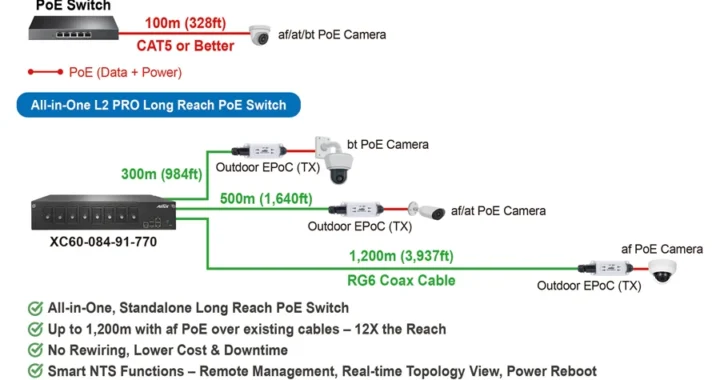
Retailers quickly realized that traditional electrical infrastructure could not keep pace. Adding a single new camera or sensor required bringing in an electrician to run new power lines, a process that was both time-consuming and expensive. The adoption of PoE marked a pivot point, allowing retailers to deploy smart devices wherever they were needed, provided an Ethernet cable could reach them. Today, we are in the third wave of this evolution: the move toward high-power (90W) PoE, which enables the operation of sophisticated kiosks, advanced POS systems, and automated environmental sensors, effectively turning the store into a living, breathing data node.
Supporting Data: The ROI of Modernization
The urgency of this transition is driven by harsh economic realities. In the grocery and warehouse sectors, profit margins are notoriously thin—often hovering between 2% and 3%. In such an environment, operational efficiency is not just a goal; it is a matter of survival.

- Operational Density: Retail warehouses, averaging 146,000 square feet, face the Herculean task of managing thousands of SKUs. With PoE, retailers can maintain a dense network of RFID readers and inventory sensors that feed real-time data to a central management system, reducing "out-of-stock" events that drive customers to competitors.
- The Cost of Insecurity: Security is a paramount concern, particularly for 24/7 operations. According to recent FBI data, 15% of all robberies occur in convenience stores and gas stations. The integration of PoE-powered PTZ (pan-tilt-zoom) cameras and motion sensors allows for a proactive security posture, where real-time footage is transmitted instantly to centralized monitoring hubs, enabling rapid law enforcement response.
- The Consumer Perception Gap: A study cited by the National Center for Biotechnology Information (NCBI) reveals a stark correlation between retail environment and crime: 38% of shoppers have witnessed a crime in a grocery store, and over 70% admit they avoid businesses with a history of security issues. For the retailer, investing in PoE-enabled surveillance is a direct investment in customer retention.
Official Perspectives: The Role of Industrial-Grade Resiliency
Industry experts emphasize that not all PoE solutions are created equal. As retail environments become more automated, the hardware supporting them must meet industrial standards to ensure uptime.
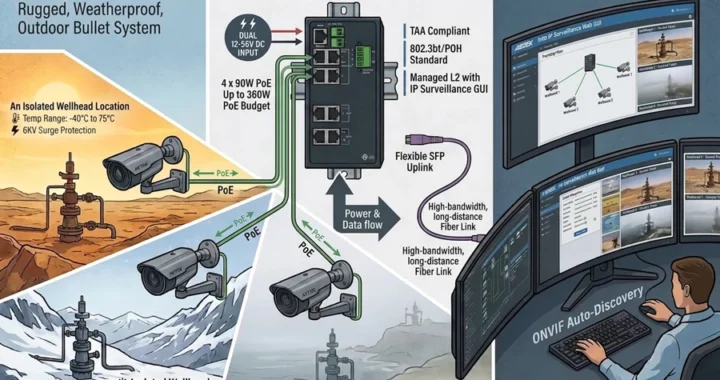
"Retailers are no longer just selling products; they are managing complex, tech-enabled ecosystems," says a lead systems architect at Versa Technology. "When you move critical functions—like point-of-sale terminals and environmental controls—onto a network, you cannot afford downtime. Our focus has been on developing managed industrial PoE switches that can handle the environmental stressors of a busy store, such as temperature fluctuations and power surges."
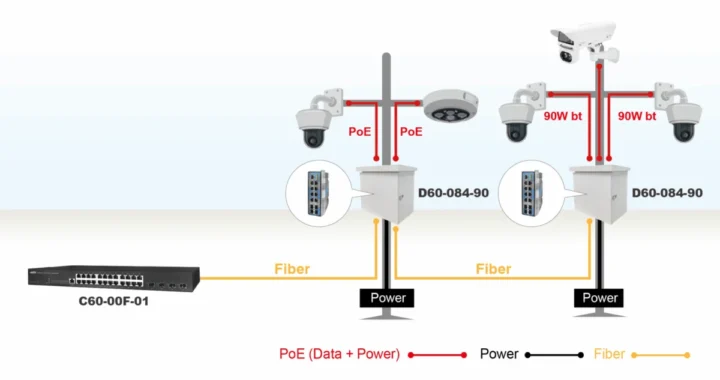
Official industry standards, specifically IEEE 802.3bt, have paved the way for this transition by enabling up to 90 watts of power delivery. This "PoE++" capability is what allows retailers to move beyond simple cameras to high-draw devices like interactive kiosks, smart shelving that updates pricing dynamically, and large-format digital signage. By utilizing an Uninterruptible Power Supply (UPS) in tandem with these industrial switches, retailers ensure that even in a local power outage, their security and payment processing systems remain online.
Implications: Building the "Future-Proof" Storefront
The shift toward a PoE-centric infrastructure has profound implications for how retailers approach expansion, remodeling, and daily operations.
1. Architectural Agility
Retail trends are fickle; seasonal displays and floor plan reconfigurations are constant. In a traditional store, changing the layout could necessitate a month of electrical rewiring. With a PoE-based network, a store manager can relocate a camera or an access point in minutes, simply by unplugging it from one port and plugging it into another. This agility is a competitive advantage in a world where customer traffic patterns change as quickly as social media trends.
2. Precision Environmental Control
Large-format retailers, particularly those with massive refrigeration sections, face significant energy costs. PoE-enabled sensors provide granular data on temperature and humidity. By connecting these sensors to an automated switch, the store’s environmental control system can dynamically adjust cooling levels based on the current load or outside weather, directly impacting the bottom line by preventing spoilage and reducing energy waste.

3. Enhancing the Customer Journey
The modern shopper is "digitally augmented." They carry smartphones that act as personal shopping assistants. By deploying a robust PoE-backed Wi-Fi network, retailers can provide high-speed, reliable connectivity that allows customers to scan QR codes for product details, check real-time inventory, or use mobile checkout apps. When a customer can find what they need, get help from a staff member with a tablet, and skip the traditional checkout line, the retailer wins on both experience and efficiency.
Conclusion: Preparing for the Next Retail Frontier
Predicting the future of retail is a hazardous exercise, but one thing remains certain: the integration of technology will only accelerate. The stores that succeed in the next decade will be those that have built a foundation capable of supporting whatever comes next, from advanced AI-driven inventory tracking to enhanced biometric security.
By choosing to invest in a scalable, high-performance PoE infrastructure, retailers are doing more than just wiring a building; they are creating a framework for resilience. They are reducing the overhead of manual operations, increasing the safety of their physical space, and creating the frictionless environment that the modern consumer demands.
As profit margins continue to be squeezed and competition intensifies, the storefront of the future will be defined by its ability to pivot. Versa Technology and other leaders in the space are providing the industrial-grade tools—such as the D60-044 Managed Industrial switch—to make this possible. The question for retail executives is no longer if they should modernize their infrastructure, but how quickly they can deploy the backbone that will sustain their growth for years to come.
For retailers looking to remain relevant, the path is clear: embrace the efficiency of PoE, fortify the security of your premises, and build an environment where technology serves the shopper, not the other way around. The store of the future is already here—it is connected, it is smart, and it is powered by a single, reliable cable.