






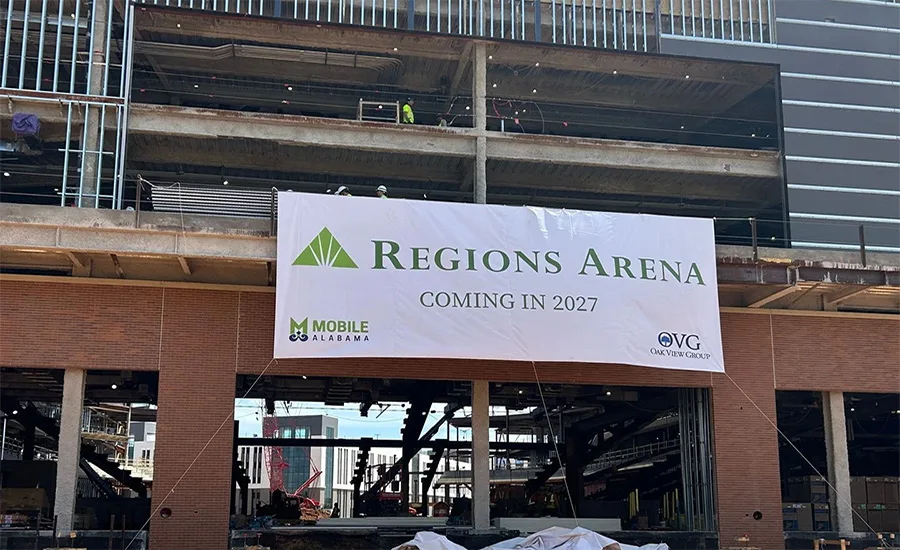
The construction industry, long reliant on trust and established business relationships, is facing an escalating crisis of digital impersonation. Nowhere is this more evident than in the recent $14.7-million fraud targeting the City of Mobile, Alabama, during the development of the $300-million Regions Arena project. By methodically impersonating a trusted contractor over several months, cybercriminals successfully siphoned off a massive, routine payment, exposing significant vulnerabilities in municipal financial controls and highlighting the existential threat posed by social engineering in the infrastructure sector.
The Breach of Trust: A Chronology of Deception
The scheme that ultimately defrauded the city of Mobile was not a "smash-and-grab" cyberattack. It was a calculated, patient, and highly disciplined campaign of social engineering.
The deception began in late May, when an individual—or group—posing as representatives of Birmingham-based B.L. Harbert International contacted the city’s finance department. Armed with falsified but professional-looking documentation, the impostors initiated a correspondence that would span months. By leveraging the names of actual employees at B.L. Harbert and mimicking corporate communication styles, the fraudsters slowly built a veneer of legitimacy.
For months, the impostors maintained an active dialogue with city employees. This period of "nurturing" the relationship was critical. Approximately two months into the correspondence, a city staffer—likely acting in good faith—sent the impostors a genuine, legitimate invoice belonging to B.L. Harbert. This provided the scammers with the precise data points required to perfect their impersonation.
"One of the key problems," Mobile Finance Director Logan Gewin Jr. explained during an Oct. 27 city council meeting, "is that an invoice from the real vendor was exchanged with a fake vendor, which, as this moves up the chain, helped to legitimize that communication."
By the time October arrived, the impostors had successfully convinced city officials to update the vendor profile for B.L. Harbert in the city’s payment system. On Oct. 2, the city processed a $14.7-million payment—a routine disbursement for the arena project. Because the underlying payment infrastructure had been altered months prior, the funds were directed not to the contractor, but to a fraudulent bank account controlled by the criminals.
The Window of Opportunity: Environmental Factors
The recovery of stolen funds in digital fraud is often a race against time. In this instance, a series of "circumstantial" hurdles hampered the city’s ability to intervene.
B.L. Harbert first noted the absence of the payment on Oct. 7. However, before a rigorous investigation could gain momentum, Hurricane Isaias made landfall on the Gulf Coast on Oct. 9. The storm forced a multi-day disruption of city operations, financial institutions, and the contractor’s own administrative workflows. Following the storm, a bank holiday further delayed potential claw-back efforts.

"There was still a lot of circumstantial luck across the entire chain," Gewin noted, describing the confluence of events as a perfect storm that allowed the money to vanish before the alarm was fully raised. By the time the city confirmed the fraud on Oct. 16, the funds had likely been laundered through multiple accounts, rendering them effectively untraceable.
Official Responses and Internal Accountability
The City of Mobile has been transparent about the fact that no technical breach of its servers occurred. The failure was not one of cybersecurity, but of internal process and human verification.
Mayor Spiro Cheriogotis has taken a firm stance on the necessity of accountability, revealing that the city has terminated one employee and placed two others on paid administrative leave pending further investigation. During the Oct. 27 council meeting, the mayor emphasized that the "crux of the situation" was the unauthorized change of vendor information—specifically banking details and contact addresses—without the necessary multi-factor verification.
"In the end, there was a failure in that account information was able to be updated without proper verification," Cheriogotis told the council. "That was a failure, and there were others that we can’t detail at this time."
To cover the immediate financial gap and ensure the Regions Arena project continues without delay, the city tapped into approximately $15 million from the project’s owner contingency fund. While the mayor acknowledged that this was not the intended use for the contingency money, he maintained that the project’s timeline remains intact despite the setback.
Industry Implications: The "Social Engineering" Threat
Cybersecurity experts argue that Mobile’s experience is part of a broader, alarming trend. Dave Hatter, a cybersecurity consultant at Intrust IT, suggests that the industry must move away from the assumption that digital communication is inherently safe.
"Every hour that elapses, the likelihood of you recovering that money goes down because they will launder it through multiple steps," Hatter explains. He advocates for a "zero-trust" approach to vendor communications. "If the vendor reaches out and says, ‘Hey, we didn’t get that ACH,’ that is a super red flag. Something is up. You should act immediately."
The Mobile case is particularly instructive because the city had actually been targeted previously. In August, an attempted diversion of a different vendor payment was caught within 48 hours, allowing the city to successfully recover the funds. The city had even implemented new, stricter protocols following that near-miss. However, because the B.L. Harbert impersonation had been "planted" in the system back in May, the new, more rigorous protocols were bypassed because the fraudulent data was already considered "trusted" by the time the updated procedures were enacted.

A Comparative Look: The Arab, Alabama Case
The difference between a catastrophic loss and a near-miss can often be measured in hours. In a separate incident earlier this year, the city of Arab, Alabama, was targeted by individuals impersonating FITE Building Co. during a payment for a municipal recreation center.
In the Arab case, the city acted with extreme swiftness. By working in immediate coordination with their bank, legal counsel, and law enforcement, they were able to recover $431,819 of the $432,739 stolen. This stark contrast underscores the critical importance of immediate reporting. When fraud is detected within 24 to 72 hours, financial institutions often have the leverage to freeze accounts or "claw back" the wires. Once the funds are moved across international borders or through complex cryptocurrency exchanges, the prospects for recovery drop precipitously.
Moving Forward: Strengthening the Bastions of Finance
In the wake of the $14.7-million loss, the City of Mobile is overhauling its financial protocols. The city council and the mayor have proposed the creation of a seven-member committee dedicated to overseeing payment security.
The proposed reforms center on three core pillars:
- Out-of-Band Verification: Any request to change banking or contact information must be verified through a secondary, independent communication channel. If an email requests a change, staff must call a known, trusted contact at the company using a phone number verified from a source other than the email itself.
- Dual Controls: No single employee should have the authority to alter vendor payment information. The process will now require mandatory sign-offs from multiple senior finance officials.
- Heightened Skepticism: The city is moving toward a culture of "authorized doubt," where any request for a change in payment details is treated as a potential threat until proven otherwise.
"A big amount of the defense against this is skepticism and awareness," says Hatter. "It’s not technological. A request to change payment instructions is a gigantic red flag."
Conclusion: The New Reality of Infrastructure Finance
The Regions Arena project, which broke ground in May 2025, remains a cornerstone of Mobile’s urban development strategy. Despite the massive financial diversion and the subsequent political fallout, the city maintains that the project’s spring 2027 completion target remains viable.
The $14.7-million fraud serves as a stark, expensive lesson for public and private entities alike. As construction projects grow in complexity and value, they become increasingly attractive targets for sophisticated criminal enterprises. These syndicates are no longer just hacking into networks; they are hacking into the social fabric of business relationships.
For the construction industry, the era of "trust but verify" is shifting toward a model of "verify before you trust." Whether the stolen millions can ever be recovered through federal investigations remains an open question, but the cost of the lesson has already been paid in full by the taxpayers of Mobile. The incident stands as a definitive warning that in the digital age, a professional email, a familiar tone, and a legitimate-looking invoice are no longer enough to guarantee the safety of project funds. Vigilance, verification, and an unwavering adherence to process are the only true defenses against the invisible threat of the modern fraudster.