



In a landmark move to secure its supply chain against the backdrop of an unprecedented global power infrastructure crunch, GE Vernova announced on October 28 its intent to acquire the Berlin-based high-voltage equipment manufacturer Trench Group. The $9 billion transaction, slated for completion in late 2027, marks a pivotal shift for the Cambridge, Massachusetts-based energy giant as it seeks to internalize the production of critical components necessary for modernizing the world’s aging electrical grids.
By acquiring Trench Group from investment firm Triton Partners, GE Vernova is not merely purchasing a manufacturer; it is integrating a cornerstone supplier of high-voltage bushings, instrument transformers, and coils—the essential "plumbing" of the global energy transition. This acquisition, to be financed through a balanced mix of cash and debt, is designed to insulate GE Vernova from the extreme lead times that have paralyzed major utility projects and data center expansions across North America and Europe.
The Chronology of a Strategic Acquisition
The path to this deal began as GE Vernova recognized the growing vulnerability of its electrification backlog, which surged to $46.1 billion by the end of the third quarter of 2026—a 55% increase year-over-year.
- 2022–2024: As global electricity demand skyrocketed, spurred by the electrification of transport and the rapid rise of AI-driven data centers, lead times for large power transformers ballooned to as long as five years. GE Vernova, like many of its peers, faced an increasingly volatile external supply chain.
- Late 2026: Recognizing the bottleneck, GE Vernova entered final negotiations with Triton Partners.
- October 28, 2026: GE Vernova officially announced the $9 billion acquisition agreement during its Q3 earnings call, outlining a timeline for regulatory approval and a target closing date in late 2027.
- 2027 and Beyond: The integration phase is expected to begin immediately upon closing, with the activation of Trench Group’s new North Carolina facility serving as a key milestone for North American grid capacity.
Supporting Data: The Anatomy of a Supply Chain Bottleneck
The necessity of this acquisition is rooted in stark logistical realities. According to data cited by the U.S. Department of Energy, the procurement of a standard 100-MVA large power transformer—the heart of any major substation—now requires a lead time of 30 to 36 months. Extra-high-voltage (EHV) units, which are increasingly required for long-distance renewable energy transmission, face even more dire constraints, with wait times reaching up to 60 months.
Trench Group sits at the center of this scarcity. Their bushings, which allow high-voltage electricity to pass safely through transformers and switchgear, represent approximately 5% to 8% of a transformer’s bill of materials. However, their critical importance is disproportionate to their cost; without these bushings, a transformer cannot function.
Trench operates 11 factories across eight countries, employing over 3,000 workers. Their portfolio includes technology capable of handling up to 1,200 kV, positioning them as an indispensable partner in the build-out of High-Voltage Direct Current (HVDC) transmission lines. With a current combined backlog and framework agreement value of $5 billion, and a revenue projection of $1.9 billion by 2028, Trench represents a high-growth asset that is currently operating at the edge of its physical capacity.

Official Responses and Strategic Rationale
During the October 28 earnings call, GE Vernova CEO Scott Strazik articulated the strategic necessity of the move. "This gives us a lot more control over the critical technology in the supply chain to meet the growing backlog that we see with differentiated technology," Strazik told investors.
Strazik emphasized that by bringing Trench in-house, GE Vernova gains unprecedented visibility into production schedules. Currently, GE Vernova sources the vast majority of its bushings from external vendors. Post-acquisition, the company plans to shift a significant portion of that procurement to Trench’s internal manufacturing hubs.
The transaction also addresses the unique relationship between transformer manufacturers and their customers. Large utilities often specify the "brand" of bushings they want integrated into their equipment, creating a tier-based supply hierarchy. By owning Trench, GE Vernova ensures that its own transformers will have priority access to these premium, specialized components, effectively streamlining its project execution.
Adam Tucker, GE Vernova’s director of financial communications, reaffirmed in a follow-up email that the company remains committed to Trench’s existing client base. "Yes, GE Vernova will continue to serve Trench’s existing customers as Trench does," Tucker noted. "We believe strongly in the value of this transaction for all current and future customers."
The North American Expansion: The Charlotte Plant
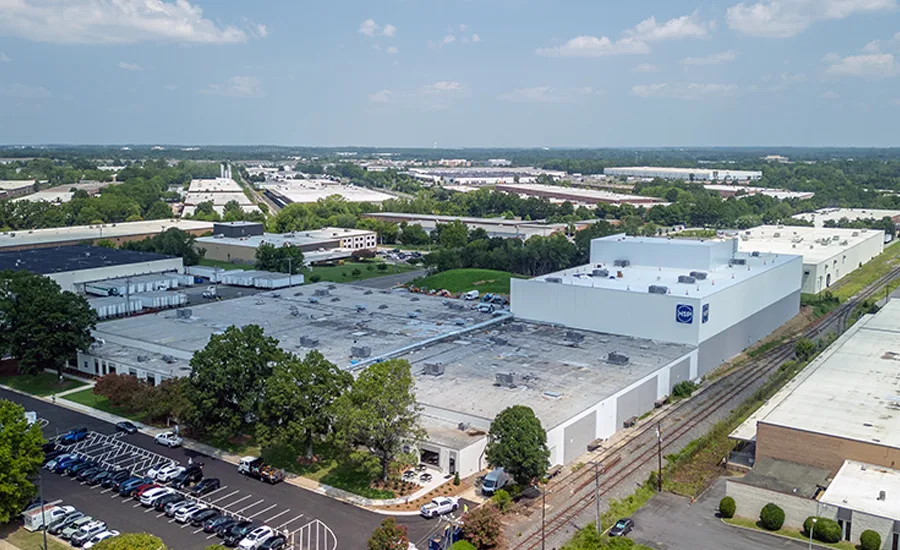
A crucial element of the deal is Trench Group’s recently inaugurated facility in Charlotte, North Carolina. This plant is explicitly designed to address the North American grid expansion crisis. Once fully operational—coinciding with the expected 2027 closing of the acquisition—the plant is projected to produce 3,500 High-Voltage (HSP) bushings annually.
Ulrich Künster, Trench Group’s Vice President of Communications, Marketing, and Investor Relations, highlighted the scalability of this site. "There is room to more than double production capacity from the initially planned 3,500 to 10,000 bushings per year," Künster explained. This flexibility is a direct response to the aggressive, multi-year infrastructure commitments required by the North American market.

Implications: A New Era for the Energy Grid
The acquisition of Trench Group is an acknowledgment that the "just-in-time" supply chain model has failed in the context of the global energy transition. With GE Vernova projecting that over 55,000 U.S. transmission substations will require comprehensive rebuilds or upgrades to higher voltages over the next decade, the industry is entering a period of permanent high demand.
1. The Data Center Dilemma
The rise of hyperscale data centers has further strained the grid. With data centers being built in 24–30 months, but grid interconnections now taking upwards of 72 months in some regions, the mismatch is severe. Trench Group’s success in securing multiple framework agreements with hyperscalers over the past two years underscores that the private sector is increasingly becoming the primary driver of high-voltage demand.
2. Market Growth Projections
GE Vernova estimates the global high-voltage equipment market will expand from $90 billion in 2025 to $130 billion by 2030. North America is expected to outpace this, with an annual growth rate of 9%. This deal positions GE Vernova to capture a larger share of this $130 billion pie by controlling the underlying technology that enables it.
3. Supply Chain Sovereignty
By integrating Trench, GE Vernova is effectively "verticalizing" its business. In an era of geopolitical uncertainty and regional protectionism, having a German manufacturer with a domestic U.S. footprint provides a hedge against trade disputes, shipping delays, and the competition for critical raw materials like grain-oriented electrical steel and copper.
4. Competitive Dynamics
For competitors, the move is a signal to consolidate or invest in internal capabilities. As GE Vernova moves to secure its supply chain, other original equipment manufacturers (OEMs) may find themselves at a disadvantage in a market where the "bushing" has become the most precious commodity in the transmission industry.
Conclusion
The $9 billion acquisition of Trench Group is more than a balance-sheet maneuver; it is a defensive and offensive strike in the race to modernize the global energy grid. As electricity demand accelerates under the weight of AI and industrial electrification, the companies that control the physical hardware of transmission will dictate the pace of the transition. With this deal, GE Vernova has clearly signaled its intention to be the entity that keeps the lights on, ensuring that it has the internal capacity to meet the daunting, decade-long challenge of rebuilding the world’s electrical infrastructure.