






The Pacific Northwest, long celebrated for its abundant hydroelectric power and pristine natural resources, now stands at a critical infrastructure crossroads. A confluence of rapid technological expansion—driven by the explosion of data centers—and the urgent mandate for total decarbonization has strained the region’s power grid and water supply to their limits. As the state of Washington pushes toward a 100% clean, greenhouse gas-free electricity supply by 2045, policymakers, utility providers, and private industry leaders are struggling to balance explosive growth with the harsh realities of climate change and a labor market in crisis.
The challenges were front and center at the recent Infraday Pacific Northwest conference in Seattle on August 20, where experts outlined a future defined by constrained resources, speculative development, and the necessity of unprecedented inter-agency collaboration.
The Core Conflict: Data Centers vs. Grid Capacity
The digital economy is physically grounded in the Pacific Northwest, a region historically favored for its cool climate and cheap power. However, the rise of "hyperscale" computing has changed the calculus.
The Planning Gap
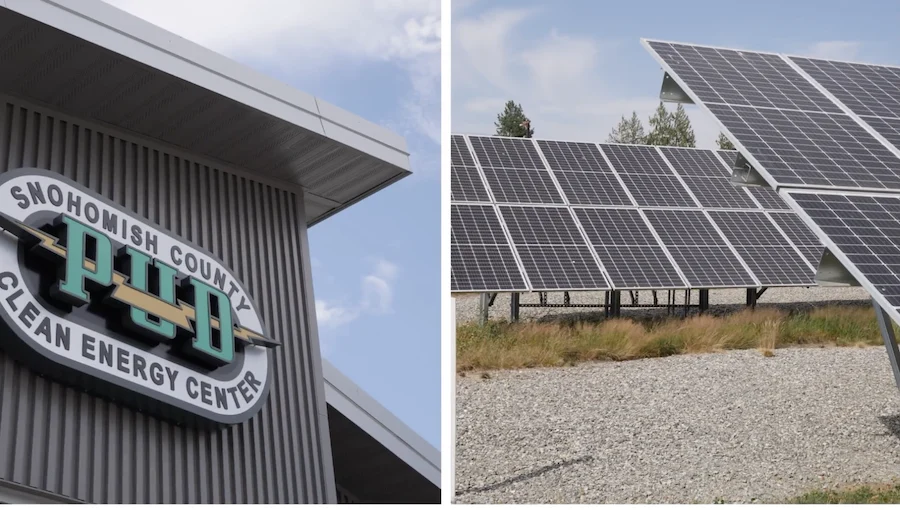
Garrison Marr, senior manager of power supply for Snohomish County, highlighted the sheer unpredictability of modern infrastructure demands. During his presentation, Marr noted that while his county conducts rigorous 20-year power planning cycles, the arrival of a single major data center can effectively swallow ten years of projected load growth in one stroke. This "growth-in-a-box" scenario has forced the county to impose a six-month emergency moratorium on large-scale data center projects, including their associated battery storage infrastructure, to prevent grid instability.
The Distributed Energy Alternative
John Wilson, the assessor for King County, Washington, pointed out that the grid is not the only dependency. Currently, there are 30 local, non-hyperscale data centers in King County operating on distributed energy sources. While this keeps them off the main grid, it leaves them vulnerable to the environmental shifts currently plaguing the region. As climate change reduces the snowpack in the Cascade Mountains, the reliability of the hydroelectric power and water supplies that these facilities depend on is increasingly in doubt.
Technological Solutions and Future Horizons
Industry experts argue that the path forward lies in efficiency and innovation rather than merely building more transmission lines.
Cooling and Efficiency
Tyler Keller, vice president of data center solutions for ACI, emphasized that the cooling of server chips—the most water-intensive aspect of data center operations—is undergoing a revolution. Evolution in liquid cooling technologies and heat-exchange systems may eventually reduce the industry’s reliance on municipal water supplies.
Nuclear and Modular Energy
Ya-Han Brownlee-Chen, vice president of data center strategy for DP World, suggested that the industry must transition from being a "taker" of energy to a "proactive contributor." She pointed to the promise of small modular reactors (SMRs) and advanced nuclear battery systems. These technologies could allow data centers to function as independent, energy-positive nodes that feed excess capacity back into the grid, potentially stabilizing the very infrastructure they currently strain.
The Battery Storage Milestone
Despite the moratoriums, some progress is moving forward. The 25-MW Arlington Battery Energy Storage System is set to go online later this year. Constructed in just three years, the facility represents a beacon of hope for regional energy management. Marr noted that the project is expected to save customers $1 million annually, providing a tangible model for how high-tech storage can mitigate costs and grid volatility.
The Workforce Crisis: An Industry at a Standstill
Even if financing and technology are secured, the Pacific Northwest faces a crippling labor bottleneck. Don Baker, regional operations director for EC Electric, presented a sobering forecast: the construction and electrical sectors are facing a shortfall of 70,000 to 80,000 electricians every year for the next decade.
This human capital deficit threatens to derail the region’s green transition. Without the skilled labor to install solar arrays, wire battery storage systems, or retrofit aging transmission lines, the policy goals of 2045 remain largely aspirational.
Transportation and the Electrification Web
The pressure on the grid is not coming solely from server racks; it is coming from the road. Katherine Rice, a senior electric vehicle (EV) charging planner for the city of Seattle, noted that the demand for public charging infrastructure is skyrocketing.
The "Constraint" Challenge
"We can only have so many lines over the Cascades," Rice stated. The city is currently juggling the needs of data centers, private residential demand, and public transit. Seattle’s Department of Transportation is now forced to coordinate across a dizzying array of stakeholders—including Seattle City Light, parks departments, and libraries—to manage limited electrical throughput. With over 10 million rides taken on electric scooters and the recent introduction of e-cargo bikes, the city is shifting toward a model of "shared electrification," where resources are pooled to avoid redundant infrastructure.
Resilience and the "Big One"
While power consumption dominates the conversation, water infrastructure remains the silent partner in regional survival. Stephen Anderson, head of water infrastructure planning for Seattle Public Utilities, provided a stark assessment of the region’s seismic risk.
Seismic Preparedness
With an 85% chance of a magnitude 6.8 earthquake occurring in the next 50 years, and a 20% chance of a truly catastrophic event, Seattle is undergoing a massive, multi-decade hardening process. The city is prioritizing 190 miles of water transmission pipelines and 1,680 miles of distribution pipes.
Projects like the $58-million replacement of the Bitter Lake Reservoir are critical. The goal, according to Anderson, is not merely to survive the quake, but to have full water service restored to all customers within two months of a major seismic event. This requires the installation of flexible couplings, ductile iron piping, and the reinforcement of critical pump stations.
The Circular Water Economy
In Mason County and the city of Yelm, utilities are thinking differently about water scarcity. Kristin Masteller, general manager for the Mason County PUD, is spearheading efforts to reuse water, specifically targeting large-scale consumers like golf courses to preserve potable water for residential needs.
In Yelm, the vision is even more pragmatic. Public Works Director Cody Colt noted that the city is currently integrating reclaimed water into industrial concrete production. "We are exploring all uses for reclaimed water," Colt said, highlighting a shift toward a circular economy where wastewater is treated as a commodity rather than a liability.
The Imperative of Collaborative Planning
The overarching theme of the Infraday conference was the transition from "speculative development" to "integrated planning."
Will Jolley, vice president of commercial analytics at GridStor, highlighted the misalignment between project timelines and financial certainty. "It takes five to eight years to build a project, but only four to five years for revenue certainty," he explained. This gap creates a dangerous environment where energy providers are essentially guessing future demand.
The aviation sector, however, offers a roadmap for success. Chris Czarnecki of the Port of Portland noted that $3 billion in investment over the last decade was only possible through deep, long-term collaboration between airlines and port staff. Similarly, the Port of Seattle is considering a new 19-gate terminal to accommodate future growth.
Looking ahead, regional airports are moving beyond their traditional roles. Brandon Rakes of the Chehalis-Centralia Airport is exploring the feasibility of hydrogen-fueled aircraft and on-site solar production. Ann Richard of the Washington State Dept. of Transportation suggested that rural airports could serve a dual purpose as regional energy hubs, utilizing their extensive acreage for solar farms and hydrogen storage to support both aviation and wildfire fighting equipment during the increasingly severe fire seasons.
Conclusion: A New Era of Infrastructure Governance
The Pacific Northwest is no longer a land of limitless resources. The future of the region depends on its ability to manage complexity. From the "poop water" being repurposed for industrial concrete to the $3 billion investments in aviation and the massive seismic hardening of the water grid, the region is pivoting toward a model of efficiency, resilience, and cross-sector cooperation.
As the 2045 clean energy deadline approaches, the success of the Pacific Northwest will not be measured by the size of its data centers or the reach of its power lines, but by how well it coordinates these disparate systems into a single, resilient, and sustainable whole. The era of "build first, plan later" is over; the era of integrated, collaborative infrastructure has begun.