






Today’s sports fans demand far more than the traditional “game-day” experience. In an era defined by hyper-connectivity, the modern stadium has transitioned from a simple concrete bowl into a sophisticated, technology-driven ecosystem. Fans no longer just watch the action; they document, share, stream, and engage in real-time, often simultaneously. For stadium operators, meeting these expectations requires a move beyond basic public Wi-Fi. The solution lies in the deployment of Power over Ethernet (PoE) and private network infrastructure, a technological shift that is effectively turning stadiums into “smart venues.”
The Main Facts: The Evolution of Arena Connectivity
The challenge facing modern stadium operators is one of density. When 50,000 to 80,000 people gather in a single location, the demand for bandwidth is staggering. Every fan is a potential node on a network—checking ticket apps, paying for concessions via mobile wallets, uploading high-definition video to social media, and texting friends.
When these thousands of devices compete for the same public cellular signals, the result is often “network congestion,” leading to dropped calls, failed payments, and frustration. To mitigate this, venues are increasingly adopting Private Networks—specifically leveraging the Citizens Broadband Radio Service (CBRS) band—in tandem with PoE infrastructure.
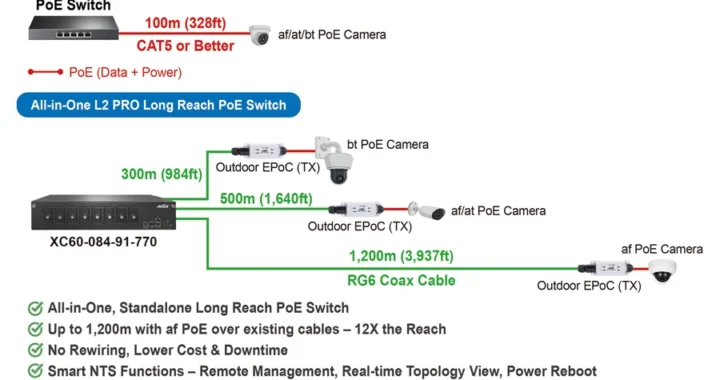
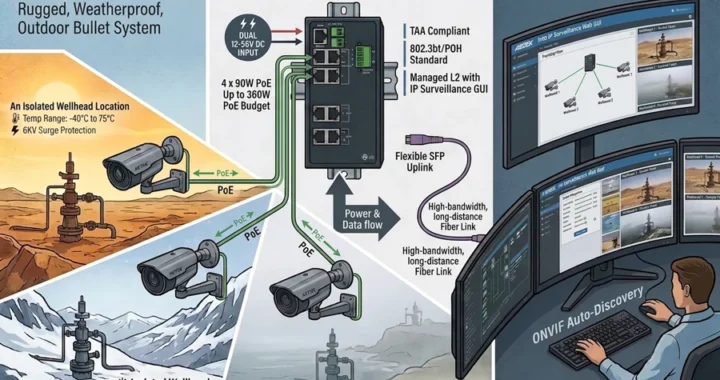
CBRS, introduced by the FCC in 2015, allows for the use of shared spectrum (3550-3700 MHz) to create secure, high-performance private networks. When coupled with PoE technology—which allows both electrical power and data to be transmitted over a single Ethernet cable—stadiums can deploy IoT sensors, security cameras, and high-speed access points in virtually any location, regardless of proximity to traditional power outlets. This creates a redundant, secure, and lightning-fast backbone for both fan-facing and mission-critical operational data.
Chronology: From Static Stands to Smart Infrastructure
The progression toward the "Smart Stadium" has been a decade-long evolution:

- 2010–2015 (The Wi-Fi Era): Stadiums began installing high-density public Wi-Fi. While it helped, it was often overwhelmed by the sheer volume of users, leading to inconsistent performance.
- 2015 (The CBRS Milestone): The FCC’s introduction of CBRS changed the landscape, allowing private entities to manage their own wireless spectrum without relying solely on public carrier infrastructure.
- 2017–2020 (The Rise of IoT): Venue operators began to see the value in connecting more than just smartphones. Surveillance systems, digital signage, and point-of-sale (POS) systems required dedicated, stable connectivity, accelerating the adoption of PoE-powered switches.
- 2021–Present (The Private 5G & AI Era): Modern venues like Allegiant Stadium and SoFi Stadium began integrating private 5G networks. This era is characterized by the use of real-time data, AI-driven security, and augmented reality (AR) fan experiences, all underpinned by high-performance PoE cabling and managed switches.
Supporting Data: Why Infrastructure Matters
The sheer scale of infrastructure required to power a smart venue is immense. For instance, the Levi’s Stadium in Santa Clara features 400 miles of cabling, with 70 miles dedicated solely to connecting 1,200 distributed antenna systems.
This infrastructure is not just for luxury; it is for economic efficiency and operational continuity. According to recent industry reports, stadiums that invest in private network segmentation see a direct reduction in “failed transaction” rates at concessions. When a stadium’s POS system is isolated from the public Wi-Fi on a secure PoE-powered private network, payment processing remains stable even when 80,000 fans are simultaneously streaming video.
Furthermore, the integration of PoE allows for:
- Maximum Deployment Flexibility: IoT devices (cameras, sensors, access points) can be placed in hard-to-reach areas of the stadium without expensive electrical retrofitting.
- Network Segmentation: By segmenting traffic, security teams can ensure that critical functions—like stadium lockdown protocols or on-field communication for coaches—are never prioritized behind a fan’s social media upload.
- Real-Time Analytics: By gathering data on fan movement and concession usage, operators can use AI to optimize staffing levels and inventory, turning a high-traffic event into an optimized business operation.
Official Responses and Industry Perspectives
Industry leaders in stadium technology emphasize that the transition to private networks is not merely an IT upgrade—it is a business imperative.
“The network is the stadium’s nervous system,” notes a spokesperson for infrastructure integrators. “When we modernize venues like the University of Washington’s Husky Stadium, we aren’t just installing wires; we are building a framework that supports real-time play-calling for coaches, secure ticketing for fans, and high-fidelity video displays that define the modern game-day atmosphere.”

Security professionals also highlight the importance of network hardening. By moving security cameras and access control points onto a private, PoE-managed network, venues drastically reduce the "attack surface" for cybercriminals. "When you control the network, you control the security," says an industry security consultant. "Layer 2 and 3 security features in modern PoE switches allow us to prevent lateral movement, ensuring that a compromise in the fan-facing network cannot reach the stadium’s critical security systems."
Implications for the Future of Sports
The implications of this technological shift are profound. We are moving toward a future where the physical limitations of a stadium are effectively erased by digital connectivity.
The "Frictionless" Fan Journey
In the near future, the goal is a entirely "frictionless" experience. This includes automated parking systems that guide fans to their spots, digital tickets that serve as a GPS map to seats and the nearest restrooms with the shortest lines, and AR overlays that provide instant replays and player statistics directly to a fan’s device. None of this is possible without the high-density, low-latency environment created by private networks and PoE.
The AI-Driven Operational Model
Operational intelligence is the next frontier. Using PoE-powered sensors, management can track everything from the temperature in a luxury suite to the crowd density in a specific concourse. AI models can then process this data to adjust HVAC systems, alert janitorial staff to overflowing trash bins, or open additional concession lanes in real-time.
Global Benchmarks
The standard is being set by a select group of world-class venues:

- Mercedes-Benz Stadium (Atlanta): Sets the bar for visual immersion with its 360-degree halo video board and widespread facial recognition technology, all supported by 1,800+ wireless access points.
- SoFi Stadium (Inglewood): Utilizes AI for seamless weapon detection, allowing for rapid entry without sacrificing safety.
- Allegiant Stadium (Las Vegas): Represents the gold standard for connectivity, providing a private 5G network that eliminates the traditional “stadium dead zone.”
Conclusion: The Road Ahead
As we look to the future, the reliance on robust, private, and powered network infrastructure will only increase. With the integration of 5G, the proliferation of Internet of Things (IoT) devices, and the increasing sophistication of fan-engagement tools, the "Smart Stadium" is no longer a luxury—it is the baseline requirement for any major venue.
Organizations like Versa Technology are at the forefront of this shift, providing the managed PoE switches and networking infrastructure necessary to power these complex environments. By prioritizing secure, scalable, and high-performance networks, venues are not only protecting their assets and their fans but are also ensuring that the magic of the game remains uninterrupted by the digital demands of the modern era. The stadium of tomorrow is being built today, one cable at a time.