







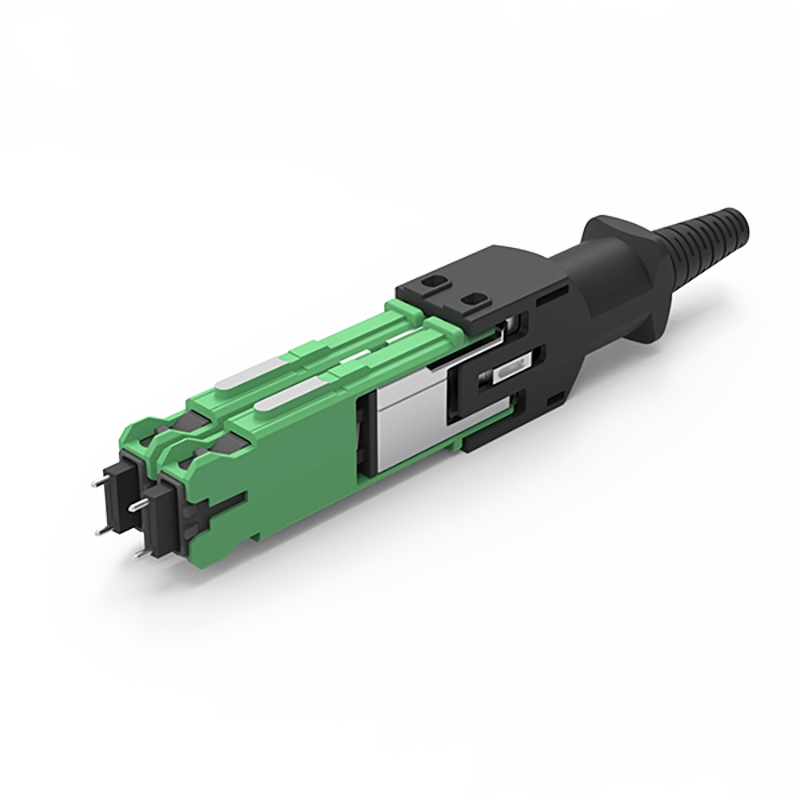
TOKYO, Japan — September 14, 2026 — In a move designed to address the surging demand for high-performance computing and hyperscale data center infrastructure, Lightera, a global titan in optical fiber and connectivity solutions, has announced a pivotal expansion of its Very Small Form Factor (VSFF) portfolio. Following the finalization of a comprehensive licensing agreement with SENKO Advanced Components, Inc., Lightera is now authorized to manufacture and distribute the industry-standard SN-MT optical connector technology.
This strategic alignment marks a significant milestone in the evolution of optical interconnects, providing data center operators with a robust, high-density solution to meet the bandwidth-intensive requirements of the Artificial Intelligence (AI) era.
The Core Development: Scaling for the AI Era
The digital landscape is currently undergoing its most significant transformation since the dawn of the internet. With the explosive growth of generative AI, large language models (LLMs), and cloud-native workloads, the physical infrastructure supporting these applications is being pushed to its limits. Traditional connectivity solutions, while effective for legacy systems, are increasingly struggling to balance space constraints with the need for massive data throughput.
The SN-MT connector technology, pioneered by SENKO Advanced Components, represents the cutting edge of VSFF design. By allowing for higher fiber density within a smaller physical footprint, the SN-MT enables data centers to maximize their rack space while simultaneously improving airflow and simplifying cable management. The licensing agreement grants Lightera full access to this technology, allowing the company to integrate it into its vertically integrated manufacturing pipeline, encompassing everything from high-precision ferrules to fully assembled connectivity modules.
Chronology: Building a Resilient Connectivity Ecosystem
The path to this announcement has been one of calculated technical integration and strategic market positioning.
- Early 2025: As AI infrastructure requirements began to shift toward "densification," market demand for SN-MT and similar VSFF interfaces accelerated. Industry leaders identified that a single-source model for such critical infrastructure posed potential supply chain risks.
- Late 2025: Lightera and SENKO Advanced Components initiated formal discussions regarding a licensing partnership. Both parties sought to leverage their complementary strengths—SENKO’s innovative R&D in VSFF interfaces and Lightera’s massive, established global manufacturing footprint.
- Q1–Q2 2026: A rigorous technical validation and authorization process was conducted to ensure that Lightera’s manufacturing standards met the exacting tolerances required by the SN-MT specification.
- September 14, 2026: The official announcement confirms that Lightera is now fully operational in the production and supply of SN-MT optical connectors to a global client base, including hyperscale cloud providers and AI infrastructure developers.
Supporting Data: Why VSFF Matters for Modern Data Centers
To understand the significance of this move, one must examine the metrics of current data center evolution.
The Density Dilemma
Modern hyperscale data centers are moving toward 800G and 1.6T transceiver architectures. As switch silicon capacity increases, the number of optical fibers required to sustain these connections grows exponentially. Conventional MPO (Multi-fiber Push-On) connectors, while standard for years, often lack the granularity and density needed for the next generation of pluggable optics.
Technical Advantages of the SN-MT
The SN-MT interface addresses these challenges through several key performance indicators:
- High-Density Footprint: The SN-MT allows for a significantly higher density of fibers per rack unit compared to legacy connectors, essential for high-radix switch designs.
- Low Insertion Loss: High-performance AI clusters are highly sensitive to optical loss. The SN-MT is engineered for superior optical performance, maintaining signal integrity over dense, complex architectures.
- Simplified Handling: In high-density environments, manual maintenance is difficult. The ergonomic design of the SN-MT facilitates faster installation and easier access, reducing the likelihood of technician-induced errors during network upgrades.
Official Responses: A Shared Vision for the Future
Industry leaders are viewing the collaboration as a bellwether for how the industry is maturing in response to the "AI Gold Rush."
Phil Ward, Director of Strategic Marketing at SENKO Advanced Components, emphasized the necessity of a diversified supply chain. "As AI infrastructure scales globally, it is essential that the industry has access to multiple qualified suppliers of advanced connectivity technologies," Ward stated. "By licensing SN-MT technology to Lightera, SENKO is strengthening the optical connectivity ecosystem, expanding supply chain resilience, and giving customers greater confidence as they deploy increasingly dense and bandwidth-intensive network architectures."
Satoshi Koyanagi, VP of Connectivity Division at Lightera Japan, echoed these sentiments, framing the agreement as a direct response to customer needs. "The addition of SN-MT technology further strengthens Lightera’s VSFF portfolio and enables us to provide customers with advanced connectivity solutions designed to support next-generation data center infrastructure," Koyanagi noted. "The expansion of our VSFF portfolio reflects our commitment to delivering innovative solutions that help customers address increasing bandwidth demands, improve network density, and prepare for the future of AI and hyperscale data center infrastructure."
Strategic Implications for the Market
The implications of this agreement extend far beyond a single product line. There are three primary areas where this partnership will shift the competitive landscape:
1. Strengthening Supply Chain Resilience
In an era of geopolitical and logistical uncertainty, hyperscalers are prioritizing "multi-sourcing" strategies. By providing a qualified, second-source manufacturer for the SN-MT interface, Lightera and SENKO have significantly reduced the risk profile for large-scale data center projects. This gives architects the confidence to bake SN-MT technology into their long-term roadmaps.
2. Vertical Integration as a Competitive Edge
Lightera’s advantage lies in its heritage. As a member of the Furukawa Electric Group, Lightera controls the entire value chain—from the glass fiber itself to the finished connector assemblies. This level of control allows for tighter quality assurance, which is vital when managing the microscopic tolerances of SN-MT ferrules. This integration ensures that Lightera can maintain high-volume production without sacrificing the precision required for high-speed AI connectivity.
3. Setting the Standard for Future Interconnects
The adoption of SN-MT is not just a trend; it is a signal of the industry moving away from "legacy-heavy" architectures. As AI and High-Performance Computing (HPC) continue to converge, the demand for modular, high-density, and low-loss interconnects will only increase. By standardizing on the SN-MT interface, Lightera and SENKO are helping to define the "language" of the next generation of optical networking.
Looking Ahead: The Road to 6G and Beyond
While the current focus is on AI and hyperscale cloud infrastructure, the technology being deployed today will form the bedrock for future advancements. As we approach the implementation of 6G telecommunications and more sophisticated edge-computing nodes, the demand for these high-density connectors will migrate from the core data center to the network edge.
Lightera’s investment in the SN-MT portfolio signals that the company is not merely reacting to current market conditions but is actively preparing for a future where high-bandwidth connectivity is as ubiquitous as electricity. Through its global footprint and deep technical expertise, Lightera is well-positioned to remain the partner of choice for organizations that cannot afford the downtime or performance bottlenecks associated with outdated connectivity standards.
For further information regarding the SN-MT product line and Lightera’s updated VSFF portfolio, please visit www.Lightera.com. For inquiries related to SENKO’s technical specifications, please visit www.senko.com.
About Lightera
Lightera is a global leader in optical fiber and connectivity solutions, built on a rich legacy of optical science and manufacturing excellence. Headquartered in Norcross, Georgia, U.S.A., the company serves a diverse array of sectors, including telecommunications, generative AI, 5G/6G, aerospace, and defense. As a proud member of the Furukawa Electric Group, Lightera is dedicated to advancing infrastructure through integrated, sustainable, and reliable connectivity solutions.
About SENKO Advanced Components
SENKO Advanced Components, Inc., a subsidiary of SENKO Advance Co., Ltd., is a globally recognized pioneer in passive fiber optic interconnects. Headquartered in Yokkaichi, Japan, SENKO has built a reputation for innovation, specifically in the development of Very Small Form Factor (VSFF) technology. With a global network of design and manufacturing facilities, SENKO continues to drive the future of connectivity for data centers, enterprise networks, and the burgeoning AI sector.