







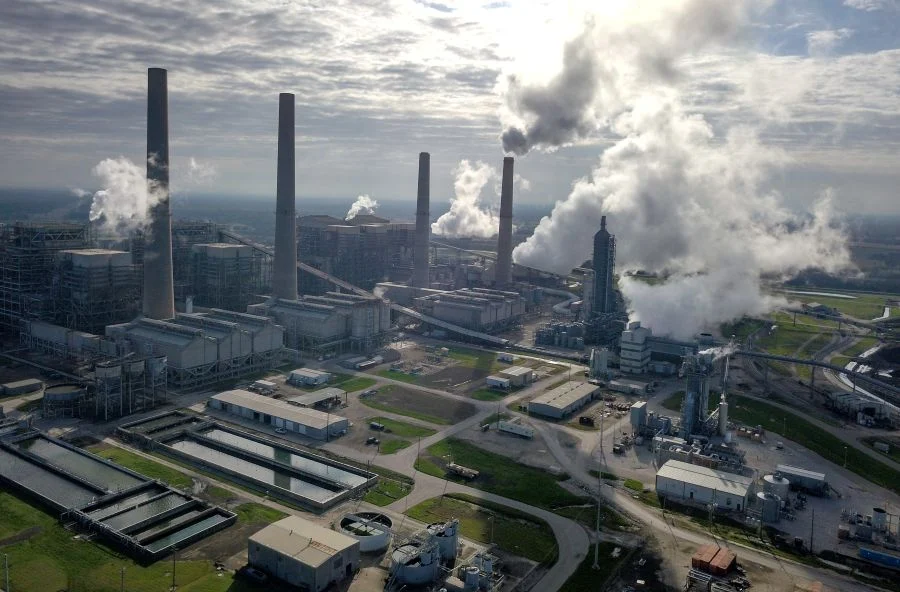
In a sweeping transformation of federal environmental policy, the Trump administration has moved to dismantle the regulatory framework governing carbon emissions from the nation’s power sector. During the G20 Energy Abundance Ministerial meeting in Houston on September 14, EPA Administrator Lee Zeldin and Secretary of the Interior Douglas Burgum announced the finalization of a rule that effectively guts nearly all existing greenhouse gas (GHG) emission requirements for coal- and gas-fired power plants.
The move represents the latest, and perhaps most significant, step in a broader administrative strategy to prioritize energy production over emissions mitigation. By revoking the 2024 carbon pollution standards established during the Biden administration, the EPA has signaled a total reversal of previous climate-focused mandates, opting instead for a deregulatory path that officials argue will stabilize the grid and reduce costs for American consumers.
The Chronology of Regulatory Reversal
The path to this week’s announcement began shortly after the inauguration of the current administration, which viewed the previous EPA’s climate agenda as a primary hurdle to domestic energy independence.
- February: The EPA rescinded its "endangerment finding," the foundational legal mechanism that empowered the agency to regulate climate-warming emissions under the Clean Air Act. The agency justified this reversal by citing a Department of Energy study that questioned the severity of climate-change projections—a study that was subsequently refuted by over 80 international climate experts.
- September 11: A critical legal setback occurred when a federal appeals court in Washington, D.C., limited the Department of Energy’s authority to mandate the continued operation of aging coal plants that were slated for retirement. This ruling challenged the administration’s ability to force plants to stay online, complicating the strategy of using federal mandates to maintain "baseload" power.
- September 14: Administrator Zeldin and Secretary Burgum used the G20 platform in Houston to formally announce the revocation of the 2024 carbon standards.
- Post-Announcement: The EPA has concurrently proposed a separate rule to eliminate any remaining greenhouse gas pollution control requirements, a measure now entering a 45-day public comment period following its publication in the Federal Register.
Economic Justification vs. Scientific Skepticism
The economic rationale provided by the EPA for these rollbacks is rooted in the concept of compliance relief. According to the agency’s internal estimates, the removal of the 2024 carbon pollution standards will save utility companies approximately $310 billion in compliance costs. Furthermore, the agency asserts that rescinding all remaining carbon reduction requirements across the power sector could yield an additional $370 billion in savings.
EPA officials argue that the standards set by the Obama and Biden administrations were fundamentally flawed. They contend that these previous mandates exceeded the agency’s authority under the Clean Air Act by demanding the adoption of technologies—specifically carbon capture and sequestration (CCS)—that were "not adequately demonstrated." From the EPA’s current perspective, the previous administration was effectively forcing functional power plants into premature retirement rather than setting achievable performance benchmarks.
However, industry experts and advocates of carbon capture technology reject this assessment. Jessie Stolark, executive director of the Carbon Capture Coalition, notes that the technology is far more viable than the current administration admits. "Carbon capture and storage deployment at power generation facilities is an available, effective way to address emissions from the growing U.S. power sector," Stolark said. She pointed to the 30 active carbon capture and storage projects currently under development at power facilities across the United States as evidence of the technology’s maturity and scalability.
Official Responses and Industry Polarization
The reaction to the EPA’s announcement has been sharply divided, mirroring the ongoing tension between proponents of traditional fossil fuel energy and advocates for aggressive climate action.
Support from the Energy Sector
Industry-aligned groups have largely welcomed the policy shift. Jim Matheson, CEO of the National Rural Electric Cooperative Association, emphasized the necessity of maintaining current power assets to meet soaring electricity demand. "Every available electron will be needed," Matheson stated, arguing that the previous carbon rules "exacerbated the pressures facing America’s electric grid by forcing critical existing power plants into early retirement and severely restricting the operation of new natural gas plants."
Senator Shelley Moore Capito (R-W.Va.), chair of the Senate Environment and Public Works Committee, lauded the move as a victory for domestic energy stability. "The previous standards would have decimated baseload energy production and eliminated jobs across West Virginia," Capito said, framing the revocation as a necessary intervention to protect economic livelihoods.
Opposition from Climate and Policy Advocates
Conversely, environmental organizations and energy analysts have characterized the move as a catastrophic failure of governance. Holly Bender, chief program officer at the Sierra Club, described the EPA’s actions on a September 16 conference call as a "blatant and unsupported denial of decades of science and research." She categorized the decision as "climate denial at its worst," warning that the removal of these protections would have irreversible consequences for public health.
Nathenial Keohane, CEO of the Center for Climate and Energy Solutions, echoed these concerns, highlighting the irony of the timing. "At a moment when electricity demand is growing more rapidly than it has in a half-century, and businesses, utilities, and consumers need greater certainty, the Environmental Protection Agency has taken a giant step backward," Keohane stated. He accused the agency of "ignoring sound science and economics" and "abdicating its responsibility to protect public health and welfare."
Implications for Public Health and the Environment
The local impacts of these policies are perhaps most acutely felt in communities located near large-scale emitters. Thelisa Lavergne, an environmental justice advocate with Air Alliance Houston, drew attention to the W.A. Parish coal plant in Fort Bend, Texas—one of the largest emitters of sulfur dioxide and nitrogen oxides in the nation.
"These emissions have consequences beyond the immediate area surrounding the plant," Lavergne explained. "Air pollution does not respect city limits, neighborhood boundaries, or political districts. That is why what happens at W.A. Parish matters to all of Fort Bend County and the Greater Houston region and beyond."
For residents living in the shadow of industrial power facilities, the rescinding of carbon standards represents more than just a political debate; it is seen as a direct threat to air quality and long-term health outcomes. The removal of federal oversight creates a regulatory vacuum that critics argue will leave local communities without recourse against the negative externalities of fossil fuel generation.
Conclusion: A New Era of Energy Policy
The EPA’s decision to gut carbon emission requirements marks a definitive pivot in American energy policy. By prioritizing the immediate, unhindered operation of coal and gas plants, the Trump administration is wagering that the economic savings and grid reliability benefits will outweigh the risks posed by increased greenhouse gas emissions.
As the 45-day public comment period for the proposed rule begins, the nation remains caught in a deepening ideological and scientific divide. While the administration points to the necessity of "energy abundance" and cost savings to drive industrial growth, climate scientists and advocacy groups warn that the environmental cost of this path may be far higher than any short-term financial gain. With the legal landscape also shifting—as evidenced by the recent appeals court ruling on coal plant retirements—the future of the U.S. power grid remains in a state of profound uncertainty.