




As the greater New York and New Jersey region enters a period of unprecedented infrastructure investment, the primary stakeholders responsible for the area’s transportation arteries gathered on September 14 at the ENR NY/NJ Infrastructure Forum to discuss the trajectory of the region’s most complex megaprojects. From the cavernous expansion of the Second Avenue Subway to the massive overhaul of the Port Authority’s aviation and bus hubs, the consensus among leadership is clear: the era of siloed, isolated construction is over, replaced by a mandate for collaborative, sustainable, and highly efficient project delivery.
The Second Avenue Subway: Moving Toward Phase 2 Completion
The Metropolitan Transportation Authority (MTA) is currently navigating a critical milestone in its most ambitious project: the Phase 2 extension of the Second Avenue Subway. With the project budget set at approximately $6.97 billion and a targeted completion date in the fall of 2032, the agency is now advancing the procurement for its fourth and final construction contract.
Contract 4: The Systems Integration Powerhouse
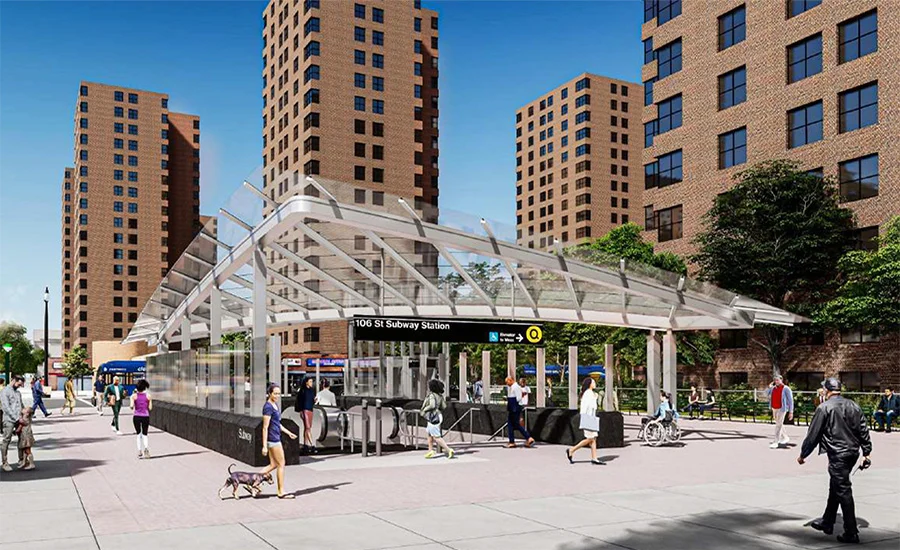
Matthew Zettwoch, program executive and vice president at MTA Construction and Development, highlighted the significance of the "Contract 4" package, which serves as the architectural and operational bridge for the entire expansion. This contract encompasses the systems fit-out and finishes for the three new stations—at 106th, 116th, and 125th Streets—and the connecting tunnel segments.
The scope of work for Contract 4 is vast. It includes the installation of:
- Station Infrastructure: Platform finishes, entrance canopies, and six above-ground ancillary buildings.
- Vertical Transportation: 22 elevators and 20 escalators designed for high-capacity, high-traffic environments.
- Core Systems: Communications and security systems, track installation, third-rail power, traction power, and state-of-the-art communications-based train control (CBTC).
- Integration: The project features a vital connection from the new 125th Street station to the existing Lexington Avenue 4/5/6 line, alongside a dedicated Park Avenue entrance providing proximity to Metro-North’s Harlem-125th Street station.
Rethinking Project Delivery: Design-Bid-Build vs. Design-Build
In a strategic pivot, the MTA is transitioning Contract 4 back to a design-bid-build framework. According to Zettwoch, this shift was calculated to optimize the project’s footprint. "This has given us an opportunity to optimize the design—we’ve eliminated our back-of-house spaces," he explained. By collaborating closely with labor unions and the agency’s internal subway teams to refine work rules, the MTA has successfully reduced the need for massive mechanical support spaces, allowing for a more streamlined, maintainable facility.
Chronology of Progress and Procurement
The MTA’s approach to the Second Avenue Subway reflects a meticulous, phased timeline:

- Phase 2 Launch: Currently underway, with the recent award of a $1.02-billion design-build contract to a joint venture comprising Skanska, Traylor Bros., and Walsh Construction to build the station shell and underground infrastructure.
- Contract 4 Procurement: The Request for Qualifications (RFQ) has been issued. The MTA expects to issue the Request for Proposals (RFP) to qualified contractors by the end of this year.
- Contract Selection: Mid-2027 is the targeted window for selecting the successful bidder for Contract 4.
- Construction Commencement: Work on the fit-out is scheduled to begin in 2027.
- Revenue Service: The agency aims to complete the project and open the extension to the public by fall 2032.
Airports Abound: The Port Authority’s Unified Vision
Beyond the subway, the Port Authority of New York and New Jersey (PANYNJ) is overseeing a massive transformation of the region’s aviation gateways. Palmina Whelan, capital program director for the $9.5-billion New Terminal One at JFK International Airport, emphasized that the modern approach to airport construction is defined by "unprecedented stakeholder collaboration."
Breaking the Silos
Whelan noted that in the past, terminal renovations were performed in silos, tailored narrowly to the branding and operational preferences of specific airlines like American Airlines at LaGuardia. Today, the strategy has shifted toward "common-use" infrastructure that balances airline-specific needs with long-term flexibility. This allows for a consistent passenger experience while accommodating shifting global aviation trends and new entrants to the market.
Economic Leverage and Private Partnerships
PANYNJ Chief Operating Officer Jim Heitmann provided context on the sheer scale of the investment. While the Port Authority has invested approximately $4 billion into the JFK transformation, private entities have contributed $15 billion. This model of leveraging public capital capacity through private partnerships has been central to the agency’s success.
Newark and LaGuardia: Future-Proofing
The regional strategy also focuses on Newark and LaGuardia:
- Newark Liberty (EWR): Construction is ongoing for the $3.8-billion, 2.5-mile AirTrain, which will replace the aging system with a higher-capacity four-car configuration. The new alignment is critical, as it clears the way for the future replacement of the 53-year-old Terminal B.
- LaGuardia (LGA): Planning is underway for Terminal A. Rather than full demolition, the agency intends to integrate the historical terminal into the broader modern airport footprint, ensuring architectural continuity while upgrading capabilities.
The Mid-Manhattan Bus Terminal Overhaul
The Port Authority is also tackling one of its most complex challenges: the $10-billion, multi-stage reconstruction of the Midtown Manhattan Bus Terminal. Steven Plate, the Port Authority’s chief of major capital projects, underscored the necessity of the project, noting that the facility has seen little significant modification since the 1970s.
Strategic Phasing
The project is currently in its early stages, focusing on foundational improvements:
- Ramp Reconstruction: A more organized ramp system is being built to feed the terminal more efficiently.
- Deck-overs: Work is progressing on the Dyer Avenue and Lincoln Tunnel deck-overs, a $271-million effort currently being led by MLJ Contracting.
- Community Benefits: Upon completion, these decks will reclaim three acres of space for public park use, a significant win for Midtown residents and commuters.
Implications for the Construction Industry
The forum revealed several overarching trends that will shape the regional construction industry for the next decade.
1. The Rise of "Best-Value" Contracting
Zettwoch’s comments on the MTA’s procurement philosophy are emblematic of a shift away from purely cost-driven awards. The agency is now prioritizing "best value," which includes long-term maintainability, community impact, and the integration of transit-oriented development. By not "loading" contracts with excessive milestones, the MTA is empowering contractors to focus on their core competency: building.
2. Disincentives and Accountability
A notable change in the MTA’s project management approach is the inclusion of "real disincentives" to hold contractors accountable. By aligning contracts with critical project paths—such as Tunnel Boring Machine (TBM) launches and revenue service deadlines—while providing flexibility in phasing, the agency aims to reduce overall project risk and improve delivery speed.
3. Workforce and Equity
The industry is also keeping a close watch on the Port Authority’s minority business enterprise (MBE) program for the bus terminal project. As Steven Plate suggested, the imminent approval of these policies is expected to unlock significant opportunities for consulting and contracting firms, further diversifying the regional supply chain.
4. Technological and Operational Efficiency
The implementation of Communications-Based Train Control (CBTC) on the Second Avenue Subway is expected to be a game-changer for Manhattan’s transit capacity. By reducing headways from seven minutes to three, the MTA expects to move 30 trains per hour. This, combined with the Port Authority’s focus on future-ready infrastructure—such as accommodating air taxis and integrated airport lounges—signals a region moving toward a smarter, more interconnected future.
Conclusion
The convergence of the Second Avenue Subway Phase 2, the JFK and Newark airport redevelopments, and the Midtown Bus Terminal overhaul represents a historic investment in the regional backbone of the Northeast. While the sheer scale of these projects presents significant logistical, financial, and political challenges, the current leadership within the MTA and the Port Authority appears unified by a common strategy: leverage private-sector expertise, demand operational flexibility, prioritize long-term maintenance, and, above all, minimize the impact on the communities they serve. As these projects progress toward their 2030s deadlines, the region’s ability to execute these complex, interconnected infrastructure goals will serve as a global benchmark for urban development.