






In the landscape of modern enterprise networking, the "dumb" copper wire is undergoing a radical evolution. For decades, Ethernet cables were the silent conduits of data, relegated to the background of office life. Today, they are the lifeblood of the digital ecosystem, evolving into sophisticated power grids that deliver up to 100W of electricity alongside 10Gbps data throughput. This fusion of power and speed, driven by the IEEE 802.3bt (PoE++) standard, is not merely an incremental update; it is the fundamental infrastructure layer for the next decade of AI-driven smart buildings, Wi-Fi 7 integration, and the explosive growth of the Internet of Things (IoT).
The Main Facts: Defining the Modern Standard
Power over Ethernet (PoE) has transcended its origins as a convenience for VoIP telephony. It has matured into a robust, scalable technology that simplifies deployment and significantly reduces the total cost of ownership (TCO) for enterprise networks. By consolidating power and data delivery into a single category-rated cable, organizations eliminate the need for costly AC electrical infrastructure at every endpoint.
The current gold standard, IEEE 802.3bt—often referred to as PoE++—represents a technological leap. While early iterations of PoE were limited to 15.4W (Type 1), the 802.3bt standard allows for up to 100W at the power source. This power-to-data ratio is the cornerstone of modern network design, enabling high-performance devices like high-definition pan-tilt-zoom (PTZ) cameras, smart lighting grids, and enterprise-grade wireless access points to function without dedicated local power outlets.
A Chronology of Connectivity: From VoIP to the AI Era
The journey of PoE is a narrative of increasing capacity. The evolution can be categorized into distinct phases:

- The Infancy (2003 – IEEE 802.3af): Initially, the focus was purely on supporting legacy VoIP phones. The standard delivered 15.4W, sufficient for low-power voice devices but insufficient for the high-bandwidth hardware of the future.
- The Growth Phase (2009 – IEEE 802.3at / PoE+): As wireless LANs began to proliferate, the need for higher power became apparent. PoE+ pushed the limit to 30W, enabling dual-radio Wi-Fi access points and basic security cameras.
- The High-Power Era (2018 – IEEE 802.3bt / PoE++): The current era of 802.3bt allows for 60W (Type 3) and 100W (Type 4) delivery. This opened the door for power-hungry devices like LED lighting, thin clients, and automated building sensors.
- The Multi-Gigabit Frontier (Present – 2026 and beyond): We are currently witnessing the integration of 802.3bt with 2.5G, 5G, and 10G BASE-T speeds. The shift is moving from "can we power it?" to "how much data can we push while powering it?"
Supporting Data: The Market Trajectory
The economic indicators surrounding PoE are as compelling as the technical specifications. The PoE chipset market, valued at approximately $2.78 billion in 2025, is projected to grow to $5.57 billion by 2031. This represents a robust compound annual growth rate (CAGR) of 20%, signaling a massive shift in how enterprises allocate their capital expenditure (CAPEX).
Data from the Ethernet Alliance further highlights this trend, noting that 33% of organizations planning network expansions are specifically targeting deployments exceeding 51W per port. This demand is fueled by the reality that the "next generation" of IoT devices—ranging from smart building climate control systems to AI-enabled security surveillance—requires higher sustained power budgets than their predecessors.
Official Perspectives and Technical Interoperability
Industry bodies, most notably the Ethernet Alliance, have been instrumental in ensuring that this rapid growth does not result in a fragmented ecosystem. Through the PoE Gen 2 Certification Program, vendors are held to rigorous testing standards. This ensures that a 100W switch from one manufacturer can safely and efficiently power an access point from another.
"Interoperability is the linchpin of the smart building," says an Ethernet Alliance spokesperson. "As we push toward 10Gbps and 100W, the risks of non-compliance—ranging from cable overheating to data packet loss—become severe. Certification isn’t just a badge; it’s a guarantee of network stability."

Experts emphasize that the physical layer is the most common point of failure. With 802.3bt, the baseline for cabling has shifted firmly to Cat6A. Cat6A provides the necessary headroom for 10G data throughput while offering superior heat dissipation, a critical factor when bundling multiple high-power cables in a single cable tray.
Implications: The Smart Building Revolution
The implications for the modern enterprise are profound. When a single network switch can provide 10Gbps of bandwidth and 100W of power to a single device, the constraints on where that device can be placed vanish.
AI and High-Definition Surveillance
Modern AI cameras do more than record video; they perform real-time edge analytics. This requires substantial processing power and high-speed data backhaul. PoE++ provides the constant, reliable power needed to keep these analytical engines running without the interference of local power fluctuations.
Wi-Fi 7 and Wireless Density
Wi-Fi 7 introduces unprecedented throughput. To realize the full potential of these access points, the wired backhaul must be multi-gigabit. PoE++ ensures these access points can operate at peak performance, handling massive traffic loads without dropping power, which often occurred in earlier, under-powered setups.

Sustainability and Energy Efficiency
Perhaps the most overlooked implication is the sustainability quotient. By utilizing Power over Ethernet, organizations reduce the amount of high-voltage AC cabling required in a building. This results in:
- Lower Copper Consumption: Less cabling material is mined and manufactured.
- Energy Efficiency: DC-to-DC power distribution, which is inherent in PoE, eliminates the energy losses associated with multiple AC-to-DC conversions at every individual device.
- Reduced Infrastructure Footprint: Intelligent power management, such as AI-driven dynamic allocation, ensures that power is only drawn when needed, effectively "budgeting" energy across the network to prevent brownouts.
Strategies for the Future-Ready Enterprise
For IT managers and facilities directors, the directive is clear: plan for the future to avoid the "rip and replace" cycle. As organizations look to 2030, the following strategies are essential:
- Audit and Refresh: Assess current PoE budgets. If existing switches are limited to PoE+ (30W), they will become a bottleneck for the next wave of Wi-Fi 7 and AI-enabled hardware.
- Standardize on Cat6A: While Cat5e served the industry well, it is inadequate for the thermal and data demands of the next decade. Standardizing on Cat6A (or Cat8 in high-density areas) provides the necessary infrastructure longevity.
- Embrace Intelligent Management: Look for switches that support priority queuing and predictive power budgeting. These features allow the network to intelligently prioritize critical infrastructure (like fire alarms or security cameras) over non-essential devices during peak load periods.
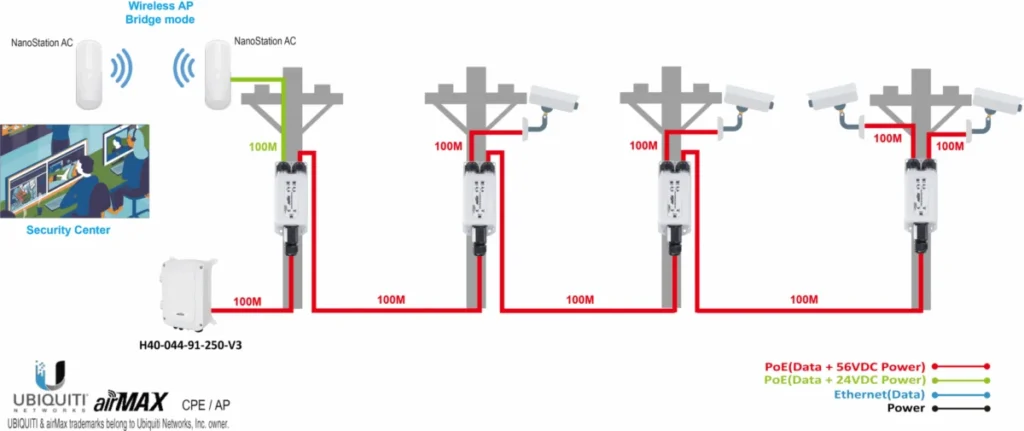
- Extended Reach Solutions: In sprawling campuses, fiber-to-the-edge combined with PoE extenders is becoming the standard. This allows for the benefits of PoE to be extended well beyond the traditional 100-meter Ethernet limitation.
Conclusion: The Backbone of the Future
The evolution of Power over Ethernet is a testament to the power of convergence. What began as a simple method to keep a telephone connected has become the bedrock of the smart, automated, and hyper-connected enterprise. By pairing the speed of multi-gigabit Ethernet with the robust power delivery of PoE++, organizations are not just upgrading their hardware; they are building a resilient, sustainable, and highly flexible nervous system for their business.
As we move toward a future defined by AI, high-density wireless, and complex IoT integration, those who invest in a high-power, high-speed backbone today will be the ones defining the industry standards of tomorrow. Consultation with certified infrastructure experts and a commitment to future-proof cabling are no longer optional—they are the prerequisites for survival in the next decade of digital transformation. Whether through the implementation of managed 10Gbps switches or the deployment of advanced PoE++ controllers, the technology is ready. The question remains: is your network?