



In a move designed to secure control over a critical bottleneck in the global energy transition, GE Vernova announced on October 28 its intent to acquire the Berlin-based Trench Group for $9 billion. The acquisition, which targets one of the world’s most essential manufacturers of high-voltage electrical components, represents a pivotal shift for GE Vernova as it seeks to vertically integrate its supply chain. By bringing Trench’s specialized production capabilities in-house, GE Vernova aims to bypass the chronic equipment shortages currently stalling utility-scale infrastructure projects across North America and Europe.
The deal, which is expected to close in late 2027 subject to customary regulatory approvals, will be financed through a balanced combination of cash and debt. This acquisition is not merely a geographic expansion but a strategic fortification of GE Vernova’s Electrification business, which has seen its order backlog balloon to $46.1 billion—a staggering 55% increase year-over-year.
A Chronology of Supply Chain Consolidation
The decision to acquire Trench Group from the investment firm Triton Partners follows years of mounting pressure on the global electrical grid.
- 2022: As the post-pandemic energy transition accelerated, lead times for large-scale power equipment began to stretch from months into years. GE Vernova’s order backlog began its rapid ascent, climbing from roughly $7 billion at the start of 2022 to current record levels.
- August 2026: Research cited by industry experts confirmed that procuring a standard 100-MVA large power transformer now requires 2.5 to 3 years, with extra-high-voltage units—the backbone of long-distance transmission—taking up to five years to secure.
- October 28, 2026: GE Vernova officially announces the $9 billion acquisition of Trench Group, signaling an end to its reliance on external sourcing for critical high-voltage bushings.
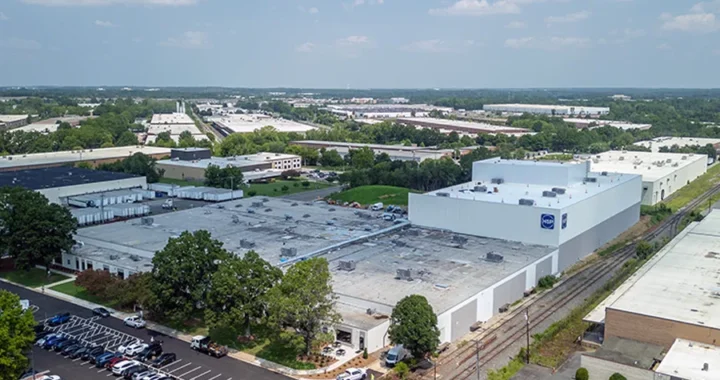
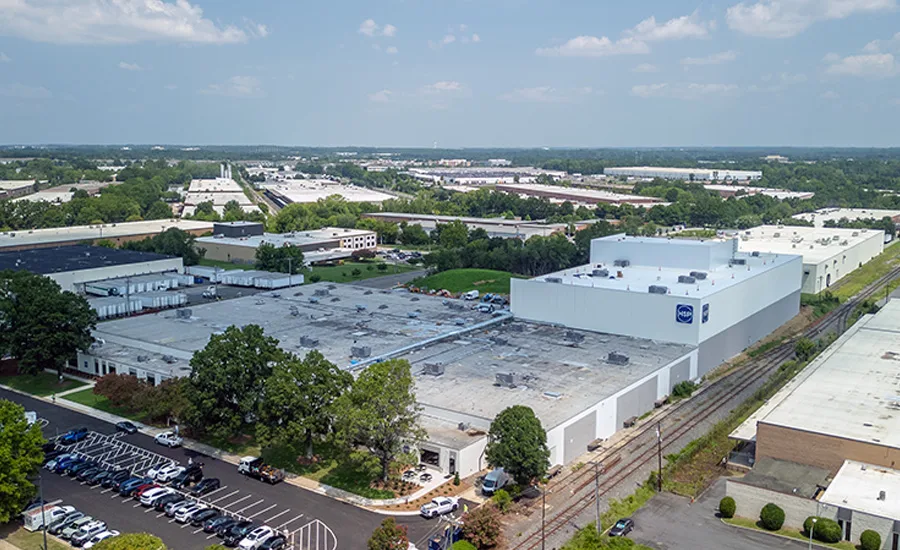
- Late 2027 (Anticipated): The deal is scheduled to close. Simultaneously, Trench Group is expected to bring its new Charlotte, N.C., manufacturing facility to full operational status, marking the company’s first significant U.S. production footprint.
The Technical Imperative: Why Bushings Matter
While the $9 billion price tag may seem steep, the acquisition focuses on a product that is arguably the most critical "chokepoint" in grid manufacturing: the high-voltage bushing. Bushings act as the primary interface for routing high-voltage electricity into and out of transformers, switchgear, and substations. Without these components, a multi-million-dollar transformer is essentially a dormant steel box.
Trench Group sits at the apex of this market. Their product portfolio—which includes bushings rated up to 1,200 kV, instrument transformers, and specialized coils—is considered "differentiated technology" by industry leaders. Because large-transformer customers often mandate specific bushing brands in their equipment specifications, controlling the supply of these components gives GE Vernova significant leverage.
Currently, bushings account for 5% to 8% of a transformer’s total bill of materials. By owning the manufacturer, GE Vernova can better align component supply with project timelines, insulating its internal projects from the volatility of the global third-party market.

Supporting Data: An Industry Under Pressure
The urgency of the acquisition is underscored by the current state of the global high-voltage equipment market. GE Vernova’s internal projections estimate that this market will grow at an annual rate of 8%, climbing from $90 billion in 2025 to $130 billion by 2030. In North America, that growth is projected at 9% annually, driven by the massive need to modernize aging infrastructure.
The Grid Infrastructure Gap
According to GE Vernova CEO Scott Strazik, the United States alone faces a monumental task: more than 55,000 transmission substations will require complete rebuilding or upgrading to higher voltages over the next decade. This demand is further compounded by:
- Data Center Proliferation: The rise of AI and cloud computing has created an insatiable appetite for power. Interconnection timelines for these facilities have stretched to five or six years, far outpacing the 2.5-year construction cycle of the data centers themselves.
- Projected Revenue Growth: Trench Group is currently tracking a robust financial trajectory, with revenue expected to grow from $1.4 billion in 2026 to $1.9 billion by 2028.
- Secured Backlog: Trench holds approximately $5 billion in combined backlog and framework agreements. Crucially, half of this value is protected by roughly 80 long-term framework agreements, some of which extend well into the 2030s, providing GE Vernova with predictable, long-term revenue visibility.
Official Responses and Strategic Vision
During the Q3 2026 earnings call, Scott Strazik emphasized that the acquisition is about more than just securing inventory; it is about "control over the critical technology in the supply chain."
"This gives us a lot more control over the critical technology in the supply chain to meet the growing backlog that we see with differentiated technology," Strazik told investors. He further clarified that while GE Vernova will benefit from internal supply, the company intends to maintain its commitment to Trench’s existing, diverse customer base.
Adam Tucker, GE Vernova’s director of financial communications, echoed this sentiment in a statement to ENR: "Yes, GE Vernova will continue to serve Trench’s existing customers as Trench does. We believe strongly in the value of this transaction for all current and future customers."
Trench Group’s leadership is similarly focused on expanding capacity to meet the North American crunch. Ulrich Künster, Trench’s Vice President of Communications, Marketing and Investor Relations, noted that the company’s new Charlotte plant is a key part of this strategy. "Once fully operational, the plant is poised to initially produce up to 3,500 HSP bushings per year," Künster stated. "There is room to more than double production capacity… reflecting Trench Group’s commitment to the growing North American market."

Implications for the Construction and Engineering Sector
The implications of this deal are far-reaching for utility companies and large-scale industrial developers.
Vertical Integration as a Competitive Edge
For firms like American Electric Power (AEP) and others involved in massive grid-expansion projects—such as the 765-kV infrastructure connecting the 1-GW Muskie Data Campus in Kentucky—the deal offers a potential path to shorter lead times. By consolidating the supply chain, GE Vernova is betting that it can offer a "one-stop-shop" solution that is less susceptible to the shortages of grain-oriented electrical steel, copper, and bushings that have plagued the industry for years.
A Signal to Competitors
This acquisition acts as a clear signal that the era of "just-in-time" supply chains for grid infrastructure is over. Major players are moving toward "just-in-case" inventory strategies, where ownership of the manufacturing process is viewed as a prerequisite for winning major infrastructure contracts.
Global Market Dynamics
While GE Vernova is a significant player, it currently accounts for only a small portion of Trench’s $1.4 billion annual revenue. This suggests that the acquisition is not a defensive move to cut off competitors, but rather a growth-oriented play to dominate a specialized manufacturing sector. Trench’s established relationships with hyperscalers—who are increasingly becoming the primary drivers of grid demand—will likely provide GE Vernova with a direct pipeline into the data center sector, further diversifying its portfolio beyond traditional utility services.
Conclusion
The $9 billion acquisition of Trench Group is a bold, long-term bet on the stability of the global energy transition. As grid demands continue to outpace existing manufacturing capacity, the ability to control the "building blocks" of electrical infrastructure—bushings, coils, and reactors—will likely become the defining factor for success in the power sector. By integrating Trench’s expertise into its own operations, GE Vernova has positioned itself not just as a provider of power solutions, but as the master of the critical components that keep the lights on in an increasingly electrified world.