





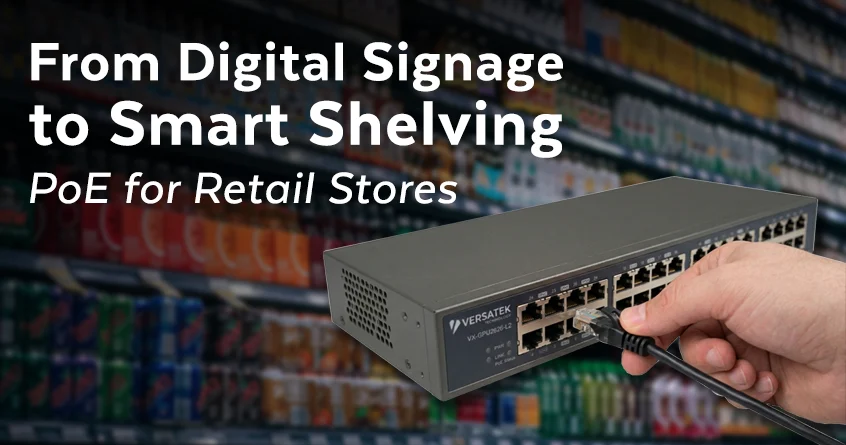
In an era defined by the dominance of e-commerce, the physical storefront has undergone a profound metamorphosis. Far from being rendered obsolete by digital marketplaces, the brick-and-mortar store has evolved into a high-tech ecosystem. Today’s consumers—armed with smartphones and accustomed to the instant gratification of online shopping—bring those same expectations into the aisles. They demand seamless connectivity, rapid self-service options, and an environment that feels both safe and personalized.
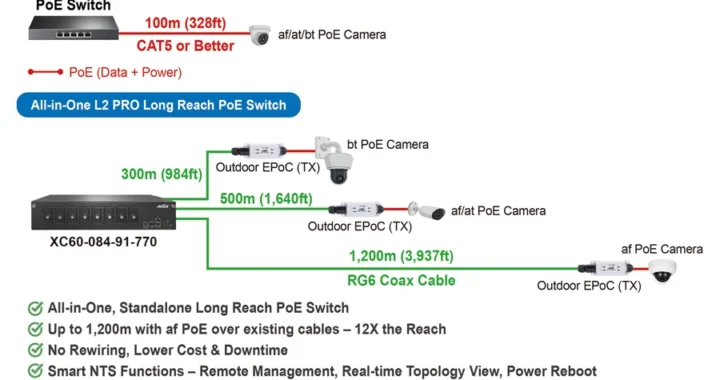
To meet these demands, retailers are increasingly turning to a backbone of Power over Ethernet (PoE) infrastructure. By consolidating power and data transmission into a single, efficient cable, PoE is not merely an IT upgrade; it is the fundamental framework supporting the "Retail Storefront of the Future."
The Evolution of Retail Infrastructure: Main Facts
At its core, PoE technology allows network cables to carry electrical power to devices, eliminating the necessity for local power outlets at every endpoint. This capability has revolutionized how retailers approach store design.
Key Capabilities of Modern PoE Infrastructure:
- Unified Connectivity: A single Ethernet cable transmits both data and power, reducing installation complexity and clutter.
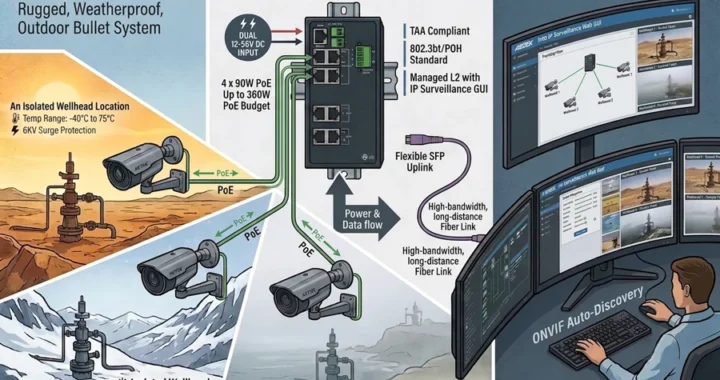
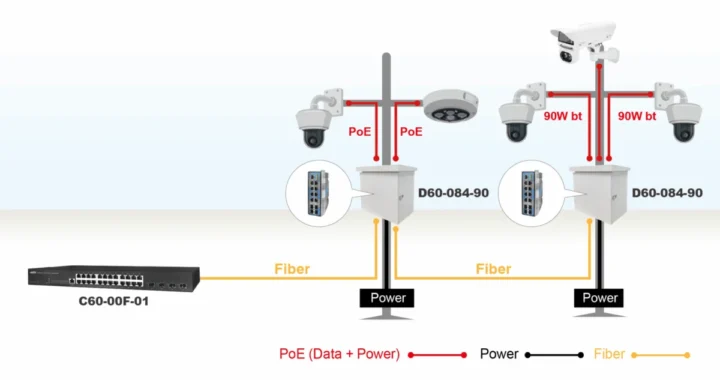
- High-Wattage Support: Modern standards, such as IEEE 802.3bt, provide up to 90 watts per port, enabling the operation of power-hungry hardware like POS terminals, high-definition PTZ security cameras, and interactive kiosks.
- Scalability: As store layouts change to accommodate seasonal traffic, PoE devices can be relocated with ease, requiring only a patch cable change rather than a costly electrical overhaul.
- Centralized Management: PoE switches allow administrators to monitor power consumption, reboot devices remotely, and prioritize traffic, ensuring critical systems like payment processors maintain uptime.
A Chronology of Retail Transformation
The shift toward "smart" retail did not happen overnight. It is the result of a multi-decade transition from manual operations to data-driven, interconnected environments.
- 1990s–2000s: The Analog Era. Retail security and operations were largely siloed. Surveillance systems were analog, and inventory management relied on paper logs or disconnected terminal systems.
- 2010s: The Rise of Connected Commerce. As Wi-Fi became a store standard, retailers began integrating IoT devices. Early PoE deployments were limited to basic VoIP phones and low-resolution IP cameras.
- 2020–2024: The Catalyst of Change. The pandemic accelerated the need for contactless shopping, real-time inventory visibility, and enhanced loss prevention. Retailers were forced to pivot to curbside pickup, mobile POS, and automated surveillance.
- 2025 and Beyond: The Predictive Store. We are now entering an age where infrastructure must support AI-driven insights, environmental monitoring, and hyper-personalized customer engagement, all of which rely on the high-bandwidth, high-power capabilities of modern PoE switches.
Supporting Data: The Economic Imperative
The shift toward advanced infrastructure is not merely for convenience; it is a financial necessity driven by razor-thin margins and rising security concerns.
Inventory and Profitability
Retail warehouses and large-format stores operate on profit margins often thinner than 3%. In these environments, inventory management is the difference between success and failure. RFID tags and smart shelving, supported by a dense network of PoE-connected sensors, allow for real-time tracking of thousands of SKUs. By reducing "out-of-stock" scenarios and minimizing shrinkage, retailers can preserve those critical margins.

The Security Crisis
Safety remains a paramount concern for both staff and consumers. According to data from the FBI and industry researchers, convenience stores and gas stations—often operating on 24/7 schedules—remain high-risk targets for criminal activity. Statistics indicate that approximately 15% of all retail robberies occur in these settings. Furthermore, a study published in the National Center for Biotechnology Information highlights the social impact: 38% of shoppers have witnessed crime in grocery stores, and over 70% of those consumers report that they will actively avoid locations they perceive as unsafe.
PoE technology provides the solution through the rapid deployment of high-resolution PTZ cameras and license-plate recognition (LPR) software, turning passive surveillance into an active, automated defense system.
Strategic Implications: Operational Efficiency
The implementation of a robust PoE infrastructure creates a ripple effect across the entire retail operation.
Environmental Control and Sustainability
In large retail warehouses, maintaining specific climate conditions is vital for both product longevity and energy conservation. Sensors detecting humidity and temperature fluctuations can communicate directly with building management systems via PoE. If a freezer unit in a grocery store fails or a storage area in a warehouse becomes too warm for electronics, the system can trigger an automatic alert or adjust HVAC settings. This level of automation reduces energy waste and prevents massive inventory loss.
The Human-Tech Hybrid Model
Customer service has shifted from static "help desks" to mobile, roaming staff. By utilizing PoE to power high-density Wi-Fi access points, retailers ensure that floor staff have reliable, low-latency access to inventory databases. Whether a customer is in the electronics department or the produce section, a staff member equipped with a tablet can provide immediate answers regarding stock availability, effectively bridging the gap between digital convenience and human interaction.
Official Perspectives on Future-Proofing
Industry experts emphasize that "future-proofing" is not about predicting the next trend, but about building a foundation that can adapt to the unknown.

Versa Technology, a leader in industrial networking, advocates for the use of managed industrial PoE switches—such as the D60-044 model—to provide the necessary resilience. These devices are built to withstand extreme temperatures and electrical surges, ensuring that a store’s network remains operational even under adverse conditions.
"Retailers must stop viewing their network as a secondary utility," notes an industry analyst. "The infrastructure is now the storefront. When the power goes out, or the network lags, the store effectively closes. A resilient PoE setup, backed by an Uninterruptible Power Supply (UPS), ensures that security cameras continue to record and payment systems remain online, even when the grid fails."
The Path Forward: Building the Modern Store
For retailers looking to modernize, the roadmap is clear:
- Assess Existing Infrastructure: Identify bottlenecks where legacy wiring prevents the installation of new IoT devices.
- Standardize on PoE: Transition security, lighting, and communication endpoints to a unified PoE standard. This simplifies cabling, reduces labor costs during store remodels, and increases overall system visibility.
- Prioritize Resiliency: Invest in industrial-grade switches capable of handling the power demands of 90W 802.3bt devices.
- Integrate Data Streams: Ensure that the data captured by cameras, sensors, and POS systems is being funneled into a centralized analytics platform to drive better business decisions.
Conclusion: A Strategic Pivot
The retail environment of tomorrow will be defined by its ability to balance physical presence with digital intelligence. As profit margins remain compressed and customer expectations continue to climb, the retailers who succeed will be those who view their store infrastructure as a strategic asset rather than a sunk cost.
By leveraging the power of PoE, businesses can create a responsive, secure, and highly efficient environment. Whether it is a 35,000-square-foot supermarket or a 150,000-square-foot retail warehouse, the goal remains the same: protecting the people inside, securing the assets on the shelves, and providing an unparalleled customer experience. The future of retail is connected, and for those ready to innovate, it is already here.
For more information on how to optimize your retail infrastructure with advanced Power over Ethernet solutions, consult with the experts at Versa Technology.