




In the rapidly evolving landscape of enterprise networking, the silent revolution is occurring not in the cloud, but within the physical cabling infrastructure of our buildings. Power over Ethernet (PoE), once a niche solution relegated to powering basic VoIP handsets, has matured into the high-octane engine driving the modern smart building. By delivering up to 100W of power alongside multi-gigabit data throughput over a single copper cable, PoE++ (IEEE 802.3bt) is fundamentally changing how we deploy AI cameras, Wi-Fi 7 access points, and dense IoT ecosystems.
As we look toward 2030, the convergence of power and data represents more than just convenience—it is a critical infrastructure requirement for organizations aiming to remain competitive in an increasingly data-saturated world.
The Chronology of Connectivity: From VoIP to Intelligent Power
To understand the significance of current developments, one must look at the evolution of the IEEE 802.3 standards. PoE began as a rudimentary concept: using the unused pairs of copper wire in an Ethernet cable to deliver low-voltage DC power to desktop telephones. Because data signals (high frequency) and electrical currents (low frequency) operate on different spectrums, they could coexist without interference.
- The Early Era (2003): IEEE 802.3af established the baseline, providing up to 15.4W per port. This was sufficient for basic VoIP phones and early, low-power IP cameras.
- The PoE+ Era (2009): IEEE 802.3at increased output to 30W, enabling the first generation of pan-tilt-zoom (PTZ) security cameras and early wireless access points.
- The PoE++ Era (2018–Present): The IEEE 802.3bt standard marked a paradigm shift. By utilizing all four twisted pairs within the Ethernet cable, the standard pushed power delivery to 60W (Type 3) and 100W (Type 4). This unlocked the potential for smart lighting, motorized sensors, and sophisticated building management systems.
Today, we are in the "Multi-Gigabit Phase." As Wi-Fi 7 enters the market, the bottleneck has shifted from power delivery to data bandwidth. Modern switches now pair 802.3bt power with 2.5G, 5G, and 10G BASE-T interfaces, ensuring that the infrastructure is as fast as the devices it supports.
Supporting Data: A Market in Hyper-Growth
The transition toward high-power, high-speed networking is reflected in the financial projections for the sector. Market analysts indicate that the global PoE chipset market is on a trajectory to double, rising from an estimated $2.78 billion in 2025 to approximately $5.57 billion by 2031. This represents a compound annual growth rate (CAGR) of 20%—an extraordinary figure for a foundational technology.

This growth is driven by clear demand signals:
- High-Power Adoption: Recent industry surveys suggest that 33% of organizations currently planning network expansions are specifically targeting deployments exceeding 51W per port to accommodate advanced IoT hardware.
- Bandwidth Requirements: The transition from 1G to 10G at the access layer is no longer an "enterprise luxury" but a requirement for modern campus networks.
- Sustainability Metrics: By consolidating power and data, organizations significantly reduce the consumption of raw materials. Less copper cabling, fewer AC power outlets, and lower-voltage DC distribution translate into reduced energy waste and a smaller carbon footprint for large-scale smart building projects.
The Technical Pillars of Modern PoE
The reliability of modern PoE is not accidental; it is the result of significant engineering advancements in three key areas:
1. Intelligent Power Management
In dense deployments—such as a smart warehouse with thousands of IoT sensors—managing the power budget is critical to preventing "brownouts." Modern switches employ AI and machine learning algorithms to perform dynamic power allocation. Rather than reserving the maximum wattage for every port, the switch monitors real-time usage, using priority queuing to ensure mission-critical devices (like life-safety systems) remain powered even if the power budget is stressed.
2. Advanced Cabling Standards
While older Cat5e cabling served its purpose, the current standard for modern high-power, high-speed networks is Cat6A, with Cat8 emerging for specific high-density zones. These cables are designed with superior heat dissipation properties, which is essential when carrying high current. Furthermore, improved shielding mitigates the signal-to-noise ratio issues that can occur when high-voltage power runs alongside high-frequency 10G data.
3. Extended Reach and Interoperability
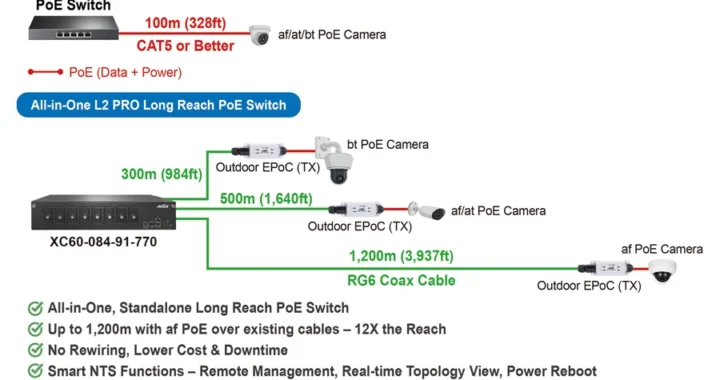
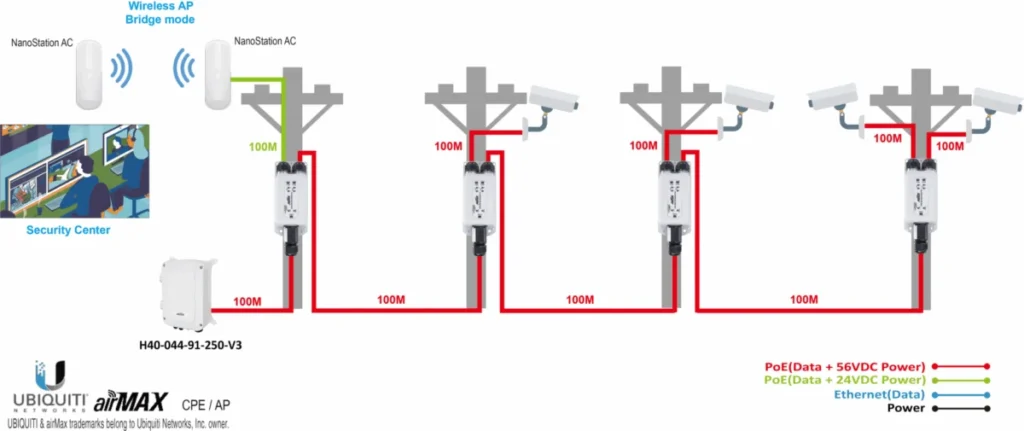
The 100-meter limitation of Ethernet has historically hampered outdoor or large-venue deployments. Today’s extended reach solutions, including fiber-to-copper media converters and daisy-chained PoE extenders, allow for edge deployments that were previously impossible. Furthermore, the Ethernet Alliance’s PoE Gen 2 Certification program has effectively eliminated the "vendor lock-in" era, ensuring that any IEEE-compliant device will work seamlessly with any certified switch.

Implications for the Modern Enterprise
The implications of this shift are profound, affecting everything from IT budgeting to physical building design.
The "Rip and Replace" Risk:
Organizations that fail to plan for PoE++ infrastructure today face a high probability of "rip and replace" costs within the next five years. As AI-driven security cameras, smart lighting, and 6G-ready access points proliferate, the demand for both power and throughput will only climb. Architects and IT directors are now advised to treat PoE infrastructure as a long-term capital asset, akin to the building’s HVAC or structural framing.
The Rise of the "Software-Defined Building":
The ability to manage, monitor, and power thousands of endpoints from a single, centralized management console is the hallmark of the software-defined building. By utilizing a single PoE switch, a facility manager can control lighting, thermal sensors, access control, and high-resolution video surveillance. This consolidation reduces the number of physical power cords and AC outlets required, drastically simplifying installation and reducing labor costs during construction.
Official Industry Perspectives
Industry bodies like the Ethernet Alliance have been vocal about the necessity of standard-based interoperability. "The transition to 802.3bt is not merely an incremental upgrade; it is the enabler for the next generation of smart environments," notes a representative from a leading networking consortium. "When you provide a robust, high-wattage, high-speed pipe to every corner of a building, you essentially democratize the ability for businesses to innovate at the edge."
Strategic Recommendations for Future-Proofing
For organizations looking to future-proof their network, the path forward is clear:

- Audit Current Infrastructure: Determine the percentage of current hardware that supports IEEE 802.3bt. If the infrastructure is primarily PoE+ (802.3at), begin a phased upgrade cycle in high-density areas.
- Standardize on Cat6A: Avoid the temptation to cut costs with lower-category cabling. Cat6A is the baseline requirement for 10G speeds and provides the thermal headroom necessary for 100W PoE.
- Consult Certified Partners: Given the complexity of power budgets and thermal management in large bundles, working with certified integrators is essential. Organizations like Versa Technology offer the expertise to navigate the transition, ensuring that network design aligns with both current needs and future capacity requirements.
Conclusion: The Best is Yet to Come
The journey of Power over Ethernet—from the humble 15W VoIP phone to the 100W, 10Gbps powerhouse of today—is a testament to the power of convergence. As we stand on the precipice of a new decade, the infrastructure we lay down now will dictate the capabilities of our smart environments for years to come.
The future of PoE is not just about moving electrons; it is about efficiency, sustainability, and flexibility. By embracing high-wattage, multi-gigabit networking, enterprises are doing more than just connecting devices—they are building the foundational intelligence of the modern world. The next decade belongs to those who view their cabling not as a utility, but as a strategic asset.