







Executive Summary: A Paradigm Shift in Healthcare Infrastructure
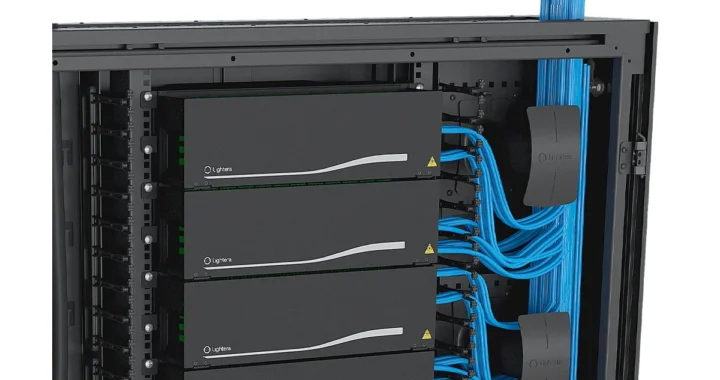
In the high-stakes environment of modern medicine, the network is no longer merely a support utility; it is the central nervous system of the hospital. Recognizing that traditional copper-based network architectures were becoming a bottleneck to innovation, Hospital São José recently undertook a massive digital transformation project. By implementing Laserway, a Passive Optical LAN (POL) solution developed through a strategic partnership between Lightera and Nokia, the hospital has successfully overhauled its connectivity.
This deployment integrates cutting-edge optical cabling, specialized hardware, and advanced software into a single, cohesive platform. The result is a highly resilient, scalable, and efficient infrastructure that bridges the gap between demanding clinical requirements and administrative needs. By moving away from legacy switching environments to an optical architecture, Hospital São José has set a new benchmark for how healthcare facilities can ensure high availability while preparing for the inevitable expansion of digital healthcare technologies.
The Challenge: Navigating the Complexity of Modern Healthcare
As Hospital São José expanded its footprint with the construction of a new wing, its IT leadership faced a classic infrastructure dilemma: how to scale operations without exponentially increasing the complexity and maintenance overhead of the network.
Modern hospitals are essentially data centers that provide medical care. They rely on a constellation of mission-critical applications—from Electronic Health Records (EHR) and high-resolution medical imaging (PACS) to real-time telemetry, IoT-enabled patient monitoring, and sophisticated building management systems. These applications require low-latency, high-bandwidth, and, above all, 100% uptime.
The Limitations of Legacy Systems
Traditional copper-based Local Area Networks (LANs) typically rely on numerous distributed switches located in telecommunications closets throughout a facility. This approach presents several challenges:
- Space Consumption: Telecommunications closets occupy valuable square footage that could otherwise be used for patient rooms or administrative offices.
- Energy and Cooling: Multiple switches generate significant heat and consume substantial power, requiring additional HVAC support.
- Complexity: Managing hundreds of individual switches increases the risk of configuration errors and creates a fragmented troubleshooting environment.
- Physical Footprint: Copper cabling has distance limitations (typically 100 meters), necessitating more intermediate distribution points.
Hospital São José required a solution that could support future technological growth, simplify network operations, and maintain a sterile, efficient environment that didn’t compromise the aesthetic or functional integrity of its clinical spaces.
Chronology of the Transformation
The journey to an all-optical network at Hospital São José was a phased, methodical process designed to minimize clinical disruption.
Phase 1: Strategic Planning and Architectural Design
Before a single cable was pulled, the engineering teams from Lightera and Nokia worked closely with the hospital’s IT department to map out every node of the facility. The design phase focused on identifying high-density areas (such as radiology and the ICU) versus lower-density administrative zones.
Phase 2: Deployment of the Passive Infrastructure
The core of the Laserway solution is the Passive Optical Network. Unlike active networks, POL uses passive splitters that require no power. This was a critical step in the installation process, as it removed the need for active intermediate switches. Optical fibers were routed through the facility to connect the central data center directly to the Optical Network Terminals (ONTs) located near the end-user equipment.
Phase 3: Hardware Integration and Optimization
The final phase involved the strategic installation of ONTs. In administrative areas, these were integrated into furniture or hidden within cabinets. In clinical areas, they were installed above suspended ceilings or within optical termination boxes. This phase concluded with a rigorous validation process, ensuring that the network met the "five-nines" (99.999%) availability standard required for clinical environments.
Technical Deep-Dive: The Laserway Architecture
The Laserway solution, powered by Nokia’s industry-leading networking technology and Lightera’s deep systems expertise, utilizes a point-to-multipoint architecture.
Administrative Areas: Discreet and Functional
In office settings, the goal was to eliminate clutter. ONTs were positioned beneath workstations or inside furniture, effectively "disappearing" from the user’s sight. This not only preserves the professional appearance of the hospital’s business offices but also simplifies moves, adds, and changes (MACs), as the optical fiber is significantly more durable and easier to manage than bulky copper bundles.
Clinical Areas: Safety and Sterility
The clinical environment presents unique challenges, particularly regarding infection control. Traditional network equipment, if placed in patient rooms, requires specialized antibacterial faceplates and constant cleaning.
By utilizing the Laserway approach, the active hardware is centralized in protected technical rooms. Only a standard Ethernet cable emerges from the RJ45 outlet at the point of care. This design eliminates the need for expensive, specialized hardware in the patient’s immediate vicinity, standardizing the equipment and significantly reducing the risk of contamination or hardware damage.
Supporting Data: Efficiency and Reliability Metrics
The transition to an optical architecture has yielded measurable benefits for Hospital São José:
- Energy Consumption: By eliminating the need for active switches in peripheral closets, the hospital achieved a significant reduction in power consumption. The passive nature of the optical splitters eliminates the heat load, allowing the hospital to reclaim space previously dedicated to cooling systems.
- Network Availability: Through redundancy protocols and the elimination of single points of failure inherent in distributed copper switches, the network has achieved a level of stability that supports uninterrupted patient care.
- Space Optimization: The removal of multiple intermediate closets has allowed the hospital to repurpose square footage for clinical use.
- Lifecycle Longevity: Optical fiber, once installed, has a much longer lifecycle than copper. It is essentially "future-proofed" against increasing bandwidth demands for the next decade or more, as the underlying technology can be upgraded simply by replacing the optics at the endpoints rather than re-cabling the entire facility.
Implications: The Future of Digital Healthcare
The successful implementation at Hospital São José serves as a blueprint for the future of smart hospitals.
Improving IT Operational Efficiency
For the IT department, the shift from managing hundreds of devices to a centralized, software-defined architecture has been transformative. Troubleshooting is now faster, updates are streamlined, and the overall network security posture is improved. When the network is simplified, the IT team spends less time on "keeping the lights on" and more time on strategic initiatives, such as AI-driven diagnostics or telemedicine platforms.
Scalability for Next-Gen Technologies
As healthcare moves toward more data-intensive applications—such as robotic surgery, real-time remote monitoring, and the use of augmented reality in medical training—the bandwidth requirements will only grow. The Laserway architecture provides the necessary headroom to scale these technologies without a complete overhaul of the underlying infrastructure.
Official Perspective: The Lightera + Nokia Partnership
The collaboration between Lightera and Nokia represents a synergy of infrastructure engineering and global telecommunications expertise.
"The goal of this project was not just to replace wires, but to fundamentally change how the hospital interacts with its digital assets," said a lead project consultant. "By combining Nokia’s robust networking hardware—which powers some of the largest service provider networks in the world—with Lightera’s localized integration expertise, we have provided Hospital São José with an industrial-grade backbone that is as reliable as the power grid."
The partnership focuses on:
- Reliability: Leveraging carrier-grade technology for enterprise-level healthcare environments.
- Innovation: Continuous software updates that ensure the network evolves with the hospital’s needs.
- Support: A holistic approach to project management, from the initial survey to post-installation optimization.
Conclusion: A New Standard for Healthcare Connectivity
The modernization of Hospital São José demonstrates that the most effective technological solutions are often those that become invisible. By moving to a Passive Optical LAN, the hospital has successfully hidden the complexity of its digital infrastructure while simultaneously increasing its performance and reliability.
For healthcare organizations globally, the lesson is clear: as digital transformation accelerates, the physical layer of the network must be as advanced as the applications it supports. The Laserway solution provides not just a faster network, but a more resilient, efficient, and sustainable foundation for the future of patient care.
Are you ready to modernize your healthcare facility?
The transition to optical LAN is a significant move, but one that yields long-term dividends in operational excellence and clinical reliability. Organizations looking to emulate the success of Hospital São José are encouraged to reach out to the Lightera and Nokia teams. By conducting a detailed audit of existing network infrastructure and defining long-term clinical goals, healthcare providers can ensure they are not just building for today, but architecting for the future of medicine.