






ORLANDO, Florida — From November 17–19, the epicenter of the telecommunications world shifted to Orlando for the Broadband Nation Expo. As the demand for high-speed, low-latency connectivity reaches an all-time high, industry titans, policy architects, and infrastructure innovators convened to address a singular, pressing question: How does the United States build, secure, and sustain the network of the future?
In a defining keynote address, Dave Stehlin, CEO of the Telecommunications Industry Association (TIA), framed the current moment as a pivotal junction in human history. With broadband now the primary conduit for economic growth, critical social services, and the daily functions of modern life, the expo served as both a victory lap for decades of engineering progress and a sober call to action regarding the challenges that lie ahead.
The Evolution of the Digital Frontier: A Chronology of Progress
To understand the trajectory of the modern internet, one must first appreciate the velocity of its development. The shift from the analog, copper-based voice networks of the 20th century to the fiber-optic, 5G, and satellite-integrated ecosystems of today represents one of the most rapid infrastructure transitions in history.
The Acceleration Curve
The history of American infrastructure has often been a story of patience. Electricity took decades to reach a quarter of the U.S. population. The telephone followed a similar, incremental adoption curve. However, the internet achieved that same 25% penetration milestone in just seven years. More recently, the emergence of generative AI has shattered even those records, reaching mass adoption in a matter of months.
This acceleration is not merely a social phenomenon; it is a structural one. Each leap in network performance—from 3G to 4G to 5G—has acted as an "innovation multiplier." As capacity increased, it enabled new technologies, which in turn demanded even greater capacity, creating a self-sustaining cycle of infrastructure investment and technological breakthrough.
Supporting Data: The Multi-Trillion Dollar Foundation
The transformation of the American broadband landscape is backed by staggering financial commitment. According to data highlighted at the expo, the U.S. communications sector has seen over $2.2 trillion in private capital investment since the mid-1990s. In 2024 alone, the industry poured $90 billion into the ground and the sky to expand connectivity.
The Economics of Connectivity
The impact of this investment on the consumer is quantifiable and profound:
- Cost Efficiency: While internet speeds have surged exponentially, the cost per megabit has plummeted by 98% since the dawn of the commercial internet.
- Traffic Distribution: As of 2024, wireless networks are responsible for carrying more than 60% of all global internet traffic. This highlights a paradigm shift where mobile radio access and robust backhaul infrastructure have become the primary arteries of daily digital life.
- The Global Scale: The modern network fabric now supports more than 5.5 billion internet users globally, a testament to the seamless integration of wireline, wireless, and satellite architectures.
Data Centers: The New Core of the Network
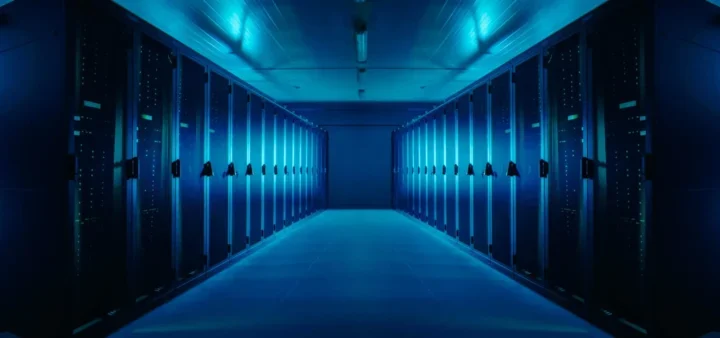
If the telecommunications network is the body, the data center is now the brain. As cloud computing and AI workloads dominate the digital landscape, these facilities have evolved from simple server rooms into the central hubs of the global economy.
The $6 Trillion Investment Horizon
McKinsey & Company projects that global investment in data centers will exceed $6 trillion by 2030. This massive capital influx is driven by the specific demands of AI-centric architectures, which require significantly higher computing density and energy capacity than the traditional data centers of the last decade.
Stehlin emphasized that as these facilities scale, the stakes of failure rise accordingly. "The complexity of these architectures is unprecedented," Stehlin noted. "A disruption in a central data hub today is no longer just a service outage; it is an economic and operational bottleneck that ripples through every sector of the economy."
The Call for Quality Standards
In response to this volatility, the TIA and its QuEST Forum community have launched a formal Data Center Quality initiative. This program aims to codify global standards based on Total Quality Management (TQM) principles. By establishing rigorous benchmarks for reliability, security, and continuous improvement, the TIA hopes to create a common framework for hyperscalers and operators alike.
Early adopters include major social media platforms and cloud hyperscalers, with Google actively collaborating with the TIA to drive these standards forward. The consensus among expo participants was clear: as data centers become the foundation of our digital society, they must be held to the highest standards of operational integrity.
Critical Implications: The Hurdles to Sustainable Growth
Despite the technological optimism at the Broadband Nation Expo, the path forward is not without significant obstacles. Stehlin identified three primary "friction points" that threaten to impede the momentum of the digital revolution.
1. The Workforce Gap
The industry is currently facing a talent shortage. As the complexity of building fiber-optic networks, managing sophisticated data centers, and defending against state-sponsored cyber threats grows, the need for a highly skilled workforce has never been higher. While states and educational institutions are responding with vocational training, the demand is currently outpacing the supply of qualified technicians and engineers.
2. The Permitting Bottleneck
Perhaps the most persistent frustration voiced at the expo was the issue of slow permitting. Even projects that are fully funded and well-engineered are frequently stalled by bureaucratic red tape. Whether it involves laying subsea cables or upgrading terrestrial fiber, the time required to navigate local, state, and federal approvals remains a significant drain on efficiency.
3. Subsea Security
With nearly all global internet traffic flowing through subsea cable systems, these assets are among the most critical, yet vulnerable, components of our infrastructure. Stehlin warned that landing points and cable hubs require enhanced security protocols and more robust, modernized operational practices to defend against both physical and cyber-based sabotage.
Conclusion: A Collaborative Future
The Broadband Nation Expo concluded with a renewed sense of purpose. By bringing together disparate stakeholders—technology vendors, network operators, government officials, and academia—the event underscored that broadband is no longer a luxury, but the fundamental utility of the 21st century.
Looking ahead, the TIA remains committed to advancing the standards and workforce development programs necessary to secure this future. As Stehlin articulated in his closing remarks, the goal is not merely to build "faster" networks, but to build "smarter" ones. By aligning on quality, investing in the next generation of workers, and streamlining the path to deployment, the U.S. is positioning itself to lead the next era of global digital connectivity.
The Broadband Nation is not a destination, but a process—a continuous, evolving effort to ensure that the infrastructure of tomorrow is as resilient, inclusive, and innovative as the society it supports.