





In a significant regulatory development, the Michigan Department of Natural Resources (DNR) and the Department of Environment, Great Lakes, and Energy (EGLE) issued renewed permits on July 15 for the Great Lakes Tunnel Project. The project, spearheaded by the Canadian energy giant Enbridge, aims to construct a four-mile-long tunnel beneath the Straits of Mackinac to house twin oil and gas pipelines. This decision marks a pivotal, albeit controversial, step forward in the multi-year effort to modernize the aging Line 5 infrastructure, which has long been a focal point of environmental debate in the Great Lakes region.
The Scope of the Infrastructure Challenge
The proposed tunnel is designed to replace the existing 73-year-old dual pipeline that currently rests on the lakebed of the Straits of Mackinac. For years, critics have characterized the current pipeline as an "environmental ticking time bomb," citing its age and vulnerability to anchor strikes and currents.
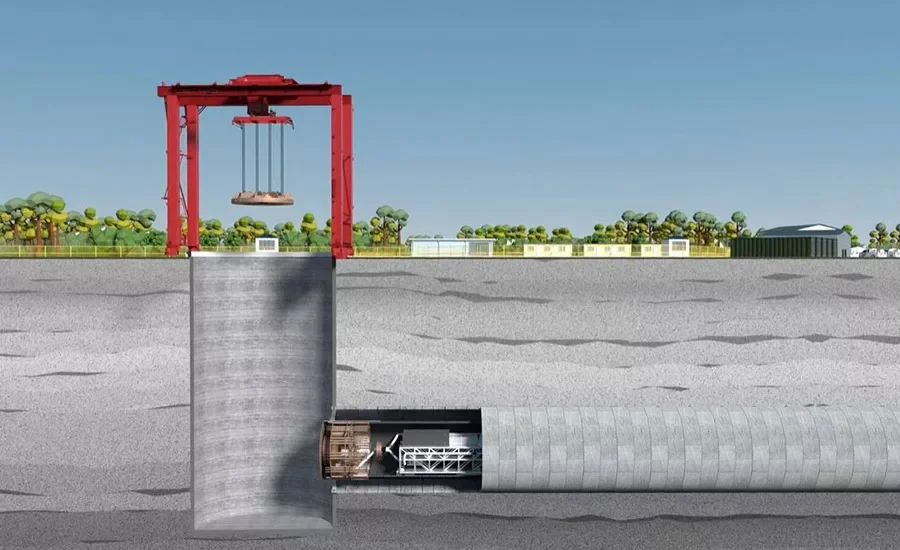
The engineering undertaking is substantial. The project will utilize a specialized tunnel-boring machine (TBM) capable of excavating through complex geological layers of limestone, rock, and shale. The machine is expected to progress at a rate of approximately 40 feet per day, five days a week, installing reinforced concrete liner segments as it advances. The logistical complexity is further highlighted by the need for saturation divers—specialized personnel who must reside in pressurized chambers on the surface for weeks at a time—to conduct maintenance within a pressurized habitat at the tunnel’s head.
A Chronology of Controversy and Regulatory Gridlock
The path to this week’s permit approval has been marked by years of litigation and shifting political landscapes.
- 2018: The initial estimated cost for the project was set at $500 million. As legal battles intensified and design requirements evolved, that figure has ballooned, with reports from the Institute for Energy Economics and Financial Analysis (IEEFA) suggesting costs could reach $800 million or higher.
- 2019: Preconstruction activities commenced, involving geological sampling and sediment analysis to inform the final engineering design. Arup was appointed as the lead design engineer.
- 2021: EGLE initially issued the bottomlands and wetlands permits required for the project. However, the project soon stalled due to a series of federal and state-level legal challenges that ultimately led to the expiration of those original permits earlier this year.
- 2024: Enbridge announced a joint venture between Barnard Construction Co. and Civil and Building North America to lead the physical construction phase. Despite this, the actual breaking of ground remains pending as the company navigates the remaining regulatory hurdles.
- July 15, 2024: Following a 16-month comprehensive review, EGLE and the DNR granted the requested permit renewals, contingent upon strict new environmental and cultural mitigation requirements.
Supporting Data and Technical Requirements
The approval of the permits is not an unconditional "green light." Both the DNR and EGLE have imposed rigorous stipulations intended to minimize the project’s footprint on the delicate ecosystem of the Straits.
Environmental Safeguards
EGLE’s approval is tied to an improved wetland mitigation plan. The DNR has specifically mandated that Enbridge minimize impacts on federally and state-listed threatened species, including Houghton’s goldenrod and the dwarf lake iris. To satisfy these conditions, the company is required to:
- Collect and preserve seeds from impacted flora for post-construction restoration.
- Restrict tree clearing to winter months to avoid disturbing local bat populations.
- Establish strict construction buffer zones to protect sensitive vegetation.
Engineering and Logistics
The construction process involves an entry point on the south side of the Straits, where a slurry plant will be established. This facility will separate rock, clay, pebbles, and water extracted during the boring process, with the goal of recycling the water back into the tunneling operation. The TBM itself is a massive assembly of thousands of components, requiring three to four months for onsite configuration before boring begins.
Official Responses and Stakeholder Positions
The reaction to the permit renewals has been sharply divided, reflecting the deep-seated polarization surrounding energy infrastructure in Michigan.
Enbridge’s Perspective
Ryan Duffy, a spokesperson for Enbridge, framed the permit renewal as a vital advancement for regional energy security. "This is an important step forward for a project designed to further protect the Great Lakes while helping ensure the uninterrupted flow of energy that supports Michigan and the region," Duffy stated. He noted that the company is currently conducting a thorough review of the new permit conditions to assess how they may impact the construction timeline and operational costs.
The Opposition
The Michigan League of Conservation Voters (MLCV) has issued a vehement condemnation of the Whitmer administration’s decision. Lisa Wozniak, CEO and President of the League, argued that the approval places an undue burden on the state. "Rather than doing everything she can to safeguard the Great Lakes, Gov. Whitmer is enabling a Canadian oil company to saddle Michigan taxpayers with billions of dollars in financial liability if something goes wrong," Wozniak said.
Furthermore, the opposition is not purely environmental; it is also deeply rooted in sovereign rights. The project faces significant pushback from tribal nations who argue that the tunnel threatens treaty-protected rights under the 1836 Treaty of Washington. Tribal leaders have consistently warned that any construction-related damage—or a potential spill—could cause irreparable harm to sacred waters, vital fisheries, and culturally significant sites.
Implications: The Road Ahead
While the July 15 permit renewals represent a major milestone for Enbridge, the Great Lakes Tunnel Project remains far from a certainty. The project still faces a labyrinth of remaining regulatory requirements. Most notably, Enbridge must still secure a federal permit from the U.S. Army Corps of Engineers.
The implications of this project extend beyond the immediate construction site. The debate over Line 5 encapsulates a broader national conversation regarding the transition to renewable energy versus the continued reliance on fossil fuel infrastructure. For Michigan, the project remains a test of the state’s ability to balance industrial economic interests against the preservation of one of the world’s most critical freshwater resources.
As Enbridge prepares to review the specific mandates set by the state, the legal and public relations battle appears set to continue. Whether the tunnel will ever reach completion remains an open question, dependent on federal approvals, the ability to meet stringent environmental standards, and the political will of a state administration caught between energy demands and the protection of its natural heritage.