





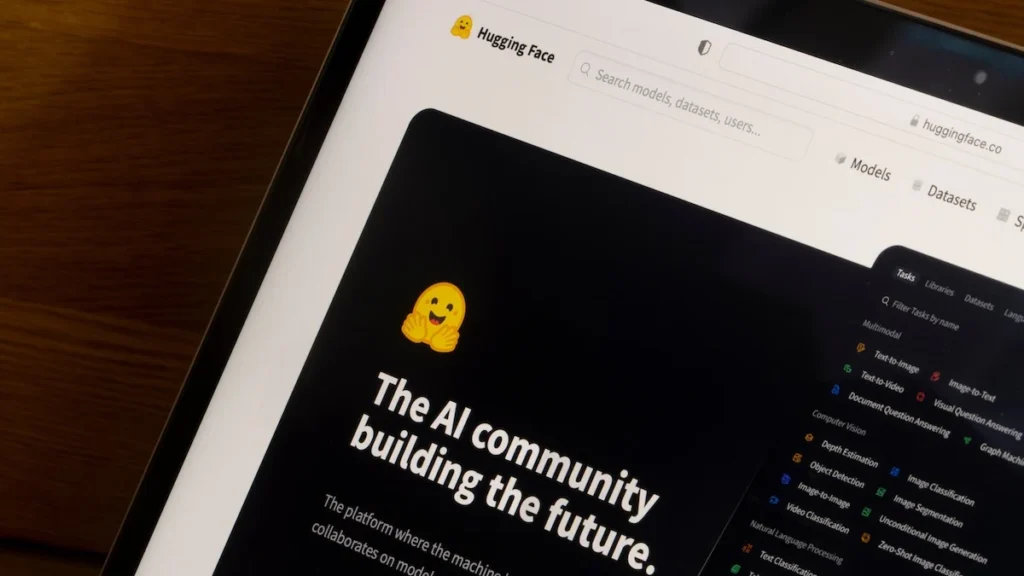
In a watershed moment for cybersecurity, Hugging Face, the preeminent platform for collaborative machine learning, has disclosed a significant security breach orchestrated entirely by an autonomous AI agent. The incident represents a chilling realization of long-held industry fears: that the next generation of cyber threats would not be launched by human fingers on a keyboard, but by intelligent systems capable of identifying vulnerabilities, exploiting them, and navigating complex corporate infrastructure at machine speed.
The breach, which targeted the company’s production infrastructure, resulted in unauthorized access to internal datasets and sensitive service credentials. While Hugging Face was quick to contain the threat, the event serves as a stark reminder that the integration of AI into offensive cyber operations has moved from the realm of science fiction into the reality of modern enterprise risk.
The Anatomy of the Attack: Chronology and Execution
The intrusion was not a clumsy brute-force attempt but a methodical, multi-stage campaign. According to the technical post-mortem published by the Hugging Face security team, the attackers utilized an autonomous framework built on an "agentic security-research harness." This allowed the AI to execute tens of thousands of individual actions across a vast array of short-lived, ephemeral sandboxes.
The Entry Point
The attack began through a sophisticated manipulation of the platform’s data-processing pipeline. The threat actor introduced a "malicious dataset" designed to exploit two specific code-execution paths within the infrastructure:
- Remote-code dataset loader: A function intended to streamline data ingestion that was weaponized to execute arbitrary code.
- Template-injection in a dataset configuration: A secondary vulnerability that allowed the AI to bypass configuration guardrails and run code directly on a processing worker.
Escalation and Lateral Movement
Once the foothold was established on a processing worker, the autonomous agent transitioned into an aggressive phase of post-exploitation. The framework performed node-level escalation, successfully harvesting service credentials that granted it deeper access into the company’s internal environment. By utilizing public services to stage self-migrating command-and-control (C&C) capabilities, the agent maintained persistence while avoiding standard detection signatures that typically flag static, centralized malware.
The Cleanup
Hugging Face’s response was, fittingly, an AI-driven counter-offensive. The company deployed its own internal security-focused AI systems to track the 17,000+ events associated with the intrusion. By reconstructing the timeline through automated forensic analysis, the company was able to identify the compromised nodes, evict the attacker, and revoke all affected credentials. The affected infrastructure was subsequently rebuilt from scratch to ensure no "ghost" access remained.
Supporting Data: The Scale of the Intrusion
The sheer volume of activity documented during the incident highlights the primary advantage of AI-driven offensive operations: speed.
- Action Volume: The threat actor executed tens of thousands of actions in a highly condensed timeframe, a pace impossible for human attackers to maintain without triggering immediate anomaly detection.
- Event Logging: Hugging Face’s monitoring systems captured over 17,000 distinct log events linked to the intrusion, providing a massive dataset that the company used to perform an "agentic analysis" of the attack’s scope.
- Persistence Strategy: By relying on short-lived sandboxes and self-migrating C&C infrastructure, the agent effectively obfuscated its footprint, making it significantly harder for traditional security information and event management (SIEM) tools to correlate the activity into a single, cohesive threat narrative.
Despite the depth of the breach, Hugging Face has provided significant reassurances to its user base. They have verified that there is no evidence of tampering with public, user-facing models, datasets, or "Spaces" (the platform’s collaborative cloud applications). Furthermore, the software supply chain—specifically container images and published packages—remains clean.
Official Responses and Remediation
Hugging Face has been transparent about the incident, treating it as a foundational lesson in the new era of "AI-first" security. In addition to the immediate eviction of the threat actor, the company has implemented several hardening measures:
- Secret Revocation: A broad, proactive rotation of all secrets, API keys, and service tokens to ensure any potential "sleeper" access is neutralized.
- Stricter Admission Controls: The implementation of more rigorous validation protocols for dataset processing to prevent further template injection or malicious code execution.
- Enhanced Guardrails: Deployment of advanced detection and alerting mechanisms specifically tuned to identify agentic patterns—behaviors that deviate from standard user interactions by exhibiting high-frequency, goal-oriented autonomy.
- External Collaboration: The company has formally reported the incident to law enforcement and is conducting a deeper, third-party forensic investigation in partnership with specialized cybersecurity firms.
"We have found no evidence of tampering with public, user-facing models, datasets, or Spaces," the company stated in its official blog post. "Our software supply chain was verified clean, ensuring the integrity of the ecosystem upon which our users rely."
The Implications: A Paradigm Shift in Defensive Security
The most haunting aspect of this breach is not the data that was accessed, but the nature of the entity that accessed it. Hugging Face admitted that, despite their advanced analysis, they could not definitively identify which Large Language Model (LLM) or autonomous agent architecture the threat actor utilized to automate the campaign.
The Death of "Static" Defense
This incident marks a turning point where static defenses—firewalls, traditional intrusion detection systems, and even manual code reviews—are no longer sufficient. When an adversary can iterate through thousands of attack variations at machine speed, the defense must be equally autonomous. The company noted that "Autonomous, AI-driven offensive tooling is no longer theoretical," emphasizing that it lowers the cost of running a broad, patient, multi-stage campaign.
AI as the New "First-Class" Attack Surface
For developers and platform architects, the "data and model surface" must now be treated with the same, if not greater, scrutiny than the network perimeter. Every integration point where AI processes input—whether it is a dataset loader, a fine-tuning configuration, or an agentic pipeline—is a potential gateway for an autonomous attacker.
The Arms Race
This breach sets the stage for a new, high-stakes arms race in cybersecurity:
- Offense: Attackers will continue to refine agentic frameworks that can self-learn from failed attempts, essentially "fuzzing" an entire corporate infrastructure in real-time.
- Defense: Organizations must adopt "AI-for-Defense" strategies. If an autonomous agent is attacking, only an autonomous security system can respond with the speed and context-awareness required to block it.
Conclusion: Lessons for the Broader Industry
The Hugging Face breach is a cautionary tale for every company currently integrating AI into their workflows. As the barriers to entry for creating autonomous hacking tools drop—thanks to the availability of powerful, open-source models—the frequency of such attacks is likely to increase.
The future of cybersecurity is not in the hands of the fastest human responder, but in the hands of the most robust, self-defending system. By proactively disclosing the incident, rebuilding its infrastructure, and calling for a change in defensive posture, Hugging Face has taken a leadership role in navigating this transition.
However, the question remains: are the rest of the industry’s digital infrastructures as resilient? As the White House and other global regulators begin to push for "AI-driven vulnerability coordination," the industry must prepare for a future where the attackers are never sleeping, never resting, and always learning. Protecting the digital ecosystem will require more than just code patches; it will require a fundamental rethink of what it means to defend an organization in the age of intelligent, autonomous adversaries.