






Technology is often heralded as a marvel of modern convenience—until it fails. For the average user, a frozen smartphone is a nuisance resolved by a simple reboot. However, in the high-stakes world of autonomous transportation, a system failure lasting even a fraction of a second is not merely an inconvenience; it is a profound safety hazard.
As cities and logistics hubs transition toward automated mobility, the margin for error shrinks to near zero. If a train’s onboard computer fails to detect an obstacle on the tracks for a nanosecond, or if a centralized traffic management system glitches when emergency vehicles are in transit, the physical consequences are catastrophic. As digital solutions become the core of our transit systems, they are only as robust as the physical infrastructure that supports them.
Main Facts: The Pillars of Automated Mobility
Autonomous transportation networks represent a complex, interconnected ecosystem of self-driving machines. These systems function without human intervention, relying on the convergence of Artificial Intelligence (AI), edge computing, 5G connectivity, and the Internet of Things (IoT).
The primary objective is clear: to optimize traffic flow, mitigate human-error-related accidents, enhance mobility, and drive down operational costs. Yet, beneath the veneer of self-driving passenger cars, long-haul autonomous freight trucks, and AI-guided rail systems, lies a massive dependency on physical network infrastructure. Cameras, LiDAR sensors, wireless access points, and traffic signals require constant, uninterrupted power and high-speed data transmission. Even a momentary lapse in connectivity can compromise the decision-making capabilities of these autonomous units, leading to delayed reactions or total system shutdowns.
A Chronology of the Autonomous Shift
The journey toward fully autonomous transport has been a decade-long evolution defined by rapid technological maturation and shifting regulatory landscapes:

- 2015–2020: The Experimental Phase: During this period, companies like Waymo began aggressive testing of robotaxis in controlled environments. Meanwhile, the development of V2X (Vehicle-to-Everything) communication began to take shape as the standard for vehicle interaction with traffic infrastructure.
- 2021–2023: Scaling and Regulatory Breakthroughs: Major breakthroughs occurred as jurisdictions in the U.S., particularly in Texas and Arizona, began codifying laws to permit autonomous trucking.
- 2024: The Infrastructure Realization: The industry shifted its focus from merely "training" autonomous vehicles to "hardening" the environment in which they operate. The realization dawned that software brilliance cannot overcome poor, unreliable hardware connectivity.
- 2026 and Beyond: Industry leaders, including Bosch Engineering, are moving toward fully automated rail operations. With projects aimed at seamless automated shutdown and recovery protocols, the year 2026 stands as a pivotal milestone for testing the full-scale reliability of automated rail systems.
Supporting Data: The Criticality of Connectivity
The reliance on data-driven decision-making is immense. An autonomous vehicle does not "see" the road in the human sense; it interprets a constant stream of information from cloud platforms, high-definition mapping systems, and roadside sensors.
When we look at the requirements for these systems, the data throughput is massive. Autonomous systems demand transmission speeds reaching gigabits per second. To manage this without latency, the industry is increasingly adopting Edge Computing. By processing data closer to the source—at the railyard or the street corner—systems can respond in real-time.
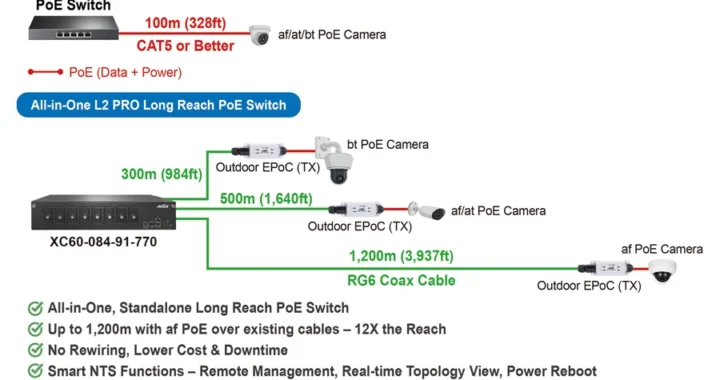
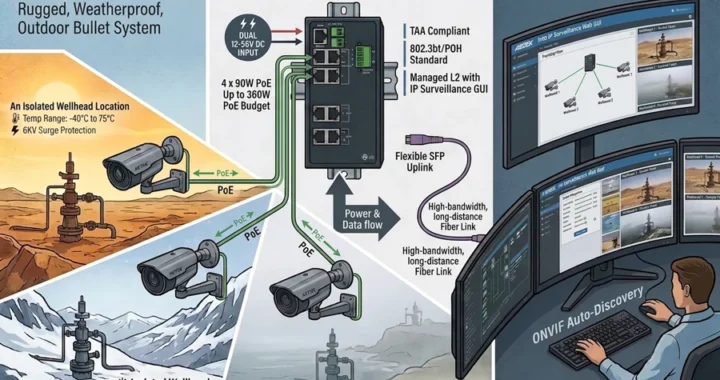
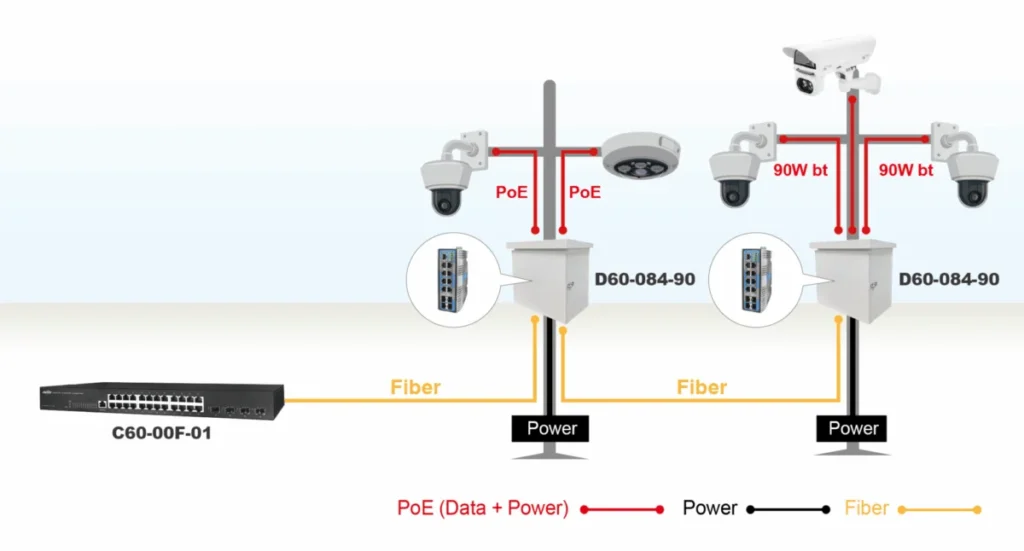
However, this decentralization requires hardware that can survive the "real world." Unlike a controlled server room, network switches in these environments must withstand temperatures ranging from -40°C to 75°C, high vibration, and fluctuating power sources. This is where Power over Ethernet (PoE) technology has become the industry standard. By consolidating power and data into a single Ethernet cable, PoE simplifies the deployment of sensors, cameras, and access points while reducing the points of failure in the physical architecture.
Official Responses and Industry Standards
Industry leaders and manufacturers are responding to these challenges by prioritizing industrial-grade durability. Versa Technology, for example, has leveraged over 30 years of experience in harsh-environment networking to address these specific vulnerabilities.
"Autonomous systems rely on AI to process data from multiple endpoints," notes a representative from Versa Technology. "When you have hundreds of sensors deployed, you cannot afford a central failure. Our goal is to provide segmented, high-speed, and industrial-hardened PoE solutions that allow for continuous operation even in the event of power surges or environmental extremes."

The shift is moving toward integrated systems like the D60 series of smart switches. These devices are designed specifically to act as the backbone for outdoor IP cameras and sensors, offering layer 2 and 3 security features that ensure the integrity of the data stream. Furthermore, the integration of Uninterruptible Power Supplies (UPS) with PoE switches ensures that even during a grid failure, critical transit infrastructure—such as traffic signals and collision-avoidance sensors—remains operational.
Implications: The High Stakes of Network Resilience
The implications of this technological transition are far-reaching, affecting urban planning, logistics, and public safety.
The Human-Infrastructure Interdependence
While the "driver" is being removed from the equation, the human element remains paramount in terms of oversight. Traffic control centers now act as the "brain," while the network infrastructure acts as the "nervous system." If the nervous system is damaged or experiences latency, the brain cannot react to an emergency, such as an ambulance attempting to clear a busy intersection.
Operational Efficiency vs. Reliability
Autonomous freight, such as the Level 5 trucks now testing in California, represents a massive opportunity to lower shipping costs and increase speed. However, if the infrastructure fails, the cost-benefit analysis shifts instantly. A stranded autonomous truck in a remote location is a logistical nightmare that requires human intervention, effectively negating the efficiency gains that automation promised to deliver.
The Future of Rail
The transition to automated rail, as highlighted by the Bosch Engineering projects, promises to increase track capacity and safety. By using smart sensors that can recognize obstacles and trigger automatic stops, railways can move from scheduled operations to demand-responsive ones. Yet, this relies heavily on the "handshake" between the train’s sensors and the trackside equipment. If the communication channel drops, the train must default to an emergency stop, causing ripple-effect delays across the entire network.

Toward a Robust Future
As we look toward the future, the integration of 5G, fiber optics, and PoE-powered edge computing will define the next generation of transportation.
The success of these systems depends on a holistic approach:
- Redundancy: Ensuring that every network node has a backup power source, such as a UPS-backed PoE switch.
- Environmental Hardening: Using equipment rated for extreme temperatures and vibration.
- Real-time Diagnostics: Implementing network topology maps and remote diagnostic tools to identify and repair faults before they cause system-wide downtime.
Ultimately, the autonomous transportation revolution is not merely a software challenge. It is a monumental task of physical engineering. As we continue to automate our world, the reliability of our network infrastructure will remain the deciding factor between a future of safe, efficient mobility and a future of stalled, dangerous systems.
For engineers and city planners, the priority is clear: build the foundation with the same rigor you apply to the code. By leveraging hardened, industrial-grade networking solutions, we can ensure that our autonomous future is not just innovative, but inherently safe. To explore how resilient network infrastructure can support your next transportation project, industry specialists remain available to consult on the specific requirements of high-density sensor deployment and mission-critical connectivity.
In the race toward autonomy, the winner will not necessarily be the one with the best software, but the one with the most reliable, unshakeable backbone.