







ORLANDO, FL – From November 17 to 19, the epicenter of the global telecommunications industry shifted to Orlando, Florida, as thousands of engineers, policy makers, and corporate leaders converged for the annual Broadband Nation Expo. The three-day summit served as a high-stakes forum for dissecting the rapid evolution of digital infrastructure, the rise of the data center as the new network core, and the urgent need for standardized quality frameworks in an era defined by artificial intelligence.
At the heart of the discourse was Telecommunications Industry Association (TIA) CEO Dave Stehlin, whose keynote address anchored the event. Stehlin’s message was clear: broadband is no longer a luxury utility—it is the foundational bedrock of the modern global economy, supporting critical services and shaping the very nature of human interaction.
The Evolution of Connectivity: A Chronology of Progress
To understand where the industry is heading, the Broadband Nation Expo spent significant time contextualizing how far the sector has traveled in a remarkably short window.
The industry’s trajectory represents one of the most aggressive technological shifts in human history. The transition from legacy analog, copper-based voice networks to the current era of high-capacity fiber optics, next-generation wireless systems, and low-earth-orbit satellite connectivity was not merely an upgrade; it was a total reimagining of how society functions.
A Timeline of Digital Acceleration
- The Mid-1990s Foundation: Following the widespread commercialization of the internet, the U.S. began an unprecedented capital expenditure cycle. Over the last three decades, more than $2.2 trillion has been poured into American communications infrastructure.
- The 2024 Investment Surge: Despite economic headwinds, 2024 saw an injection of $90 billion into the sector, focusing heavily on fiber expansion and 5G deployment.
- The Speed-Cost Inversion: Since the dawn of the broadband era, the cost per megabit has plummeted by 98 percent, while network speeds have increased by orders of magnitude. This inverse relationship between cost and capacity has been the primary engine for modern innovation, enabling everything from video streaming to tele-health.
Stehlin highlighted a crucial historical comparison: while electricity took decades to reach a quarter of the U.S. population, the internet achieved that milestone in just seven years. The adoption rate for generative AI has been even faster, signaling that the "innovation cycle" is compressing. As networks improve, they enable new technologies, which in turn place higher demands on those very networks, creating a self-reinforcing loop of progress.
Supporting Data: The Scale of the Modern Ecosystem
The sheer volume of data moving across the globe today is staggering. The modern network landscape is no longer a collection of siloed wires; it is a single, interconnected fabric supporting more than 5.5 billion internet users.
The Wireless Dominance
According to 2024 industry metrics shared at the Expo, wireless networks now carry more than 60 percent of all global internet traffic. This transition underscores the vital importance of radio access networks (RAN) and backhaul infrastructure. The "wireless-first" behavior of modern consumers and enterprises has forced a recalibration of how network operators design their infrastructure, shifting focus from fixed-point delivery to ubiquity and seamless mobility.
Data Center Projections
The data presented by industry analysts at the Expo—supported by McKinsey’s recent projections—paints a picture of a massive infrastructure build-out. Global data center investment is expected to exceed $6 trillion by 2030. This is not merely an expansion of existing floor space; it is a move toward "AI-centric" architectures. These facilities require substantially higher computing density and, critically, significantly more energy capacity than the data centers of even five years ago.
Data Centers: The New Network Core
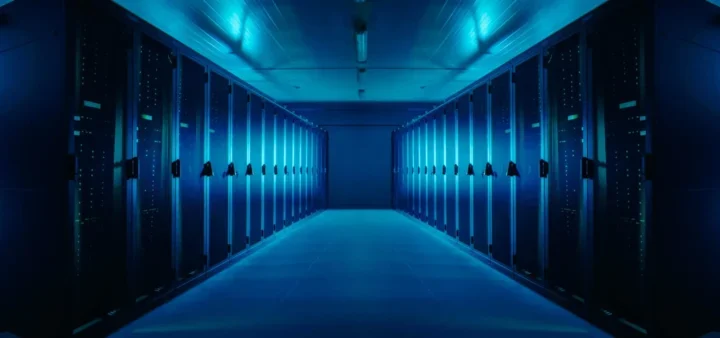
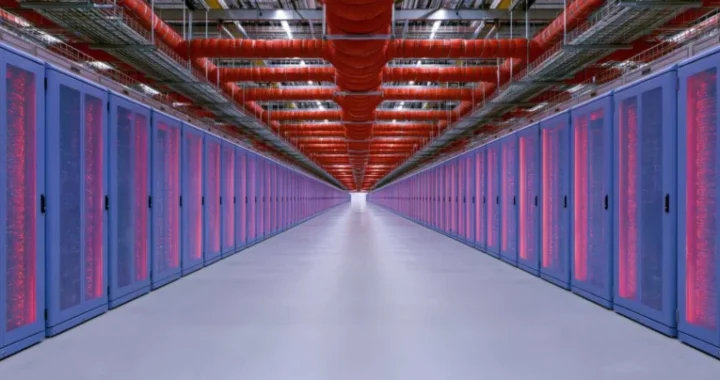
Perhaps the most significant theme of the 2024 Broadband Nation Expo was the shift in the "center of gravity" for telecommunications. For years, the industry focused on the "last mile" of fiber or the reach of a cell tower. Today, the focus has shifted to the data center.
Stehlin explained that data centers have evolved from mere storage facilities into the "core of the modern network." They are the engines that process massive cloud workloads and the training grounds for the AI models currently disrupting every sector of the economy.
The Challenge of Complexity
As these facilities grow in scale, they become more complex to manage. The consequences of even minor disruptions are now global in scope. An outage at a major hub no longer affects a neighborhood; it disrupts regional banking, healthcare, and logistics.
Consequently, there is a mounting pressure for "high availability." Operators are being pushed to adopt more rigorous, consistent operational practices. The industry is moving away from bespoke, site-specific management styles toward a more unified approach to quality and risk mitigation.
Official Responses: The TIA Quality Initiative
In direct response to the risks associated with scaling data center operations, the TIA and its QuEST Forum community officially launched the Data Center Quality Initiative during the Expo.
This initiative is designed to provide a global standard for data center operations, built upon the rigorous principles of Total Quality Management (TQM). The goal is to provide a framework that guides reliability, physical and digital security, and continuous improvement across the entire facility lifecycle.
Industry Consensus and Collaboration
The program has already garnered significant momentum. Hyperscalers—the massive cloud providers that dominate the digital landscape—along with major social media platforms, have signed on to participate. Google, in particular, is working closely with TIA to help drive the development and adoption of these standards.
"The momentum here in Orlando signals a profound industry consensus," Stehlin noted during his address. "The era of the ‘black box’ data center is over. We need performance, we need predictability, and most importantly, we need to maintain public and corporate trust as demand for digital capacity hits a fever pitch."
Implications: The Hurdles to Sustainable Growth
Despite the optimistic projections, the Expo was not without its sobering moments. Industry leaders openly discussed the structural bottlenecks that threaten to derail the ambitious expansion plans shared throughout the week.
The Talent Gap
The most immediate challenge is the workforce. Building a high-performance, AI-ready nation requires an army of specialized labor. From fiber-optic technicians and data center engineers to cybersecurity analysts, the supply of trained professionals is failing to keep pace with demand. State governments and academic institutions are under pressure to launch accelerated training programs, but the "talent pipeline" remains a critical bottleneck.
Regulatory and Permitting Friction
Stehlin was candid regarding the administrative hurdles facing the industry. Even when capital is available and engineering plans are solid, projects are frequently bogged down by slow permitting processes. Whether it is the installation of new fiber lines, the upgrading of subsea cable routes, or the hardening of landing points, regulatory red tape continues to delay the deployment of infrastructure that is vital to national competitiveness.
Security in a Hyper-Connected World
Finally, the Expo addressed the fragility of the physical layer. Subsea cable systems carry almost all global traffic, yet their landing points—the physical places where cables connect to the terrestrial grid—remain vulnerable. The consensus among the experts was that current safeguards are insufficient for the modern threat landscape. Improving operational security at these critical chokepoints is now viewed as a national security imperative.
Conclusion: A Common Purpose
As the Broadband Nation Expo concluded, the overarching takeaway was one of collaboration. The event successfully bridged the gap between technology providers, private network operators, and government partners.
By aligning these disparate groups around a "common purpose"—the expansion of high-performance, secure, and reliable connectivity—the TIA is setting the stage for the next decade of infrastructure development. While the challenges of workforce shortages, permitting delays, and operational security remain, the momentum in Orlando suggests that the industry is better prepared than ever to tackle them.
The path forward, as envisioned by TIA and its partners, relies on the continuous evolution of standards and a commitment to quality. As the world becomes increasingly defined by the data moving through its core, the work being done to secure that path will determine the economic and social stability of the next generation.