




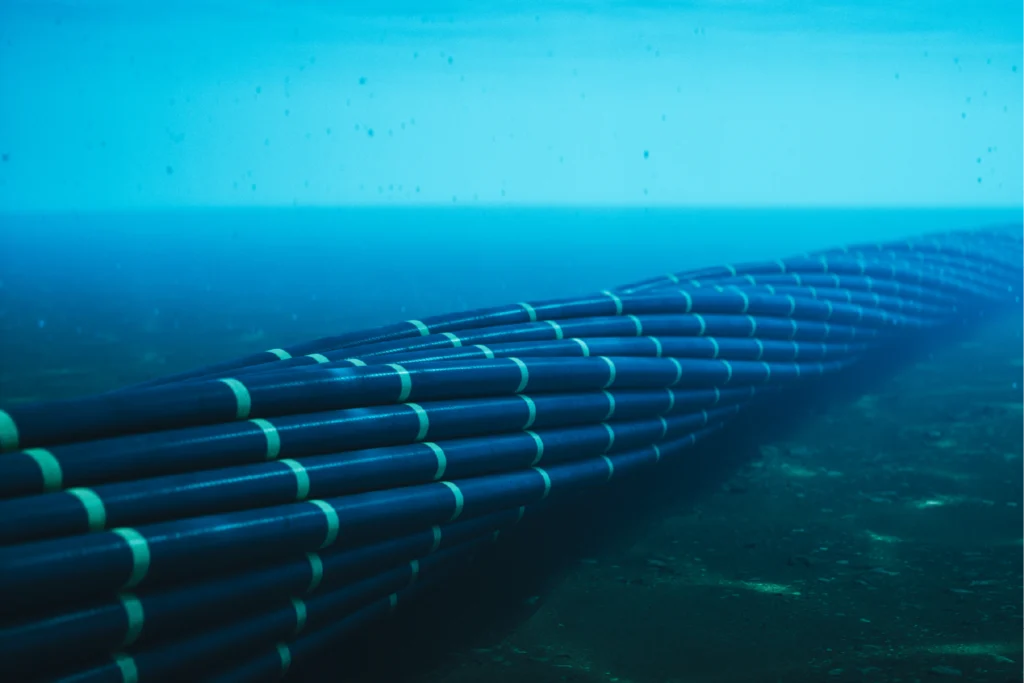
MALAGA, Spain, September 21, 2026 — In a move that signals a seismic shift in the global telecommunications supply chain, Lightera, a global leader in optical fiber technology, today announced a massive capital investment aimed at tripling its submarine optical fiber manufacturing capacity by 2029. With facilities in Brøndby, Denmark, and Norcross, Georgia, serving as the cornerstone of this expansion, Lightera is positioning itself to be the primary architect of the next generation of undersea internet infrastructure.
This strategic initiative comes at a critical juncture for the digital economy, as the insatiable demand for bandwidth—fueled by the rapid deployment of generative artificial intelligence (AI), hyperscale data centers, and cloud computing—places unprecedented pressure on the existing global subsea network.
The Catalyst: A World Hungry for Bandwidth
The modern internet is a physical construct, anchored by thousands of miles of fiber-optic cables snaking across the ocean floor. As data traffic continues to grow exponentially, the reliability and capacity of these subsea highways have become a matter of national security and economic stability.
Lightera’s decision to commit to this expansion is not merely reactive; it is an exercise in foresight. By maintaining direct relationships with both submarine cable manufacturers and the world’s largest hyperscale tech companies, Lightera has gained a unique vantage point into the trajectory of global data flows. Because optical fiber is typically procured roughly 12 months in advance of cable deployment, Lightera’s order books offer a window into the infrastructure needs of 2027, 2028, and beyond.
The current market is defined by a "perfect storm" of demand:
- The AI Revolution: Large Language Models (LLMs) and distributed AI training require massive, low-latency data transfers between global data centers.
- Cloud Decentralization: Enterprises are moving away from centralized servers to distributed cloud architectures, requiring high-throughput, low-latency backbones.
- Global Network Modernization: Many subsea cables installed in the early 2010s are reaching the end of their operational lifecycles, necessitating a massive wave of replacement and expansion.
Chronology of an Infrastructure Pivot
The timeline for this expansion is meticulously calculated to align with the anticipated technological leap to multicore fiber (MCF).
- Q3 2026 (The Announcement): Lightera formally initiates the capital investment phase. This involves upgrading high-precision manufacturing lines in Brøndby and Norcross to accommodate increased volume and specialized fiber production.
- 2027–2028 (The Scale-Up): The company will execute a phased rollout of new equipment and workforce expansion, ensuring that the existing supply chain for standard single-mode fiber remains uninterrupted while capacity begins its climb.
- 2029 (The Milestone): Lightera expects to reach its goal of nearly tripling current manufacturing capacity. This year marks the completion of the foundational expansion.
- 2029–2030 (The Next Frontier): The company targets the commercial deployment of multicore fiber (MCF). This shift represents a generational change in fiber design, allowing for significantly higher data density per cable strand.
Bridging the Technology Gap: The Move to Multicore Fiber
While the immediate goal is to satisfy the current demand for high-performance optical fiber, Lightera is simultaneously preparing for the next frontier: Multicore Fiber (MCF).
Current fiber-optic technology relies on a single core within the glass strand to transmit data. As physical limits are approached in terms of how much data can be pushed through a single core using light waves, the industry is looking toward MCF. By housing multiple cores within a single cladding, Lightera will enable cable operators to multiply the transmission capacity of a single cable without necessarily increasing the physical size or complexity of the subsea cable itself.
“By expanding capacity today while preparing for multicore fiber, we are ensuring Lightera remains the partner of choice for customers building the next generation of global communications infrastructure,” said Holly Hulse, Chief Executive Officer of Lightera.
This dual-track strategy ensures that Lightera is not just playing the "volume game" to meet today’s orders, but is also innovating the technical specifications of tomorrow’s global networks.
Official Responses and Corporate Strategy
In her statement regarding the expansion, CEO Holly Hulse emphasized the long-term commitment of the organization. "As demand for global bandwidth continues to accelerate, the industry will require both greater manufacturing capacity and next-generation optical technologies," Hulse remarked.
This investment is described as part of a broader, systemic series of strategic moves by the Furukawa Electric Group—the parent entity of Lightera—to secure the infrastructure that underpins the modern world. By integrating Lightera’s high-performance solutions with the broader technical expertise of the Furukawa group, the company aims to solidify its position as an essential supplier for the defense, aerospace, and data center sectors.
Lightera’s dual-hub manufacturing model is also a testament to the importance of regional resilience. By maintaining primary manufacturing facilities in both Europe (Denmark) and North America (Georgia), the company mitigates the risks associated with global supply chain disruptions, ensuring that both Atlantic and Pacific cable projects can be serviced with agility and speed.
Implications for the Global Economy
The ramifications of Lightera’s expansion extend far beyond the telecommunications industry.
1. Strengthening the Digital Backbone
Submarine cables carry over 99% of the world’s intercontinental data traffic. A shortage in high-performance optical fiber acts as a bottleneck for the entire digital economy. By tripling production, Lightera is effectively lowering the barrier to entry for new cable projects, which in turn encourages more investment in digital infrastructure in developing regions, particularly in Africa and Southeast Asia.
2. Supporting Generative AI and HPC
Generative AI requires a level of connectivity that was unimaginable just five years ago. To train models, massive datasets must be moved between data centers located in different hemispheres. Lightera’s fiber is designed for the low-loss, high-speed requirements of these applications, making this expansion an indirect stimulus for the global AI industry.
3. Sustainability and Reliability
As part of the Furukawa Electric Group, Lightera is deeply invested in the concept of "sustainable connectivity." The expansion projects incorporate the latest in green manufacturing processes, aimed at reducing the energy footprint of the production line. Furthermore, high-performance fiber reduces the need for frequent signal regeneration, leading to more energy-efficient undersea networks over the long term.
The Technical Landscape: Why Fiber Quality Matters
For the layperson, "fiber" may seem like a commodity, but for the engineers designing the undersea networks that span the Atlantic or the Pacific, the quality of the glass is paramount. Subsea fiber must withstand extreme pressure, temperature fluctuations, and the harsh environment of the ocean floor for 25 years or more.
Lightera’s facilities in Norcross and Brøndby employ proprietary optical science to create fiber with exceptional attenuation (signal loss) characteristics. As networks move toward higher-order modulation schemes—where more data is packed into every light pulse—the signal-to-noise ratio requirements become increasingly stringent. Lightera’s ability to manufacture fiber that meets these ultra-high specifications at scale is what differentiates it from lower-cost, lower-performance competitors.
Conclusion: Securing the Future
The announcement from Malaga marks a defining moment for Lightera. By committing to a tripling of capacity, the company has signaled to the hyperscalers, the telecommunications providers, and the global governments that it is ready to shoulder the burden of the coming data explosion.
As we look toward 2029 and the era of multicore fiber, Lightera’s strategic investment provides a blueprint for how a global manufacturer can adapt to a rapidly evolving technological landscape. Through a combination of geographical foresight, deep industry partnerships, and a commitment to next-generation R&D, Lightera is not merely supplying the cables of the future—it is building the foundation of the connected world.
About Lightera
Lightera is a global leader in optical fiber and connectivity solutions. Built on a legacy of expertise in optical science, the company provides high-performance solutions that enable faster, more reliable, and sustainable connections for businesses, communities, and industries worldwide. With operational headquarters in Norcross, Georgia, Lightera serves customers across a diverse range of sectors, including telecommunications, generative AI, data centers, 5G/6G, aerospace, and defense. Lightera is a proud member of the Furukawa Electric Group.
For more information, please visit www.lightera.com.
PR Contact:
Sherry Salyer
[email protected]