



Executive Summary: A Pivotal Moment for Nuclear Power
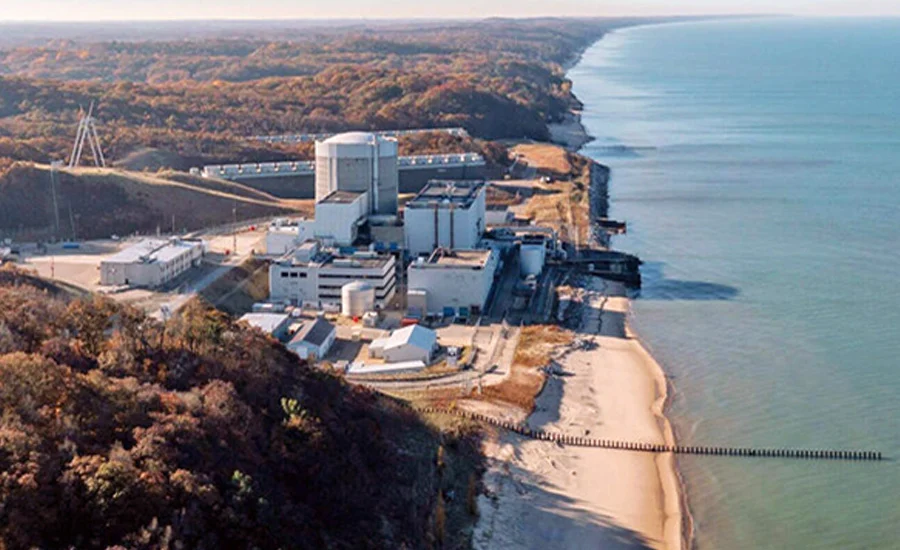
Holtec International, the Florida-based nuclear technology firm, is currently navigating a complex period of rapid infrastructure expansion and financial recalibration. On September 15, the company announced that federal regulators have granted a critical exemption, clearing the way for permanent excavation-support work for two planned small modular reactors (SMRs) at the Palisades nuclear site in southwest Michigan.
This development coincides with the company’s high-stakes effort to restart the existing 805-MW Palisades nuclear plant, a project that—if successful—will mark the first time a permanently shuttered commercial nuclear reactor in the United States has been brought back online. However, these ambitious operational milestones are occurring against a backdrop of financial turbulence, as the company recently postponed its highly anticipated initial public offering (IPO), citing cooling market enthusiasm and investor concerns regarding corporate governance.
The Regulatory Green Light: Laying the Foundation for Pioneer Units 1 & 2
The U.S. Nuclear Regulatory Commission (NRC) has provided Holtec with a crucial procedural advantage: the authorization to install permanent excavation-support walls for the proposed "Pioneer Units 1 and 2."
Because these structures—which include diaphragm walls, soldier-pile soil-mix walls, and perimeter cutoff walls—are designed to remain buried, the NRC classifies them as permanent construction. The exemption, granted in late August, allows Holtec to proceed with stabilizing deep excavations, managing groundwater, and readying the ground for the nuclear island and turbine structures while the broader review for a Limited Work Authorization (LWA) continues.
Strategic Rationale and Regulatory Risk
Holtec argued that waiting for the comprehensive LWA would impose "substantial costs" and jeopardize the construction timeline for the Pioneer SMRs. By initiating the work now, the company aims to maintain momentum on a project that is slated to provide roughly 680 MW of carbon-free power.
However, this "head start" comes with significant regulatory caveats. The NRC has made it clear that this exemption does not guarantee the eventual issuance of a construction permit. Holtec is effectively proceeding at its own risk, shouldering the financial burden of pre-construction work without the security of a finalized regulatory approval. To mitigate concerns regarding the obscuring of subsurface geology during this process, Holtec has committed to an rigorous documentation protocol, which includes extensive photography and surveying of exposed rock and soil to ensure the site’s geologic model remains accurate for future licensing phases.
Chronology of the Palisades Renaissance
The path to the current status of the Palisades site has been one of rigorous technical intervention and regulatory oversight.
- 2022: Palisades officially ceases commercial operations, triggering the decommissioning process.
- 2023: Holtec secures federal cost-share funding of up to $400 million from the U.S. Department of Energy (DOE) for the development of the Pioneer SMRs.
- January 2026: ENR reports that technical challenges, including steam-generator repairs and turbine-generator reassembly, have pushed back the expected restart date of the legacy plant to later in the year.
- August 30, 2026: Holtec initiates fuel loading for the existing reactor, transitioning the plant into "Mode 6" (refueling) status.
- September 15, 2026: The NRC grants the exemption for permanent excavation-support work for the two new SMR units.
- September 16, 2026: Holtec postpones its planned $750 million to $900 million IPO, citing unfavorable market conditions.
Supporting Data and Technical Scope
The restart of the legacy plant is a massive undertaking involving the integration of new fuel with partially used assemblies from the plant’s final cycle. Technical upgrades have been extensive, including:
- Steam Generator Reinforcement: Critical to ensuring long-term thermal efficiency and safety.
- Nozzle Replacement: Replacing control-rod-drive mechanism nozzles to address degradation.
- Vessel Inspections: Comprehensive testing of the reactor pressure vessel to meet modern safety standards.
Regarding the Pioneer SMR project, the financial scale is significant. Each unit is estimated to cost between $2.1 billion and $2.7 billion. These reactors are central to Holtec’s partnership with Hyundai Engineering & Construction, which envisions a 10-GW North American SMR fleet. The project is designed to address the surging demand for baseload power, particularly for energy-intensive sectors like artificial intelligence and data centers.
Official Responses and Corporate Governance
The postponement of the IPO on September 16, 2026, was a significant blow to the company’s capital-raising strategy. Holtec had intended to sell 50 million shares in the $15–$18 range.
The Governance Hurdle
A primary point of contention for potential institutional investors was the proposed dual-class share structure. Founder and CEO Krishna "Kris" Singh was slated to retain significant control through a holding company owning Class B shares, which carry 10 votes each, compared to the single vote per Class A share offered to the public.
Critics and market analysts, including those cited in Barron’s, expressed concern that this structure would insulate leadership from shareholder accountability. In response to these concerns, and coupled with a general cooling of the "nuclear-for-data-centers" investment narrative, Singh characterized the market climate as a "perfect storm."
Leadership Perspective
In his remarks to the Financial Times, Singh remained optimistic about the long-term viability of the company, emphasizing that Holtec possesses alternative pathways to secure the necessary capital for its nuclear initiatives. He noted that the company could potentially revisit the IPO market within three to six months, provided that market sentiment regarding AI-driven energy demand stabilizes.
Implications: The Road Ahead
The dual track of restarting an aging reactor while simultaneously breaking ground on next-generation SMR technology represents one of the most ambitious industrial projects in the modern U.S. energy sector.
Implications for the Energy Grid
The successful return of the Palisades plant to the grid would serve as a landmark case study for the nuclear industry, proving that retired assets can be rehabilitated to meet current energy demands. If the Pioneer SMRs also proceed on schedule, the Palisades site will become a flagship for nuclear rejuvenation, transforming from a decommissioned asset into a massive, multi-reactor power hub.
Implications for Future Investors
For the broader investment community, the Holtec situation highlights the disconnect between the long-term strategic necessity of nuclear power and the short-term volatility of public equity markets. Investors are increasingly cautious, balancing the undeniable need for carbon-free, high-density power with skepticism regarding corporate transparency and the high capital intensity of SMR deployment.
Final Outlook
As of late 2026, the NRC has set a target date of March 31, 2027, to complete its final safety evaluation and environmental impact statement for the broader construction of the Pioneer units. The coming months will be a defining period for Holtec: it must demonstrate technical competence in bringing the legacy reactor to full power while navigating a skeptical financial market.
While the excavation-support work begins, the eyes of the nuclear industry remain fixed on southwest Michigan. The success of Palisades will likely serve as a litmus test for whether the United States can effectively leverage its existing nuclear footprint to anchor the massive expansion of carbon-neutral power required for the next decade of digital and industrial growth. Holtec’s ability to reconcile its internal governance, financial requirements, and regulatory obligations will determine if this ambitious vision becomes a reality or remains an experimental outlier in the energy transition.