






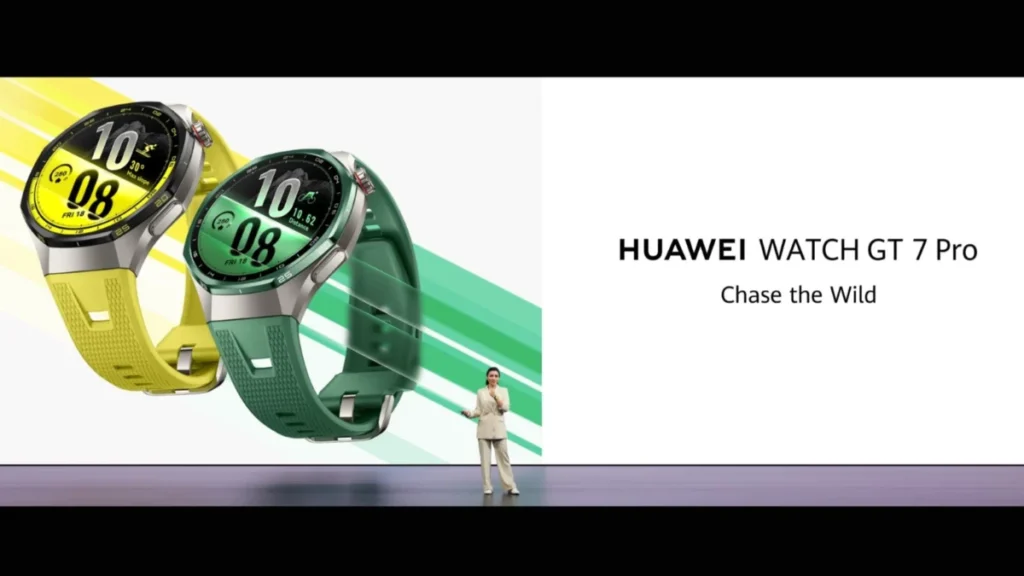
MUNICH, GERMANY — At the high-tech SHOWPALAST arena in Munich, the atmosphere was less about the glitz of consumer electronics and more about the precision of medical science. Under the theme "Chase the Wild," Huawei unveiled a suite of products and platforms that signal a definitive shift in its corporate trajectory. The Chinese technology giant is no longer merely positioning its smartwatches as accessories for the fitness-conscious; it is rebranding them as critical nodes in a global digital health infrastructure.
With the global launch of the HUAWEI WATCH D3 and the introduction of the Terve Research platform, Huawei is attempting to bridge the gap between "wellness tracking" and "clinical-grade monitoring." This strategic evolution comes at a time when the wearable market is reaching a saturation point with basic step-counters, forcing industry leaders to find differentiation through medical validation, sophisticated data collection, and academic partnerships.
I. Main Facts: A Dual-Track Strategy of Hardware and Infrastructure
Huawei’s latest announcement centers on two pillars: high-precision hardware and a collaborative data ecosystem.
The WATCH D3: Redefining Hypertension Management
The centerpiece of the hardware announcement is the WATCH D3. Unlike most smartwatches that estimate blood pressure using Photoplethysmography (PPG) sensors—which can be inconsistent—the Watch D3 utilizes a hybrid approach. It combines a miniature pump and physical airbag (oscillometric measurement) with PPG-based continuous trend monitoring.
This device is specifically designed to address the challenges of Ambulatory Blood Pressure Monitoring (ABPM). Traditional ABPM devices are often bulky and disruptive, requiring frequent cuff inflations that disturb sleep. The Watch D3 mitigates this by using four high-precision micro-pump measurements during the day and only three at night, relying on PPG to fill the data gaps between physical inflations.
Terve Research: The European Data Bridge
Parallel to the hardware, Huawei introduced Terve Research, an online platform designed to connect the vast amounts of data generated by European wearable users with the needs of academic and medical institutions. Managed independently by the medical technology provider Thryve, Terve allows researchers to conduct longitudinal studies using real-world data from Huawei users who voluntarily opt into specific health programs.
Portfolio Expansion
Beyond the medical-heavy Watch D3, Huawei bolstered its consumer lineup with the WATCH GT 7 Series, featuring advanced materials like nano-tech ceramic and titanium, and the return of the WATCH 6 Series to the European market. Even the new HUAWEI Mate XT 2 foldable smartphone, launched simultaneously in Guangzhou, now incorporates ECG analysis, proving that health monitoring is becoming a standard feature across Huawei’s entire device ecosystem.
II. Chronology: The Evolution of Huawei’s Health Ambitions
The transition from a manufacturer of "gadgets" to a provider of "health platforms" has been a calculated, multi-year journey.
- 2021: The Genesis of Wrist-Based BP. Huawei launched the first-generation Watch D, marking one of the first successful integrations of a physical blood pressure cuff into a consumer-grade smartwatch. This was the industry’s first step away from "estimation" toward "measurement."
- 2024 (Early): The ABPM Milestone. The introduction of the Watch D2 brought 24-hour Ambulatory Blood Pressure Monitoring to the wrist. This allowed users to track blood pressure fluctuations throughout an entire circadian cycle, a critical metric for diagnosing "masked hypertension."
- September 2, 2024: Global Launch of Watch D3 and Terve. The current phase represents the refinement of the technology. The Watch D3 arrived 17.7% thinner and 9% lighter than its predecessor, solving the ergonomic hurdles that prevented 24/7 wear. Simultaneously, the launch of Terve Research in Munich marked Huawei’s transition from a hardware seller to a research partner.
- Present Day: Huawei now operates three specialized sports and health science laboratories and maintains partnerships with over 160 healthcare institutions globally, signifying the completion of its "full-stack" health ecosystem.
III. Supporting Data: Technical Specifications and Market Context
The pivot toward medical-grade wearables is backed by rigorous certification and a changing market landscape.
Medical Validation and Standards
The WATCH D3 is not merely a "health-style" device; it has received CE Medical Device certification for several key functions:
- Resting blood pressure measurement.
- Ambulatory Blood Pressure Monitoring (ABPM).
- Pre- and post-exercise blood pressure monitoring.
Significantly, Huawei claims the Watch D3 is the world’s first wrist-worn device to pass ISO standards for accurate blood pressure measurement before and after physical activity. This is a high bar to clear, as movement and increased heart rate typically interfere with the accuracy of wrist-based sensors.
Market Trends
According to Counterpoint Research, the global smartwatch market is undergoing a fundamental shift. In its Q2 2024 analysis, the firm began tracking advanced medical features—such as sleep apnea detection, ECG, and blood pressure monitoring—as primary indicators of market health, alongside traditional metrics like shipments and average selling prices (ASPs). This shift suggests that consumers are increasingly willing to pay a premium for devices that offer validated health insights over those that offer mere notifications.
Terve Research Launch Studies
The Terve platform is launching with two specific, high-impact studies:
- Social Jetlag Study: Investigating the health impact of disrupted circadian rhythms and inconsistent sleep patterns across European populations.
- Cardiovascular Risk Study: Examining the direct correlation between specific exercise patterns and long-term cardiovascular health.
IV. Official Responses: A Vision of "Active Health Management"
Leadership at Huawei emphasizes that the goal is to move beyond passive data collection toward a proactive, "full-body" understanding of health.
Rico Zhang, President of Huawei’s Smart Wearable and Health Product Line, highlighted the shift in perspective during the Munich event:
“From metabolic monitoring and active health management to brain activity sensing, wearables are no longer just about your wrist. We are moving toward a complete picture of your health—a full-body system that monitors, understands, and responds. The technology is evolving to a point where the device doesn’t just tell you what happened; it tells you what to do.”
Zhou Hong, President of Huawei Research Institute, Europe, focused on the unique value of "out-of-hospital" data:
“The broader value of wearables lies in their ability to gather health information outside traditional settings. Wearable devices enable fast, convenient, and reliable multimodal measurements anytime and anywhere, providing actionable insights to personalize interventions. The health sector is so promising because the potential for discovery is enormous, and the need has never been greater.”
These statements suggest that Huawei views itself as a decentralized extension of the hospital system, providing the "long-tail" data that doctors usually lack between patient visits.
V. Implications: The Future of the Wearable Industry
Huawei’s strategy carries significant implications for the technology sector, the medical community, and consumer privacy.
1. The End of "Commodity" Fitness Tracking
As basic fitness metrics (steps, calories, heart rate) become standard on even the cheapest devices, premium manufacturers must move into the "medical" space to maintain margins. Huawei’s investment in micro-pumps and airbags for the Watch D3 creates a high barrier to entry for competitors who rely solely on software-based estimations.
2. The "Research Loop" as a Competitive Advantage
By funding the Terve platform, Huawei is creating a self-sustaining feedback loop. Real-world data from millions of users feeds into academic research. This research, in turn, uncovers new biomarkers or health patterns, which Huawei then uses to develop the next generation of sensors and AI algorithms. This "ecosystem lock-in" is more profound than a simple app store; it is an integration into the scientific community.
3. Engineering Challenges: Size vs. Capability
The reduction in size of the Watch D3 (17.7% thinner) is a critical engineering feat. For blood pressure monitoring to be effective, the device must be worn constantly. By making a medical-grade device indistinguishable from a standard smartwatch, Huawei is betting that "compliance" (the willingness of the user to wear the device) will lead to better health outcomes.
4. Convergence of Mobile and Health
The inclusion of ECG analysis in the Mate XT 2 foldable phone indicates that health monitoring is no longer confined to the wrist. We are entering an era where the smartphone serves as the primary diagnostic hub, processing data from the wrist, the pocket, and potentially third-party medical sensors.
5. Ethical and Privacy Considerations
With the launch of Terve, Huawei and its partner Thryve must navigate the complex landscape of European data privacy (GDPR). The "independently managed" nature of the platform is a strategic move to build trust with European users and institutions. However, the success of this initiative will depend on how transparently the company handles the sensitive biometric data of millions of citizens.
Conclusion
Huawei’s "Chase the Wild" event was not just a product launch; it was a manifesto for the future of digital health. By combining medical-grade hardware with a robust academic research platform, Huawei is attempting to transform the smartwatch from a luxury accessory into an essential tool for preventive medicine. As the line between consumer electronics and medical devices continues to blur, the company’s ability to validate its data through platforms like Terve will likely determine its dominance in the next decade of the wearable market.