





The digital landscape of the 2020s is undergoing a silent, high-voltage revolution. At the heart of this transformation is an unlikely hero: the humble Ethernet cable. Once relegated to the simple task of delivering data to desktop computers and basic VoIP phones, Power over Ethernet (PoE) has evolved into a sophisticated, high-performance power delivery system.
Today, with the advent of the IEEE 802.3bt (PoE++) standard and the integration of multi-gigabit throughput, a single cable is capable of delivering up to 100W of power alongside 10Gbps data speeds. As we move toward 2030, this "power-plus-data" convergence is becoming the indispensable backbone of smart buildings, AI-integrated security, Wi-Fi 7 access points, and the rapidly expanding Internet of Things (IoT).
The Main Facts: Convergence at the Edge
The core promise of modern PoE is radical simplicity. By consolidating power and data into a single twisted-pair copper cable, organizations can eliminate the need for costly AC electrical installations at every endpoint.
The current pinnacle of this technology, IEEE 802.3bt (Type 4), supports up to 100W of power at the source. This is a quantum leap from the original standards, which were designed for simple voice-over-IP phones. Because electricity and data operate at distinct frequencies, they coexist on the same copper path without interference. This allows a single switch to act as both a data router and a power grid for high-demand devices, including pan-tilt-zoom (PTZ) AI cameras, digital signage, smart lighting arrays, and medical monitors.
The integration of multi-gigabit Ethernet (2.5G/5G/10G BASE-T) transforms this power delivery into a high-speed highway. As wireless networks shift to Wi-Fi 7—which requires significant backhaul capacity to manage massive throughput—PoE++ provides the necessary electrical headroom to keep these power-hungry radios fully operational without sacrificing signal integrity.

A Chronology of Connectivity: From VoIP to IoT
The evolution of PoE is a testament to the engineering goal of "doing more with less."
- The Early Era (2003 – 2009): The IEEE 802.3af standard introduced the concept of delivering 15.4W over two pairs of wires. This was the birth of the "connected desk," enabling VoIP phones to operate without individual power bricks.
- The Expansion Era (2009 – 2018): With IEEE 802.3at (PoE+), power delivery jumped to 30W. This enabled higher-end devices like basic IP cameras and wireless access points.
- The High-Performance Era (2018 – Present): The ratification of IEEE 802.3bt (PoE++) marked a turning point. By utilizing all four pairs of the Ethernet cable, the standard enabled up to 60W (Type 3) and 100W (Type 4) of power.
- The Future-Proofing Era (2025 and Beyond): We are currently entering a phase defined by intelligence. The focus has shifted from mere power delivery to "smart" power management, where AI and machine learning dynamically allocate wattage to endpoints based on real-time demand, ensuring system stability in high-density environments.
Supporting Data: The Economic Engine of PoE
The market shift toward PoE++ is not merely a technical preference; it is a response to undeniable economic drivers. Industry analysts project that the PoE chipset market will expand from approximately $2.78 billion in 2025 to a staggering $5.57 billion by 2031, representing a compound annual growth rate (CAGR) of roughly 20%.
This growth is fueled by three primary indicators:
- Sustainability Mandates: Organizations are under pressure to reduce their carbon footprint. PoE is inherently more energy-efficient than traditional AC distribution because it minimizes the conversion losses associated with local power supplies at every device.
- Infrastructure Density: Recent surveys indicate that 33% of organizations currently planning network expansions are specifically targeting deployments requiring more than 51W per port, necessitating an immediate transition to 802.3bt standards.
- Cable Efficiency: The shift to Cat6A and Cat8 cabling is not just about speed; it is about thermal management. Modern cabling standards provide superior heat dissipation, allowing for higher current loads in high-density bundles without the risk of signal degradation or fire hazards.
Official Perspectives and Interoperability
The Ethernet Alliance has been the primary architect of the "PoE Gen 2" certification program, an initiative designed to eliminate the compatibility headaches that plagued the early years of the industry. This certification ensures that a switch from Vendor A will reliably provide the specified wattage to an access point from Vendor B.
"Interoperability is the linchpin of the smart building," note experts at the Ethernet Alliance. As the industry moves toward deeper integration of IoT, the ability to mix and match hardware without worrying about power handshake protocols is no longer a luxury—it is a requirement for enterprise-grade uptime.

Furthermore, the industry is increasingly adopting Intelligent Power Management (IPM). Manufacturers are now building "priority queuing" into their firmware, allowing IT administrators to designate critical infrastructure (such as security cameras or fire safety sensors) to receive power first in the event of a power budget limitation.
Implications: The Smart Building Revolution
The ripple effects of this technological convergence are profound. We are no longer just building networks; we are building ecosystems.
1. The Death of the "Rip and Replace" Cycle
By investing in Cat6A or higher cabling and 802.3bt-compliant switching now, enterprises are effectively "future-proofing" their physical layer. A building wired correctly today will not require a complete cable overhaul when the next generation of Wi-Fi or AI-integrated security systems arrives in five years.
2. The Rise of Edge Intelligence
AI-driven security cameras, which require significant power for local processing and high-speed data for cloud offloading, are becoming the primary security standard. Without PoE++, these devices would require complex, expensive, and non-scalable power installations. With PoE++, they become "plug-and-play" assets.
3. Extended Reach and Industrial IoT
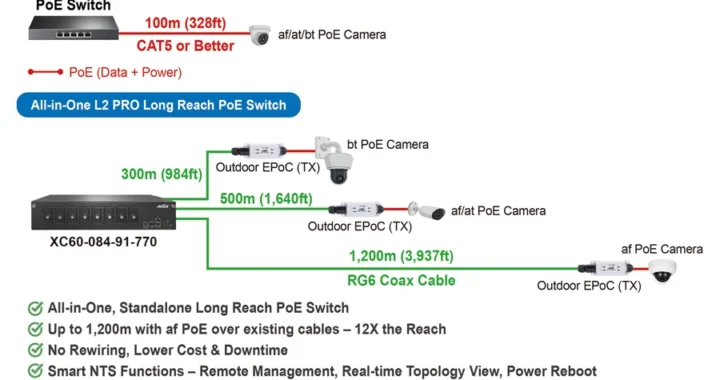
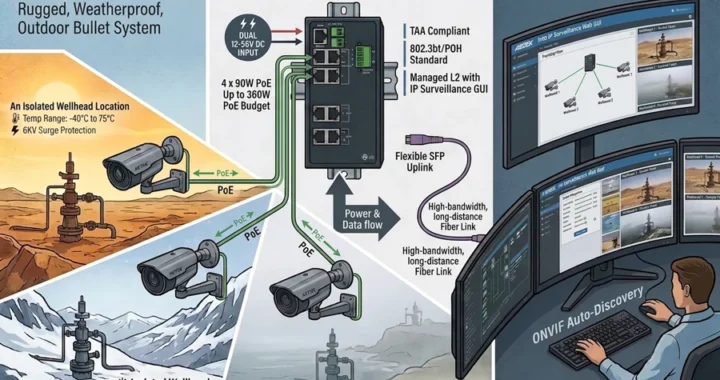
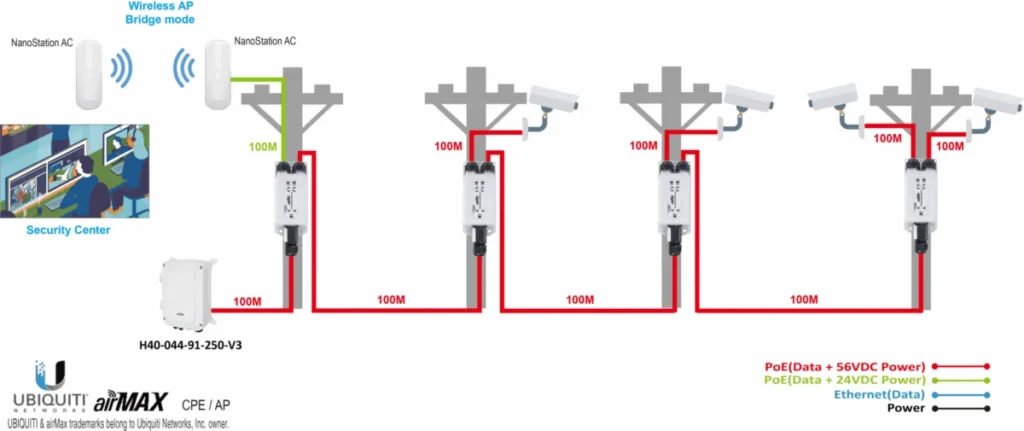
In sprawling industrial environments, the 100-meter limit of standard Ethernet has long been a hurdle. Modern advancements in PoE extenders—using fiber or single-pair Ethernet—are now allowing these high-power, high-speed networks to reach into warehouses, outdoor campuses, and hazardous environments where traditional AC power is unavailable or dangerous.

4. Sustainability as a Service
Beyond the reduction in copper usage, the shift to low-voltage DC power distribution (the essence of PoE) represents a fundamental change in how we power buildings. By moving the power conversion from the edge device back to the centralized switch, we can employ high-efficiency, centralized UPS systems to manage the entire power load, reducing waste and simplifying battery maintenance.
Conclusion: A Strategic Imperative
The transition to PoE++ and multi-gigabit Ethernet is more than just an upgrade; it is a strategic repositioning of the network as the primary utility of the enterprise. As we march toward 2030, the organizations that will thrive are those that view their cabling and switching infrastructure as an asset rather than a cost.
For decision-makers, the mandate is clear: audit your current infrastructure. Assess your power budget against the projected needs of your upcoming AI, security, and wireless deployments. Whether you are upgrading a single campus or retrofitting a smart skyscraper, the integration of 802.3bt and multi-gigabit speeds is the single most effective way to ensure your network remains resilient, scalable, and future-ready.
The technology that once powered a simple telephone now holds the keys to the future of the enterprise. By leveraging partners like Versa Technology and adhering to rigorous industry certifications, businesses can ensure they are not just keeping up with the decade—they are leading it.