





1. Main Facts: The Strategic Imperative of Physical Layer Infrastructure
In the modern digital economy, the colocation data center has evolved from a simple provider of “power, cooling, and space” into the bedrock of global connectivity. As hyperscale campuses and carrier-neutral facilities expand, a critical, often overlooked component is dictating the long-term success of these operations: the optical fiber backbone distribution topology.
For colocation operators, the physical layer is no longer a set-and-forget utility. It is the primary enabler of the multi-tenancy model, supporting diverse stakeholders ranging from cloud providers and financial institutions to sovereign government entities. Unlike enterprise data centers, where infrastructure is curated for a single user, colocation backbones must facilitate hundreds of simultaneous, high-speed interconnects.
Industry experts, including Cássio Cardoso of Lightera, argue that the design of this backbone—spanning Meet-Me-Room (MMR) models, distribution architectures, and modular scalability—is not merely a technical choice but a high-stakes business decision. Poorly planned topology creates “technical debt” that prevents facilities from scaling to meet the 400G, 800G, and 1.6T demands of modern AI and High-Performance Computing (HPC) workloads.
2. Chronology: The Evolution of Data Center Connectivity
To understand the current crisis in fiber distribution, one must look at the evolution of the data center:
- The Early 2000s (Static Era): Data centers were built with static, low-density fiber counts. Connectivity was planned based on long-term, predictable growth. Infrastructure was rarely touched, and downtime for “moves, adds, and changes” was considered an acceptable operational cost.
- The 2010s (Hyperscale Surge): The rise of cloud computing and the “Always-On” requirement shifted the paradigm. Operators realized that service interruptions during maintenance were direct hits to Service Level Agreements (SLAs). This period saw the initial shift toward centralized MMRs.
- The 2020s (AI and HPC Acceleration): The current era is defined by extreme density. With rack power requirements surging from 5 kW to 100 kW, the demand for optical throughput has reached a breaking point. Legacy cabling systems that were sufficient five years ago are now the primary bottleneck for new tenant acquisitions.
- The Present: We are entering a phase of “Strategic Infrastructure,” where the speed of provisioning—the time between a tenant signing a lease and their first bit of data flowing—is the primary competitive differentiator in the market.
3. Supporting Data: The Economic and Technical Case for High Density
The transition toward modular, high-density fiber backbones is supported by three primary economic pillars:
The Economics of Rack Space
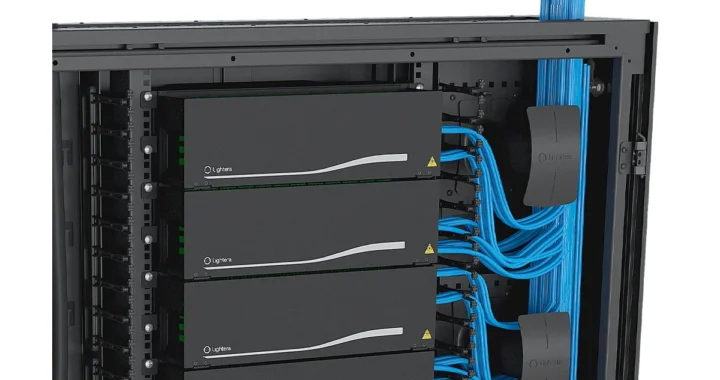
In a premium colocation facility, every Rack Unit (RU) is a revenue-generating asset. Traditional cabling systems, often bulky and inefficient, consume valuable space that could otherwise house revenue-generating compute or storage. Modern high-density termination modules can now house hundreds of fiber connections within a single RU. This efficiency is not just about aesthetics; it is about maximizing the “Revenue Per Square Foot” of the facility.
The Scalability Factor
Market analysts note that agility is the most critical metric for long-term survival. The emergence of “anchor tenants”—hyperscalers that require massive, rapid connectivity—demands a backbone that can grow without disruption. Modular, standardized systems allow operators to add capacity in hours, not weeks. By utilizing pre-terminated, interchangeable components, operators can expand their fiber plant without touching existing, live circuits, thus protecting their uptime reputation.
The Performance Ceiling
Current projections suggest that by 2027, the majority of intra-data-center traffic will be driven by AI workloads. These workloads require low-latency, massive-bandwidth interconnects. Operators using outdated distribution models are finding it impossible to support 800G and 1.6T links without an expensive, full-scale redesign of their backbone. Consequently, those who invest in modular systems today are effectively “future-proofing” their revenue streams against the next decade of hardware innovation.
4. Official Perspectives: Insights from the Field
Industry leaders emphasize that the "Meet-Me-Room" (MMR) serves as the heart of the modern data center. According to Cássio Cardoso, a Senior Engineer specialized in high-density optical solutions, the MMR is the most sensitive area of the entire facility.

"The topology of your backbone—where fibers are routed, how they are labeled, and how transition points are secured—is under increasing scrutiny during due diligence," says Cardoso. "When a government entity or a global bank audits a facility, they aren’t just looking at the software firewalls. They are looking at the physical layer. They want to see physical separation of paths, restricted access to termination points, and rigorous documentation."
Cardoso emphasizes that for colocation operators, the backbone is a marketing tool. "When you demonstrate a highly disciplined, modular, and secure physical layer, you signal to premium tenants that you have the operational maturity required to host their most critical data."
5. Implications: Redefining Security and Compliance
The physical security of the optical backbone has moved to the forefront of global regulatory requirements. With frameworks like ISO 27001 and PCI DSS becoming more stringent regarding physical access, the “hidden” nature of fiber cabling is no longer an excuse for lax oversight.
Compliance and Auditability
Modern topologies must include clear segmentation. If a fiber run is compromised or incorrectly labeled, it represents a significant compliance gap. Advanced systems now incorporate digital labeling and asset-tracking software, allowing operators to provide a real-time "map" of their fiber plant. This level of transparency is becoming a non-negotiable requirement for tenants operating in highly regulated sectors.
Path Diversity as a Service
For campuses, the "MMR-to-MMR" topology is essential for resiliency. By creating a high-capacity cross-connect backbone between Meet-Me-Rooms, operators provide a level of redundancy that protects tenants from site-level failures. In a market where uptime is an absolute, the ability to guarantee carrier diversity and path redundancy is a powerful lever for attracting high-paying, risk-averse clients.
6. Conclusion: The Strategic Choice
The colocation industry is maturing rapidly. As regional markets become more competitive, the "commoditization" of data center space is forcing operators to look for new ways to distinguish themselves. Those who view the optical backbone as a strategic asset—investing in modularity, high density, and ironclad physical security—are the ones who will capture the next generation of hyperscale anchor tenants.
The optical backbone may be invisible to the end-user, but it is entirely visible to the engineers, architects, and procurement teams that hold the future of a colocation operator in their hands. As the world moves toward a 1.6T-ready future, the decision to invest in a robust, future-proof physical layer is no longer just about engineering; it is the fundamental pillar of competitive longevity in the digital age.
About the Author
Cássio Cardoso, ATD®, RCDD®, PMP®
Cássio Cardoso is a Senior Engineer at Lightera, specializing in high-density optical infrastructure for data centers and telecommunications. With extensive experience in mission-critical environments across Latin America and international markets, he focuses on transforming physical layer infrastructure into a sustainable, scalable, and secure competitive advantage. For further inquiries, he can be reached at [email protected].