







XI’AN, CHINA — In the heart of Shaanxi province, the city of Xi’an stands as a living testament to three millennia of Chinese history. Once the eastern terminus of the Silk Road and the capital for 13 imperial dynasties—including the Qin, Han, and Tang—Xi’an is a global cultural powerhouse. Today, however, the city is making headlines not just for its buried terracotta warriors, but for a groundbreaking leap into the future of artificial intelligence.
The introduction of the BoGuan Large Language Model (LLM), co-developed by Huawei and the Shaanxi Culture Industry Investment Group (SCG), marks the world’s first commercial multimodal LLM dedicated specifically to cultural tourism. By blending ancient history with cutting-edge 5G-Advanced (5G-A) connectivity and massive computing power, the project is transforming how millions of visitors experience the "Ancient Capital of 13 Dynasties."
I. Main Facts: A Purpose-Built Intelligence for the Past
The BoGuan LLM is not a general-purpose AI. While mainstream models like ChatGPT or Google’s Gemini offer broad conversational capabilities, they often struggle with the "hallucination" of historical facts or lack the granular detail required for professional museology and archaeology. BoGuan was designed to solve this specific "knowledge gap."
The Multi-Model Integration
BoGuan serves as a unified gateway, aggregating ten different open and closed-source models, including Huawei’s own industrial-grade PanGu model. This "model of models" approach allows the platform to select the most efficient engine for specific tasks, whether it be generating high-fidelity historical images, translating archaic texts, or providing real-time voice guidance to tourists.
Multimodal Capabilities
Unlike text-only models, BoGuan is multimodal, meaning it can process and generate information across various formats:
- Text: Interpreting historical records and site descriptions.
- Audio: Providing multilingual, context-aware tour guiding.
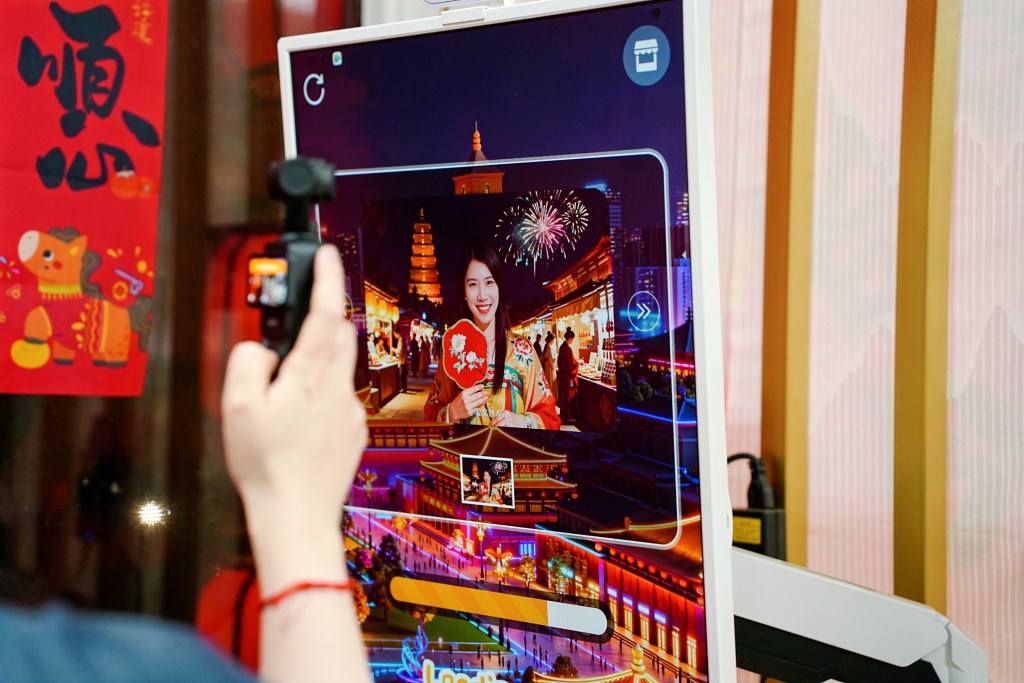
- Image/Video: Generating AI-driven short films or allowing tourists to "insert" themselves into historical recreations via the Zhiying Camera.
Scale of Deployment
Since its pilot launch in September 2023, the platform has already reached over four million users. It powers the "Xiaoqi" AI travel companion on the GO-SHAANXI app, providing a seamless digital concierge for the 330 million tourists who visit the city annually.
II. Chronology: From Data Harvesting to Global Blueprint
The journey to BoGuan was a two-year intensive collaboration between telecommunications giant Huawei and the regional cultural powerhouse SCG.
- 2021–2022: The Data Foundation: The partners spent 24 months compiling one of the most comprehensive cultural datasets in existence. This involved digitizing archives from museums across Shaanxi, capturing high-resolution imagery of artifacts, and recording millions of minutes of historical reenactments.
- Early 2023: Model Training and Infrastructure: Utilizing Huawei’s Cloud Data Engineering, the raw data was processed and labeled. Simultaneously, the physical infrastructure—including the SuperPoD computing architecture and 5G-Advanced base stations—was deployed across key tourist hubs like the Grand Tang Mall.
- September 2023: Pilot Launch: BoGuan was officially introduced to the public. The focus was on "Xiaoqi," the AI travel companion, and the "Video Factory" for B2B content creation.
- June 2024: Economic Validation: By mid-2024, SCG reported a significant surge in revenue and efficiency, proving the commercial viability of the vertical AI model.
- Present & Future: Following its success in Shaanxi, SCG has begun collaborating with tourism authorities in Xinjiang and Guizhou to replicate the framework, signaling a nationwide rollout of AI-driven cultural preservation.
III. Supporting Data: The Digital Architecture of Shaanxi
The success of BoGuan is underpinned by staggering technical specifications and impressive economic performance metrics.
The "Gold Mine" of Data
To ensure historical accuracy, the model was trained on a 1.2 Petabyte dataset, which includes:
- 31 million high-resolution images of cultural relics and historical sites.
- 4.4 million minutes of video, ranging from archaeological documentaries to cinematic reenactments.
- 960 million pieces of structured text, including official dynastic histories and archaeological reports.
Computing and Connectivity
To handle the "high-concurrency" (massive simultaneous usage) of a city like Xi’an, the infrastructure required unprecedented power:
- 48P Computing Platform: The system runs on an on-premise 48-Petaflop platform utilizing Huawei’s SuperPoD architecture.
- UnifiedBus Technology: This interconnect protocol allows multiple physical servers to function as a single logical entity, enabling the AI to "think" and "reason" with minimal latency.
- 5G-Advanced (5G-A): In the Grand Tang Mall, China Telecom Shaanxi deployed 46 specialized base stations. This network delivers 3.5 Gbps downlink and 600 Mbps uplink speeds, supporting up to 23,000 concurrent users during peak holiday periods.
Economic Impact
The integration of AI has translated directly into bottom-line growth for the Shaanxi Culture Industry Investment Group:
- Revenue Growth: SCG reported a 30% to 40% increase in revenue from last year to June 2024, achieved without increasing team size.
- Digital Sales: Sales of AI-generated digital collectibles and creative products have already exceeded 2 million Chinese yuan ($300,000).
- Efficiency: The AI "Video Factory" has automated the production of short-form dramas and advertisements, drastically reducing the cost of cultural marketing.
IV. Official Responses: Leadership on the AI Frontier
The project’s leaders emphasize that BoGuan is not just a technological feat, but a solution to a fundamental industry problem: the limitations of "general" AI.
Edric Chu, General Manager of Huawei’s Shaanxi Rep Office, highlighted the necessity of specialized models:
"General large models lack specialized knowledge in museology, archaeology, and history, making it difficult to meet the nuanced demands of niche scenarios. We completed 12 high-quality cultural tourism datasets… Supported by three major standards of data collection, management, and circulation, the platform transforms raw data resources into data assets with verifiable ownership."
Jin Yan, Chairman of the Digital and Intelligent Culture Technology Group at SCG, spoke to the transformative economic power of the model:
"With the same team size, thanks to these technologies… our revenue has increased by roughly 30–40%. The sales of related digital collectibles and creative products have exceeded 2 million Chinese yuan. We are now looking to export this framework nationwide."
Wang Hao, Director of Mobile Communications Network Business at China Telecom Shaanxi, addressed the immense pressure the city’s tourism puts on infrastructure:
"The Grand Tang Mall is a textbook example of a high-traffic, high-concurrency, and high-interaction scenario. We have deployed 46 base stations within this compact area, a density that far exceeds standard regions. The embedded AI intelligently and dynamically allocates network resources to match real-time demands."
V. Implications: The Blueprint for Vertical AI and the Talent Gap
The success of the BoGuan LLM carries profound implications for the global tourism industry, the telecommunications sector, and the future of the workforce.
The Rise of "Vertical AI"
BoGuan serves as a "proof of concept" for vertical AI—models trained on specific industry data rather than the entire internet. For telecom operators, this represents a shift in business strategy. Instead of acting as "dumb pipes" that merely provide connectivity, operators can now monetize managed AI services. By combining cloud computing, 5G-A connectivity, and industry-specific data products, they can create indispensable platforms for sectors ranging from healthcare to heavy industry.
The Human Element: A Massive Talent Gap
Perhaps the most significant challenge identified during the BoGuan rollout is the "interdisciplinary talent bottleneck." The project requires workers who understand both the nuances of Tang Dynasty history and the technical requirements of prompt engineering and data labeling.
- The Deficit: Edric Chu noted that Shaanxi alone faces a talent gap of 30,000 to 50,000 professionals skilled in both AI and cultural tourism.
- National Crisis: By 2030, the national talent gap in this cross-disciplinary field is expected to exceed one million.
- The Solution: In response, Huawei, SCG, and over ten academic institutions have established a talent training base. This initiative aligns vocational certificates with Huawei AI certifications, aiming to train 1,000 people this year and 3,000 in 2025.
A New Era of Cultural Preservation
Finally, BoGuan offers a new philosophy for cultural heritage. In an era where physical sites are under pressure from over-tourism, digital preservation and "Smart Tourism" provide a sustainable path forward. By creating historically accurate, immersive digital twins and AI guides, Xi’an is ensuring that its 3,000-year history remains accessible, accurate, and engaging for a new generation of digital-native travelers.
As Edric Chu concluded, "Artificial intelligence is not simply a stack of technologies. It has become a key enabler that can activate thousands of years of cultural heritage, reshape travel experiences, and inject new momentum into the industry."
For more updates on AI infrastructure and telecommunications, follow our coverage on the latest industry acquisitions and clean energy initiatives.