







Introduction: The Shrinking Landscape of Modern IT
The telecommunications and information technology landscape is currently undergoing a radical transformation. As the digital economy expands, businesses are faced with a paradoxical challenge: the demand for massive operational capacity is surging, yet the physical footprints available to house this infrastructure are becoming increasingly restricted. From the sprawling aisles of hyperscale data centers to the localized server closets of the modern enterprise, the directive is clear—do more with less.
This evolution is not merely a preference for minimalism; it is an economic and technical necessity. As critical applications become more data-intensive, port density increases, and the exponential growth of Internet of Things (IoT) devices clutters networks, the requirement for high-speed, reliable infrastructure has never been higher. Lightera, a leader in connectivity solutions, is spearheading this shift, providing the hardware that enables organizations to optimize physical space without compromising on performance or security.
The Core Mandate: Efficiency Through Density
At the heart of the current IT shift is the concept of "high-density infrastructure." Traditionally, scaling a network meant physical expansion—more racks, more floor space, and more cooling power. Today, that approach is often financially and logistically prohibitive.
The Technical Challenge
As networks transition to support 10GBASE-T and beyond, the thermal and spatial constraints of traditional cabling become apparent. Thick, rigid cables obstruct airflow in server racks, leading to "hot spots" that degrade equipment lifespan and increase energy consumption. Furthermore, the sheer volume of cables required for modern port density can create a "spaghetti" effect in cable trays, hindering maintenance and increasing the risk of downtime during simple troubleshooting.
The Benefits of Modernization
By transitioning to more compact, high-performance components, organizations gain several key advantages:
- Reduced Operational Expenditure (OPEX): Smaller cables improve airflow, allowing cooling systems to run more efficiently.
- Optimized Real Estate: High-density patch panels allow organizations to double or triple their port count within the same 1U rack space.
- Scalability: Modular designs ensure that as a company grows, they can add capacity without replacing the entire backbone of their network.
The Strategic Importance of Retrofitting
While greenfield projects allow for ideal planning, the vast majority of IT infrastructure projects involve existing environments. This is where the concept of the "retrofit" has become a cornerstone of modern network strategy.
Defining the Modern Retrofit
A retrofit is far more than a simple equipment swap. It is a strategic modernization of existing infrastructure that replaces obsolete components with state-of-the-art technology while leveraging the existing physical framework. When executed correctly, a retrofit acts as a catalyst for network longevity.
Retrofit as a Proactive Strategy
Rather than viewing retrofitting as a "corrective" measure for failing systems, industry leaders are now treating it as a core component of their lifecycle management. By planning for upgrades in the initial phase of a project, architects can ensure that the infrastructure is "future-proof." This modular mindset minimizes business disruption—allowing for seamless upgrades during off-peak hours—and ensures that the network remains agile in the face of sudden spikes in traffic or the introduction of new technologies like AI and machine learning.
Lightera’s Vision: Engineering for the Future
In response to these market shifts, Lightera has realigned its product development roadmap. The company has moved away from traditional, bulky cabling toward a new generation of solutions that prioritize high electrical performance, reduced diameter, and mechanical flexibility.
The Lightera Portfolio
Lightera’s current product line represents a fundamental shift in how connectivity is perceived. By focusing on materials science and ergonomic design, the company has introduced solutions that address the primary pain points of modern data center managers and IT directors.
1. The GIGALAN GREEN CAT.6A U/UTP Cable
The GIGALAN GREEN series is designed specifically for environments where space is at a premium. By reducing the cable diameter, Lightera has significantly improved the "bend radius," allowing for easier installation in tight spaces. Despite its compact size, the cable maintains rigorous standards for signal integrity, ensuring it can handle the throughput requirements of high-speed data centers without crosstalk interference.
2. The GIGALAN GREEN CAT.6A F/UTP Cable
For environments prone to electromagnetic interference (EMI), the F/UTP variant offers robust shielding in a surprisingly thin form factor. This cable is ideal for industrial settings or high-density server rooms where electrical noise could compromise data packets. Its design reflects Lightera’s commitment to balancing the mechanical requirements of small-diameter cabling with the physical requirements of high-speed networking.
3. Angular HD Patch Panel (48 ports in 1U)
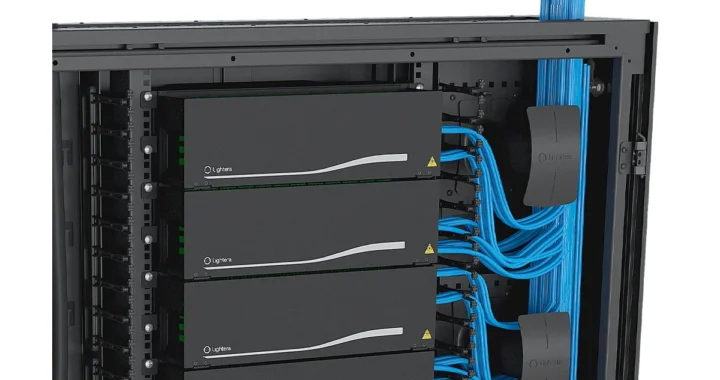
The "crown jewel" of the new Lightera line is the 48-port Angular HD Patch Panel. By utilizing an angular design, the panel allows cables to route directly into the vertical managers, significantly reducing the stress on the cables themselves and eliminating the need for bulky horizontal cable managers. This single innovation allows for 48 ports to occupy just 1U of rack space, effectively doubling the density compared to traditional flat panels.
Chronology of Infrastructure Evolution
The transition to these compact solutions follows a clear historical progression:
- Early 2000s: Focus on raw connectivity; space was abundant and density was not a primary concern.
- 2010–2015: The rise of virtualization and the first wave of data center consolidation. Focus shifted toward cable management and organization.
- 2016–2020: The IoT explosion. Massive increases in the number of endpoints created a critical need for higher port density and better airflow management.
- 2021–Present: The era of "Intelligent Infrastructure." The focus is now on high-performance, compact materials that enable AI-ready environments and edge computing, where space is almost always constrained.
Supporting Data and Implications
According to recent industry benchmarks, the shift to high-density patching and thin-gauge cabling can reduce rack congestion by up to 40%. The implications for the enterprise are significant:
- Energy Efficiency: Improved airflow management through the use of thinner cables and smarter patching can lead to a 5–10% reduction in cooling costs within a standard data center environment.
- Reliability: By reducing the mechanical tension on ports—facilitated by angular panels—the physical failure rate of connections is decreased by approximately 15% over a five-year period.
- Speed of Deployment: Modular, high-density components allow technicians to terminate and manage connections in half the time required by traditional, lower-density systems.
Official Perspectives: The Value of Precision
In an interview regarding the new product line, Lightera’s engineering lead noted: "Our goal was not just to make things smaller; it was to make them smarter. When you look at our 48-port angular panel, you aren’t just looking at a piece of hardware; you are looking at a solution that solves the fundamental friction between IT growth and physical space constraints. We believe that the future of the network is one where the infrastructure is so efficient, it effectively disappears."
Industry experts echo this sentiment. The consensus among network architects is that the "over-provisioning" of space—once common in the industry—is no longer a viable financial strategy. Today, the focus must be on precision, quality, and the ability to upgrade without requiring massive structural changes.
Implications for Future-Proofing
As we look toward the next decade, the convergence of AI, 5G, and massive-scale data processing will only intensify the demand for dense, high-speed networks. The implications for companies that fail to adopt these modern standards are clear: they will find themselves tethered to legacy infrastructure that is costly to maintain, slow to scale, and prone to bottlenecking.
By contrast, organizations that adopt a "Lightera-style" approach—prioritizing compact cabling, high-density patching, and proactive retrofitting—will enjoy a competitive edge. They will possess the agility to pivot their infrastructure to meet new demands without the overhead of major capital expenditures.
Final Considerations: The Sustainable Network
Beyond the immediate benefits of performance and space, the move toward compact, high-density infrastructure is inherently more sustainable. Smaller cables mean less copper and plastic consumption; more efficient layouts mean lower energy usage for the lifetime of the facility.
The path forward for IT leaders is to view their network infrastructure not as a static utility, but as a dynamic asset. Through the strategic application of modern, high-density technologies, the network becomes a foundation for growth rather than a constraint on progress.
Conclusion
The evolution of the telecommunications and IT market toward higher density and greater efficiency is an inevitable response to the demands of our modern, interconnected world. Lightera’s commitment to providing advanced cabling and high-density hardware demonstrates a deep understanding of these market realities. By embracing the principles of compact design and strategic retrofitting, businesses can ensure that their networks remain fast, scalable, and prepared for the challenges of tomorrow. As we move deeper into an era of unprecedented connectivity, the ability to do more with less will be the defining characteristic of the most successful enterprises.