





Today’s sports fans demand far more than the traditional game-day experience. While the quality of play on the field remains the primary draw, the modern stadium experience is increasingly defined by technology-enabled convenience, immersive digital engagement, and seamless connectivity. Fans now expect to share high-definition moments in real-time, pay for concessions with a tap of a smartphone, and navigate massive venues with ease.
To deliver these experiences, stadiums can no longer rely on standard public Wi-Fi. The sheer volume of data traffic during a sold-out event—combined with the mission-critical needs of coaching staff, security, and vendors—has pushed traditional infrastructure to its breaking point. Increasingly, industry leaders are turning to Power over Ethernet (PoE) private networks to build the robust, secure, and flexible backbone required for the modern smart stadium.
The Architecture of Connectivity: Understanding PoE Private Networks
To understand why stadiums are undergoing a digital transformation, one must first understand the infrastructure that makes it possible. A private network, often utilizing the Citizens Broadband Radio Service (CBRS), allows venues to create a dedicated wireless environment that operates independently of congested public cellular networks.
Defining PoE and CBRS
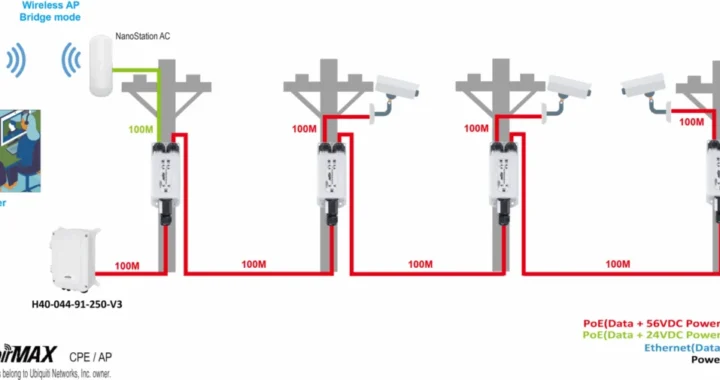
PoE technology is a game-changer for stadium deployment. By transmitting both electrical power and data over a single Ethernet cable, PoE eliminates the need for proximity to traditional AC power outlets. This allows stadiums to place wireless access points, high-definition security cameras, and digital signage in optimal locations, regardless of existing electrical infrastructure.
When paired with CBRS—a shared spectrum band between 3550-3700 MHz managed by the FCC—stadiums can deploy secure 4G LTE or 5G private networks. This dual-layered approach allows stadiums to isolate mission-critical traffic (such as on-field play-calling or emergency communications) from the heavy, unpredictable traffic generated by thousands of fans posting on social media or checking live statistics.

A Chronology of the Smart Stadium Evolution
The shift toward technology-integrated sports venues has been a multi-decade progression, accelerating rapidly as mobile technology and IoT capabilities matured.
- Early 2000s: The Basic Connectivity Era. Venues began installing basic Wi-Fi, though performance was inconsistent and limited to concourses.
- 2010–2015: The Rise of the Smartphone. As smartphones became the primary way fans engaged with content, stadiums struggled with "network congestion," leading to the infamous "no signal" issues during big games.
- 2015: The CBRS Breakthrough. The FCC’s creation of the CBRS band provided the regulatory framework for private, high-performance networks, allowing venues to take control of their own spectrum.
- 2018–2022: The IoT Integration. Stadiums began deploying thousands of sensors for environmental control, security, and inventory management, necessitating the high-density capabilities of PoE switches.
- 2023–Present: The AI and Immersive Era. Modern stadiums now utilize AI for facial recognition, weapon detection, and real-time augmented reality (AR) overlays, creating a demand for the massive bandwidth and low latency that only private, PoE-backed networks can provide.
Supporting Data: The Case for Infrastructure Investment
The necessity of private networking is driven by cold, hard metrics. In a typical modern stadium, the infrastructure must handle:
- Device Density: A capacity of 60,000+ fans means potentially 100,000+ mobile devices, each competing for bandwidth.
- Latency Requirements: On-field play-calling, which utilizes private encrypted channels, requires sub-millisecond latency to ensure coaches and players remain synchronized without interference.
- Transaction Volume: Point-of-Sale (POS) systems must be 100% reliable. Even a 30-second outage in the payment network can result in thousands of dollars in lost revenue and massive concourse congestion.
- Security Coverage: A modern venue may deploy over 2,000 high-definition surveillance cameras, all of which require continuous power and data throughput to feed into AI-driven security analytics.
The University of Washington’s renovation of Husky Stadium serves as a prime example. By integrating a comprehensive PoE-driven private network, the venue successfully unified ticketing, building access, and real-time coaching diagnostics under a single, high-performance umbrella.
Official Perspectives: The Industry Standard
Industry experts and technology partners emphasize that the "Smart Stadium" is no longer a luxury, but an operational necessity.
"The goal is to eliminate friction," says a lead infrastructure engineer at a major sports technology firm. "When a fan has to wait in line for 20 minutes because the payment network is lagging, or when a coach loses the ability to see a live replay because of electromagnetic interference from the crowd, the technology has failed. PoE private networks act as the ‘nervous system’ that ensures every part of the stadium is communicating in real-time."

From a cybersecurity standpoint, the shift to private networks is a strategic defensive move. By segmenting the network—keeping the public-facing guest Wi-Fi distinct from the backend operational systems—stadium IT teams significantly reduce the attack surface for potential hackers, ensuring that a breach in the public network cannot migrate to the core infrastructure that powers stadium security and revenue systems.
Implications: The Future of the Fan Experience
The implications of this shift are profound, affecting every stakeholder from the stadium owner to the casual fan.
Operational Intelligence
Because private networks are enterprise-specific, stadium managers gain unprecedented visibility into their venue. By analyzing anonymized data traffic, management can identify "choke points" in the stadium where foot traffic stalls, allowing for better crowd management. They can track the success of specific concessions based on real-time transaction data and even monitor the usage of virtual reality or kids’ zones to adjust staffing levels dynamically.
Enhanced Security
Modern security is no longer just about guards at the gates. With PoE-powered sensors, security teams can monitor temperature anomalies, detect unauthorized entry into restricted zones, and use AI-powered cameras to identify potential threats before they escalate. Because these devices are powered via PoE, they can be deployed in remote areas of the stadium where traditional power is non-existent, ensuring 100% coverage.
Seamless Convenience
The ultimate goal is a "frictionless journey." Imagine a stadium where:

- Parking: Sensors guide your car to an open spot, and your ticket is automatically validated upon entry.
- Navigation: Your phone provides turn-by-turn directions to your seat, the nearest restroom with the shortest line, and your pre-ordered concessions.
- Immersive Stats: Augmented Reality (AR) allows you to point your phone at the field to see live player stats and historical data, powered by the stadium’s internal 5G private network.
Leading the Way: The World’s Most Advanced Arenas
The United States leads the world in smart stadium adoption, with four of the most technologically advanced venues globally:
- Mercedes-Benz Stadium (Atlanta): Boasts the largest 360-degree halo video board in the world. Its massive network of 1,800 wireless access points ensures that even with a full house, connectivity remains robust.
- SoFi Stadium (Inglewood): A feat of engineering, it features an infinity screen that provides 4K resolution from every angle, supported by AI-based weapon detection systems that operate on a secure, private backend.
- Levi’s Stadium (Santa Clara): With 400 miles of cabling and a 40-gigabit backbone, this venue provides a blueprint for how massive data loads can be managed without compromising fan experience.
- Allegiant Stadium (Las Vegas): This venue has effectively solved the "connectivity struggle" by integrating a private 5G network that allows for seamless AR integration, bringing the broadcast experience directly to the fan’s seat.
Conclusion: Investing in the Next Generation
As the sports industry continues to embrace AI, IoT, and high-density computing, the underlying infrastructure must scale to meet the challenge. PoE private networks are not merely a technical trend; they are the essential foundation upon which the future of live sports is built.
For venue operators, the move toward a modernized, PoE-driven infrastructure is an investment in long-term operational resilience. It is about creating an environment where technology works behind the scenes, allowing fans to focus on the game, coaches to focus on the play, and security teams to focus on safety. As we move toward an era of increasingly immersive and data-driven events, companies like Versa Technology remain at the forefront, providing the managed PoE switches and networking solutions that turn a massive concrete bowl into a sophisticated, interconnected, and secure digital experience.
The stadium of the future is here, and it is powered by the invisible, reliable, and high-speed efficiency of private networking.