






The modern enterprise is undergoing a silent, high-voltage revolution. For decades, the humble Ethernet cable served a singular purpose: the transmission of data. Today, that same copper pathway is evolving into the lifeblood of the "Intelligent Building," capable of delivering up to 100W of electricity alongside 10Gbps data throughput. As we move toward 2030, the convergence of IEEE 802.3bt (PoE++) standards and multi-gigabit speeds is no longer a luxury—it is the foundational architecture for AI, Wi-Fi 7, and the next generation of Internet of Things (IoT) ecosystems.
Main Facts: The Convergence of Power and Throughput
Power over Ethernet (PoE) has transcended its origins as a convenience feature for VoIP desk phones. By decoupling power delivery from traditional AC electrical infrastructure, PoE allows organizations to deploy devices anywhere a Cat6A cable can reach, drastically reducing installation costs and architectural complexity.
The current technological standard, IEEE 802.3bt (PoE++), is the primary driver of this shift. By utilizing all four twisted pairs within an Ethernet cable, Type 4 PoE can deliver up to 100W at the source, powering everything from high-definition AI-enabled security cameras to motorized smart lighting systems and industrial sensors. When paired with multi-gigabit Ethernet (2.5G/5G/10G BASE-T), this creates a singular, streamlined infrastructure that eliminates the need for localized power outlets, significantly lowering the carbon footprint and material cost of new construction projects.
Chronology: The Evolution of a Standard
The trajectory of PoE is a testament to the rapid pace of network innovation. Understanding its history provides clarity on how we arrived at today’s high-power capabilities:

- 2003 (IEEE 802.3af): The inaugural PoE standard. Providing 15.4W per port, it was designed primarily for low-power VoIP handsets and early wireless access points.
- 2009 (IEEE 802.3at – PoE+): As devices became more power-hungry, the IEEE responded with PoE+, pushing power delivery to 30W. This enabled PTZ (pan-tilt-zoom) cameras and more sophisticated wireless radios.
- 2018 (IEEE 802.3bt – PoE++): The current benchmark. By utilizing all four pairs of the Ethernet cable, this standard introduced Type 3 (60W) and Type 4 (100W), opening the door for high-draw devices like thin clients, digital signage, and smart building controllers.
- 2024–2030 (The Multi-Gigabit Era): The current phase focuses on integrating this high-power capacity with 10Gbps data rates, ensuring that the infrastructure installed today can support the massive data backhaul required by AI and next-generation IoT.
Supporting Data: A Market in Motion
The shift toward PoE++ is not merely a technical preference; it is a market-driven necessity. Industry analysts project that the PoE chipset market will double in value, climbing from approximately $2.78 billion in 2025 to over $5.57 billion by 2031.
This growth is fueled by a specific set of enterprise requirements:
- High-Density Deployments: Organizations are increasingly planning for "smart" environments, with 33% of enterprises currently targeting deployments that exceed 51W per port.
- Infrastructure Longevity: The compound annual growth rate (CAGR) of 20% through 2030 reflects a shift in how CIOs view cabling. Rather than viewing it as a sunk cost, they see high-performance Cat6A/Cat8 infrastructure as a future-proofing investment that prevents costly "rip-and-replace" scenarios.
- Energy Efficiency: By centralizing power management at the switch level—often coupled with uninterruptible power supply (UPS) systems—businesses can achieve significantly higher energy conversion efficiency compared to the localized "wall-wart" AC adapters used in traditional office setups.
Official Responses and Industry Standards
Interoperability remains the greatest hurdle to widespread adoption. Without strict adherence to standards, the mix of switches and end-devices could lead to equipment failure or safety risks.
The Ethernet Alliance has been the primary authority in this space, launching the PoE Gen 2 Certification Program. This program provides a standardized framework for testing and verifying that multi-vendor equipment will communicate reliably. According to industry experts, this certification is now a "non-negotiable" for enterprise procurement. By utilizing certified hardware, IT managers can ensure that a high-power PoE++ switch from one vendor will safely and efficiently power an IoT sensor or camera from another, mitigating the risk of vendor lock-in and ensuring long-term network stability.

Implications for the Intelligent Building
The integration of PoE++ and multi-gigabit speeds has profound implications for how we design, build, and operate commercial real estate.
1. AI-Driven Security and Surveillance
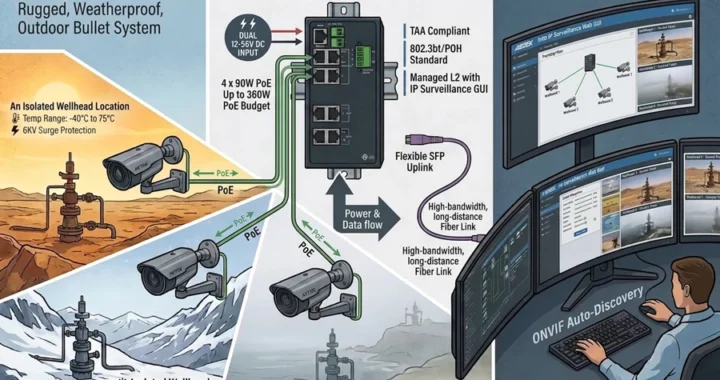
AI cameras are no longer passive recording devices; they are edge-computing nodes that analyze footage in real-time. These units require both the high-bandwidth 10G pipe to transmit processed data and the 100W power draw to maintain high-performance processors. PoE++ provides both, allowing for complex security grids that would be physically impossible to wire with traditional AC power.
2. Wi-Fi 7 and Beyond
The latest Wi-Fi 7 access points are pushing the limits of previous Ethernet standards. With multi-gigabit throughput and high-power radio arrays, these devices require the stability of 802.3bt power to maintain maximum signal integrity. PoE++ ensures that these APs can function at full capacity without throttling due to power limitations.
3. Sustainability and "Green" Networking
The environmental impact of PoE is often overlooked. By utilizing a single cable for both data and power, organizations reduce the amount of copper and plastic required for building out a network. Furthermore, centralized power management allows for intelligent, AI-driven load balancing. During off-hours, switches can intelligently power down non-essential IoT endpoints, contributing to significant energy savings and helping enterprises meet their ESG (Environmental, Social, and Governance) targets.

4. Overcoming Physical Limitations
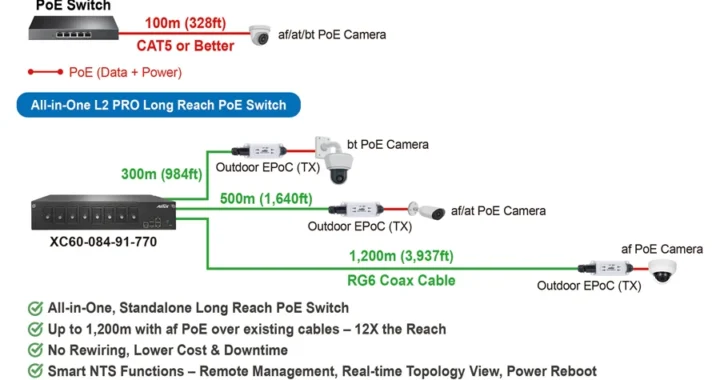
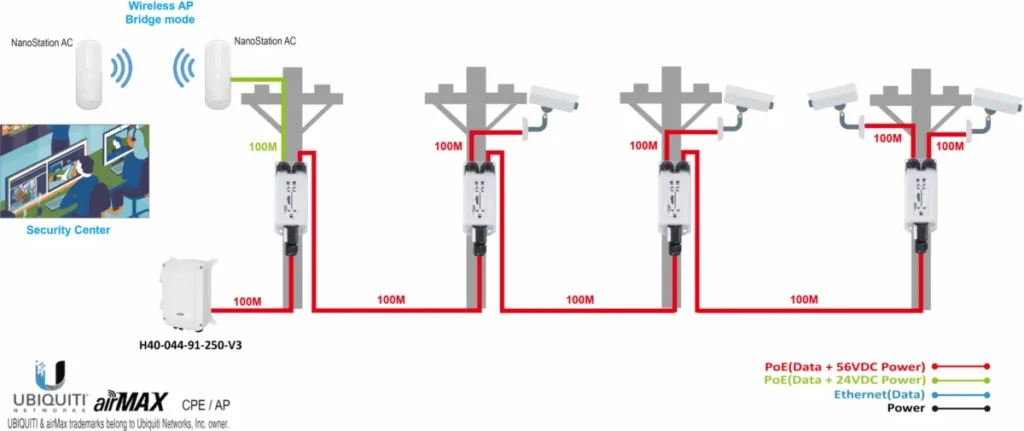
Modern PoE technology is solving the historical "100-meter limit" through advanced extended-reach solutions. By utilizing fiber-to-the-edge or specialized single-pair Ethernet extenders, organizations can daisy-chain power and data to remote locations, such as parking lots, warehouse ceilings, or campus perimeters, without needing to install expensive, localized electrical circuits.
Conclusion: Preparing for the Future
As we stand on the precipice of a new decade, the convergence of power and data is clear. The organizations that will thrive are those that view their physical layer infrastructure as a strategic asset. By transitioning to PoE++-capable multi-gigabit switches and ensuring that cabling meets modern Cat6A or Cat8 standards, businesses are laying the groundwork for an era defined by seamless, intelligent connectivity.
The future of PoE is not just about delivering electricity; it is about providing the flexibility and scalability required to support the unpredictable demands of tomorrow’s technology. Whether it is an AI-enhanced workspace or a fully automated smart factory, the foundation remains the same: a single, high-performance cable, delivering both the power to run and the bandwidth to grow.
For IT leaders, the mandate is simple: audit your current infrastructure, insist on Ethernet Alliance-certified hardware, and consult with specialists to ensure your network is not just operational, but future-ready. The transition is already underway—and the potential for growth is limited only by the intelligence of the network you build today.