







Executive Summary
In an era where digital transformation defines the standard of patient care, Hospital São José has taken a pioneering step toward operational excellence. To address the complexities of a modern, expanding healthcare facility, the hospital has successfully implemented "Laserway," a cutting-edge Passive Optical LAN (POL) solution developed by Lightera in collaboration with Nokia. By integrating optical cabling, advanced hardware, and sophisticated software into a unified platform, the project has established a highly available, robust, and future-proof network. This infrastructure overhaul not only simplifies the hospital’s IT landscape but also provides the high-performance backbone necessary for mission-critical clinical and administrative operations, setting a new benchmark for the medical sector.
The Challenge: Building a Network for Tomorrow
As Hospital São José embarked on the construction of its new expansion building, its leadership faced a classic, yet daunting, digital dilemma. Modern healthcare facilities are no longer just buildings; they are vast, interconnected ecosystems that rely on high-bandwidth, low-latency data transmission. From real-time diagnostic imaging and electronic health records (EHR) to patient monitoring systems and AI-driven predictive analytics, the network is the hospital’s central nervous system.
The institution’s existing infrastructure struggled to meet the rising demands of these digital applications. The primary challenges included:
- Operational Complexity: Managing a massive, distributed array of traditional copper-based switches was becoming labor-intensive for the IT department.
- Space Constraints: In a busy hospital, physical space is a precious commodity. Traditional networking equipment requires bulky closets and climate-controlled rooms that take away from clinical or administrative utility.
- Future Scalability: The hospital required an architecture that could grow without requiring a massive "rip-and-replace" cycle every few years.
- Reliability: In a healthcare setting, downtime isn’t just an inconvenience; it is a clinical risk. The network needed to be fundamentally resilient.
Chronology of Transformation: From Vision to Implementation
The transition to a Passive Optical LAN (POL) was not an overnight endeavor. The project followed a meticulously planned timeline designed to ensure zero disruption to ongoing patient care.
Phase 1: Planning and Strategic Alignment
The journey began with an intensive audit of the hospital’s existing infrastructure. Working closely with Lightera and Nokia, the IT leadership at Hospital São José identified the specific needs of different hospital wings. They mapped out the data requirements for surgical suites, patient wards, administrative offices, and emergency departments.
Phase 2: Design and Integration
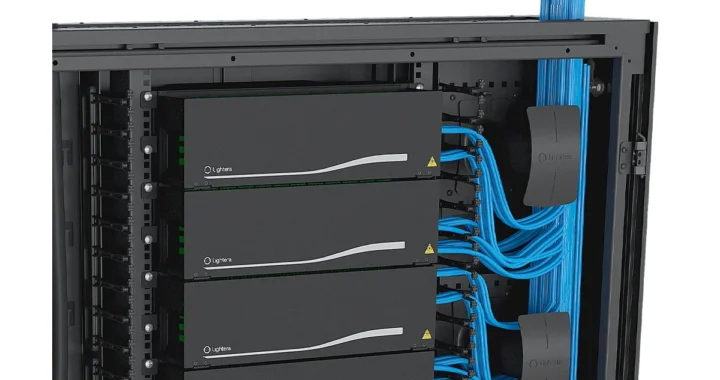
During this phase, the teams focused on the "Laserway" design. Unlike traditional Ethernet networks that require active switches every 100 meters, the Laserway architecture utilizes fiber-optic cables that can run significantly longer distances without signal degradation. The design team created a central hub where the core network intelligence resides, pushing the "edge" connectivity out through Passive Optical Network Terminals (ONTs).
Phase 3: The Deployment
Installation took place in stages, synchronized with the completion of the new building. The deployment was notable for its surgical precision; because the optical cables are thinner and more flexible than traditional Cat6 copper cabling, the installation team was able to route them through existing conduits, minimizing construction dust and noise—a critical factor in a sterile healthcare environment.
Phase 4: Validation and Go-Live
Before full integration, the system underwent rigorous stress testing to simulate peak load conditions. Upon validation, the hospital migrated critical administrative and clinical systems to the new fiber-backed network, marking the official transition to the Laserway platform.
Technical Deep-Dive: How Laserway Works
The core of the solution lies in the strategic deployment of Optical Network Terminals (ONTs). By moving away from a decentralized switch model to a centralized optical model, the hospital fundamentally changed how data flows through its halls.
Administrative Optimization
In the administrative wing, the goal was aesthetics and efficiency. ONTs were installed discreetly—hidden beneath workstations, inside specialized furniture, or tucked into cabinets. This "invisible" infrastructure ensures that staff members work in clutter-free environments while maintaining high-speed connectivity that supports seamless video conferencing, cloud-based accounting, and administrative workflow management.
Clinical Hygiene and Safety
In the clinical areas, the approach shifted to prioritize hygiene and safety. By installing ONTs above suspended ceilings or inside protected optical termination boxes, the hospital effectively removed active hardware from patient-contact areas. This design choice eliminated the need for antibacterial faceplates, as the active electronics are housed in controlled, centralized technical rooms. This standardization simplifies the maintenance routine for the cleaning staff and ensures that clinical equipment at the bedside connects to a clean, reliable, and high-performance fiber line.
Supporting Data: Why Fiber Outperforms Copper
The metrics behind the switch to POL are compelling. By replacing the traditional "active switch" model with an optical architecture, Hospital São José has reported significant improvements:
- Energy Efficiency: By removing the need for power-hungry switches in every department, the hospital has achieved a marked reduction in total energy consumption.
- Heat Mitigation: Fewer active devices translate to less heat generated within the building, reducing the load on the hospital’s HVAC systems.
- Reduced Infrastructure Footprint: The consolidation of hardware has reclaimed valuable square footage previously occupied by telecommunications closets, allowing for more clinical beds and expanded office space.
- Simplified Maintenance: The IT team reports a dramatic decrease in "truck rolls"—the need to physically visit a remote closet to reset or troubleshoot a switch. The centralized nature of the system allows for more proactive, remote management.
Official Perspectives: A Partnership for Excellence
The collaboration between Lightera and Nokia represents a synergy of infrastructure expertise and global technological leadership.
"The implementation at Hospital São José is a testament to the power of Passive Optical LAN technology," noted a representative from the project’s integration team. "When we looked at the requirements for a modern hospital, we saw that copper was becoming a bottleneck. By bringing the Lightera expertise in localized, user-centric infrastructure together with Nokia’s global standard in optical networking, we provided a solution that is as reliable as a utility service."
Hospital administration emphasized that the move was not merely a technical upgrade but a patient-safety initiative. "In the modern hospital, the network is the bridge between the doctor and the data," said the Hospital São José IT Director. "With Laserway, we have ensured that this bridge is wider, faster, and more stable than ever before."
Implications: The Future of the Connected Hospital
The successful deployment of Laserway at Hospital São José carries significant implications for the broader healthcare industry.
Scalability for AI and IoT
As hospitals integrate more Internet of Things (IoT) devices—from smart beds that report vitals to automated medication dispensers—the bandwidth requirement will only grow. The optical architecture installed today is capable of handling future upgrades in bandwidth (such as migrating to XGS-PON or higher) by simply swapping the electronics at the end-points, without needing to tear up the walls to replace the fiber cables.
Resilience in Crisis
The high-availability design ensures that even if a fiber link is damaged in one area, the network architecture is designed to mitigate impact, ensuring that the EHR system and life-critical monitors remain online. This level of resilience is non-negotiable for institutions tasked with saving lives.
Setting a New Industry Standard
Hospital São José serves as a case study for other healthcare organizations. The shift from "switch-heavy" to "fiber-centric" networking is proving to be the most viable path forward for hospitals facing the dual pressures of digital expansion and cost containment.
Conclusion: A New Chapter in Healthcare
The partnership between Hospital São José, Lightera, and Nokia has produced a network that is not only faster and more reliable but also smarter. By rethinking the physical and logical structure of their connectivity, the hospital has managed to turn a complex technological hurdle into a strategic advantage.
As the medical field continues to lean into digital-first strategies, the infrastructure at Hospital São José stands as a beacon of what is possible. It is a reminder that in the world of high-stakes medicine, the most important technology is often the one that works silently, efficiently, and tirelessly in the background, ensuring that when a patient needs care, the systems supporting that care are ready.
For other healthcare providers looking to modernize, the roadmap is clear: the future is optical, the future is centralized, and with the right partners, the transition can be a seamless step into a more connected era of medicine.