






NORCROSS, Georgia — August 13, 2026 — In a move that signals a seismic shift in the telecommunications and data infrastructure landscape, Lightera, a global leader in optical fiber technology, today announced a massive, multi-continental expansion of its manufacturing capacity. This strategic initiative is designed to fortify the company’s ability to meet the insatiable demand for high-performance optical fiber and cable, a demand driven by the explosive growth of artificial intelligence, hyperscale data centers, and the next generation of cloud computing infrastructure.
The expansion project spans key operational hubs in the United States, Brazil, Japan, and India. By augmenting its global manufacturing footprint, Lightera aims to secure its supply chain against future volatility and position itself as the primary backbone provider for the bandwidth-heavy applications defining the mid-2020s.
The Catalyst: A New Era of Connectivity
The digital landscape is currently undergoing a transformation equivalent to the invention of the internet itself. The rise of generative AI, large language models (LLMs), and high-frequency cloud processing has created a "bandwidth bottleneck" that traditional fiber infrastructure is increasingly ill-equipped to handle.
Lightera’s decision to scale is not speculative; it is a direct response to tangible market pressure. The company reports that long-term purchase commitments from hyperscale cloud providers have already secured much of the projected production output, even before the new lines go live.
"Artificial intelligence is fundamentally transforming the world’s communications infrastructure and driving unprecedented requirements for fiber density, performance, and scale," said Holly Hulse, Chief Executive Officer of Lightera. "This expansion reflects our long-term commitment to growing alongside our customers by increasing manufacturing capacity, strengthening our global supply chain, and continuing to innovate the advanced optical technologies required for the next generation of AI and cloud infrastructure."
Chronology: Building Toward 2028
The timeline for this global initiative has been carefully mapped to align with the anticipated surge in data center construction and 6G development cycles.
- August 2026 (Announcement Phase): Lightera formalizes the investment strategy, outlining the capital allocation for facilities in North America, South America, and Asia.
- Q4 2026 – Q4 2027 (Infrastructure Development): During this period, the company will focus on facility upgrades, the installation of next-generation drawing towers, and the integration of automated cabling lines.
- H1 2028 (Testing and Calibration): Final integration of new machinery and rigorous testing to ensure global quality standards are met across all four manufacturing regions.
- H2 2028 (Commercial Rollout): The company expects the first significant tranches of new, high-capacity production to come online. By this time, the global data market is expected to have reached a tipping point where current fiber density levels will be considered obsolete.
Supporting Data: Why Fiber is the New "Oil"
The investment in optical fiber is predicated on the physical realities of the AI era. Modern AI training clusters require high-speed, low-latency interconnects between thousands of GPUs. Traditional copper wiring is physically incapable of supporting the throughput required, and older fiber configurations struggle with the "cable density" issues found in crowded data centers.
The Role of Rollable Ribbon Cable
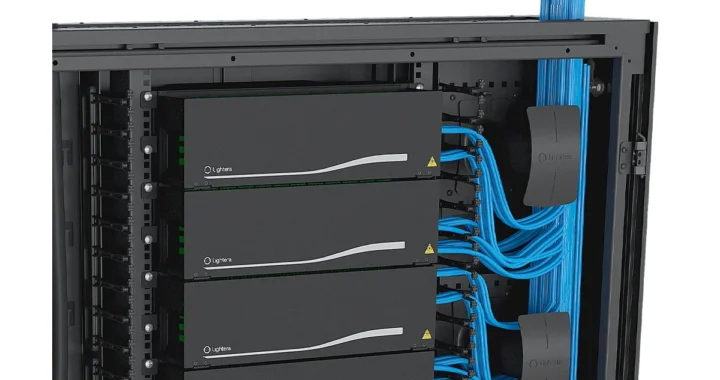
A centerpiece of Lightera’s expansion is the focus on "Rollable Ribbon Cable" technology. Unlike traditional flat ribbon cables, rollable ribbon is designed to be highly flexible, allowing for significantly higher fiber counts in the same physical space.
- Efficiency: It facilitates faster installation and easier splicing.
- Density: It allows for a massive increase in bandwidth per square inch of conduit, which is critical for hyperscale facilities where space is at a premium.
- Sustainability: By reducing the amount of space required for cabling, Lightera is helping to lower the carbon footprint of data center construction.
Beyond Fiber: A Diversified Ecosystem
Lightera’s strategy is not limited to the production of standard fiber optic glass. The company is positioning itself as a comprehensive solutions provider for the entire optical ecosystem. As the industry moves beyond standard single-mode fiber, Lightera is betting on several "frontier" technologies:
1. Multicore Fiber (MCF)
As the industry nears the theoretical limit of standard fiber, MCF allows for multiple transmission cores within a single cladding. This effectively multiplies the bandwidth potential of existing fiber pathways.
2. Hollow Core Fiber (HCF)
HCF provides lower latency—a critical requirement for high-frequency trading and real-time AI processing—by transmitting light through air rather than glass. Lightera’s investment in this space suggests they are preparing for the sub-millisecond demands of 2030 and beyond.
3. Advanced Connectivity and Ocean Fiber
With the proliferation of subsea cables required to connect global cloud regions, Lightera is bolstering its production of ruggedized, high-durability fiber suitable for trans-oceanic deployment, ensuring that the "cloud" remains physically connected across the world’s oceans.
Strategic Implications: Resilience in an Uncertain World
The decision to spread manufacturing across the United States, Brazil, Japan, and India serves as a hedge against geopolitical and supply chain risks. By maintaining a decentralized production model, Lightera ensures that if one region faces disruptions—whether through logistical bottlenecks, regional conflicts, or natural disasters—the global supply remains uninterrupted.
This "regional-for-regional" approach allows Lightera to minimize transit times and reduce the carbon footprint associated with shipping heavy cable reels, aligning with the broader corporate values of the Furukawa Electric Group, Lightera’s parent company.
Official Responses and Industry Outlook
Analysts suggest that Lightera’s announcement will force competitors to accelerate their own capital expenditure plans.
"The fiber optic industry has been waiting for a clear sign that the AI hype would translate into physical demand," says a senior analyst in the telecommunications sector. "Lightera’s move to expand in four distinct markets shows they have seen the order books. They aren’t just betting on AI; they are building the physical foundation that AI needs to function."
The partnership with the Furukawa Electric Group continues to be a cornerstone of Lightera’s success. By leveraging the parent company’s deep expertise in energy and information infrastructure, Lightera is not just a fiber company; they are an integrated connectivity provider. This synergy is particularly relevant as data centers increasingly look for integrated energy-efficient cooling and power-delivery solutions alongside their fiber connectivity.
The Road Ahead
As the world moves toward the deployment of 6G, the integration of autonomous systems, and the ubiquitous adoption of generative AI, the importance of the physical layer of the internet cannot be overstated. Lightera’s investment is a testament to the fact that while AI software may be "in the cloud," the infrastructure that makes it possible is firmly grounded in the manufacturing plants of the real world.
For the stakeholders, customers, and partners of Lightera, the next two years will be defined by an intense focus on scaling, innovation, and logistical precision. The company has laid out a clear roadmap: by 2028, they intend to be the primary provider for the infrastructure that will define the next decade of human progress.
For more information regarding Lightera’s global expansion, or to view technical specifications for their latest rollable ribbon and multicore fiber solutions, please visit www.Lightera.com.
About Lightera
Lightera is a global leader in optical fiber and connectivity solutions. Built on a legacy of expertise in optical science, we provide high-performance solutions that enable faster, more reliable, and sustainable connections for businesses, communities, and industries worldwide. With operational headquarters in Norcross, Georgia, U.S.A., Lightera serves customers across telecommunications, enterprise, industrial, generative AI, data centers, 5G/6G, utilities, medical, aerospace, defense, and sensing markets. Lightera is part of Furukawa Electric Group, a pioneer in advancing the next generation of infrastructure through integrated solutions in connectivity, information, energy, and mobility.
Lightera PR Contact:
Sherry Salyer
[email protected]