





In the modern retail landscape, store owners are walking a tightrope. On one side, they face a staggering surge in organized retail crime (ORC) and inventory shrinkage, which threatens the very viability of physical storefronts. On the other, they must meet the sophisticated demands of tech-savvy consumers who expect seamless, personalized, and efficient shopping experiences. To bridge this divide, retail leaders are increasingly turning to a foundational infrastructure shift: Power over Ethernet (PoE) technology.
By consolidating power and data delivery into a single cable, PoE systems are doing more than just simplifying installation; they are providing the backbone for an intelligent, secure, and customer-centric retail environment.
The Dual Mandate: Security and Profitability
Retailers today are navigating an era of profound economic uncertainty. With profit margins squeezed by rising operational costs and inflationary pressures, the traditional approach to brick-and-mortar security—relying on disparate, costly electrical wiring and manual monitoring—is no longer sustainable.

Recent data paints a concerning picture. According to a 2024 survey by the National Retail Federation (NRF), shoplifting incidents have surged by 93% compared to pre-pandemic levels. Perhaps more alarming is the shift in the nature of these crimes; approximately 90% of surveyed retailers report an increase in violence associated with theft since 2019. With Organized Retail Crime (ORC) costing the industry an estimated $100 billion annually, security has transitioned from a back-office concern to a top-line business priority.
What is PoE? The Foundation of Modern Infrastructure
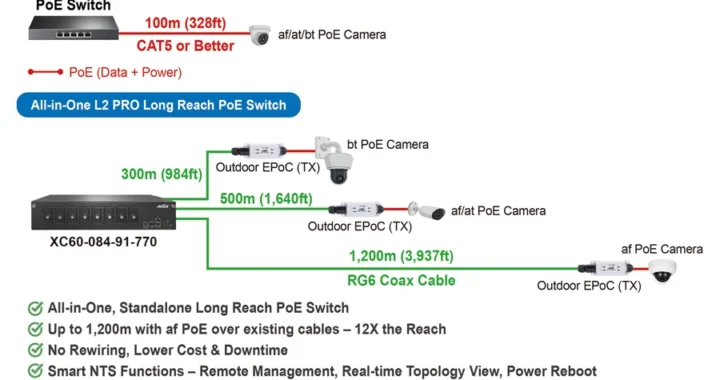
At its core, Power over Ethernet is a technology that allows network cables to carry both electrical power and data. This eliminates the requirement for separate electrical outlets at every device location, providing retailers with unparalleled flexibility in where they deploy cameras, sensors, and access points.
Evolution of the Standard
The latest PoE standards support devices requiring up to 90W of power. This capability is a game-changer for high-performance hardware, such as pan-tilt-zoom (PTZ) cameras, multi-sensor surveillance systems, and advanced wireless access points. Because the system utilizes standard Ethernet cabling, it can transmit gigabits of data, which is essential for fueling the artificial intelligence (AI) applications that are becoming standard in modern loss prevention.

Operational Simplicity
For IT departments, PoE simplifies the architecture of the store. Expanding or reconfiguring a network is as simple as adding a new cable run. Furthermore, network administrators can oversee, manage, and reboot devices from a centralized location, significantly reducing the need for on-site technician visits and minimizing operational downtime.
A New Frontier in Surveillance: The Versa D62-084-MX-DCP
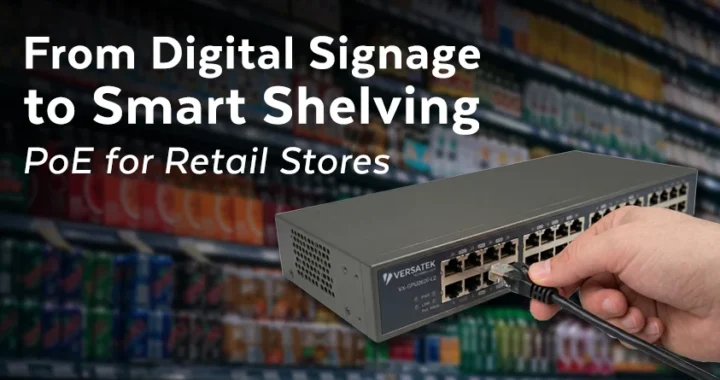
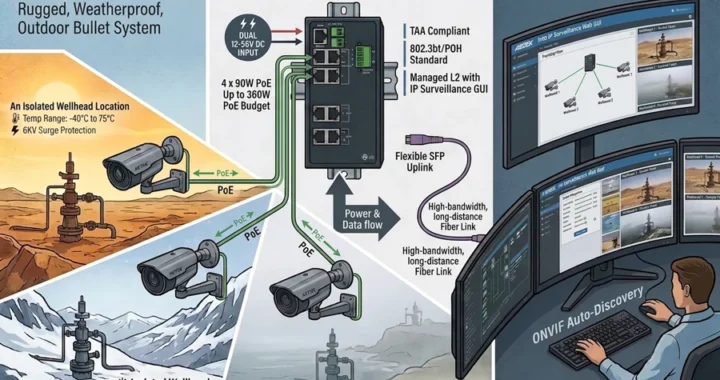
To leverage these benefits, retailers require robust hardware. The Versa D62-084-MX-DCP managed industrial PoE switch is specifically designed for this high-demand environment. Beyond delivering the 90W necessary for cutting-edge cameras, the switch offers specialized features that act as a "command center" for store security.
Advanced Management Features
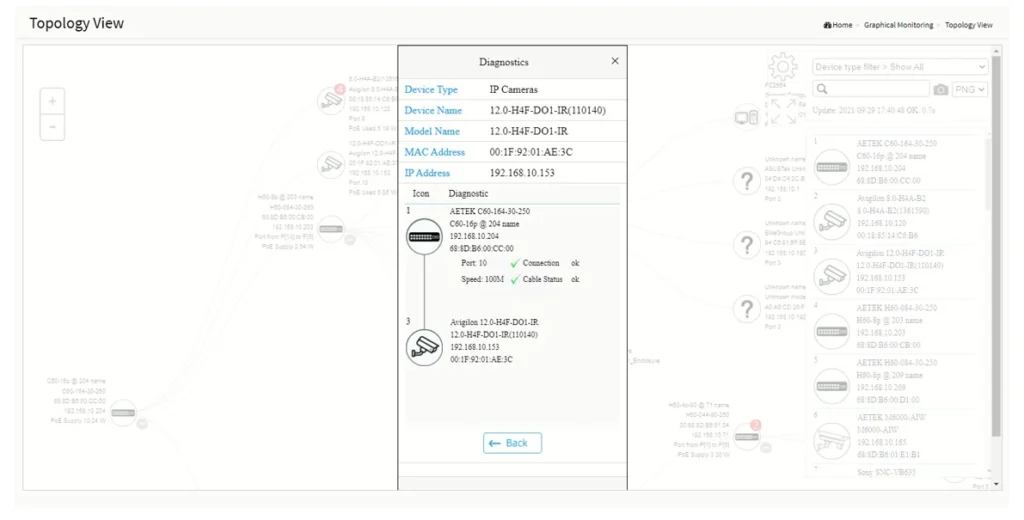
The D62-084-MX-DCP includes an embedded Network Topology System (NTS) with a user-friendly, web-based interface. Key features include:

- Auto Discovery: Using the Open Network Video Interface Forum (ONVIF) protocol, the switch automatically identifies and classifies connected devices. This ensures that cameras, AI software, and recording servers connect seamlessly.
- E-MAP Functionality: This allows managers to visualize their security footprint on a digital map. Whether uploading floor plans or utilizing satellite views, managers can pinpoint the exact location of every sensor, making incident response significantly faster.
- Remote Power Management: Through the web interface, managers can monitor real-time power consumption. If a camera malfunctions, it can be power-cycled remotely, eliminating the need to climb ladders or navigate complex wiring.
- Cable Diagnostics: The switch actively monitors the health of the physical connection. If a port stops receiving data, the switch can run a diagnostic test to determine if the issue is a software glitch or a damaged cable, allowing for proactive maintenance.
Integrating Security with Access Control
The true power of an integrated PoE system lies in its ability to unify diverse security elements. By pairing PoE-powered surveillance cameras with electronic door locks and card readers, retailers can create a cohesive security zone.
For instance, an access reader on a restricted room can be triggered to record high-resolution video the moment a card is swiped. When these switches are paired with an Uninterruptible Power Supply (UPS), the security system remains operational even during power outages—a critical window of vulnerability that criminals often exploit.
Implications: Beyond Loss Prevention
While the primary driver for adopting PoE is often security, the ripple effects on the customer experience are profound. A store that feels safe and operates efficiently is, by definition, a better place to shop.

Enhancing the Customer Journey
Retailers are finding that the same infrastructure used to catch shoplifters can be used to drive sales and customer engagement:
- Dynamic Price Checking: Customers no longer need to hunt for an associate to verify a price. PoE-powered scanning kiosks placed throughout the floor provide instant information, reducing friction at the point of decision.
- Inventory Intelligence: Nothing damages brand loyalty faster than an "out-of-stock" experience. PoE-connected kiosks allow shoppers to check real-time inventory, place backorders, or locate items at nearby branches.
- Personalized Experiences: Modern kiosks can offer customization options—allowing customers to preview fabric colors, sizes, or accessories—and link to loyalty accounts to suggest products based on purchase history.
The Road Ahead: A Strategic Investment
The retail industry is at a crossroads. As shoplifting and retail crime continue to escalate, the status quo is becoming increasingly expensive and ineffective. Nearly 73% of store managers are actively seeking ways to strengthen security without ballooning their budgets.
PoE technology provides the solution to this paradox. It lowers the barrier to entry for advanced security while simultaneously providing the high-speed data backbone required for the "store of the future." By reducing electrical installation costs and energy consumption, PoE pays for itself through operational efficiency.

For the modern retailer, the choice is clear: security and customer experience are no longer separate departments. They are two sides of the same coin, both supported by the same robust, scalable infrastructure. Whether it is through the deployment of intelligent AI cameras or customer-facing engagement kiosks, PoE is the foundation upon which the next generation of retail will be built.
Versa Technology remains at the forefront of this shift, providing the industrial-grade switches necessary to handle the complex, data-heavy demands of today’s retail environment. As retailers look to optimize their margins and protect their assets, integrating PoE into their core infrastructure is not just a technological upgrade—it is a competitive necessity.
For more information on how to optimize your retail network, contact the experts at Versa Technology to discuss your specific infrastructure needs and request a quote for your next deployment.