





The rapid ascent of artificial intelligence is placing unprecedented demands on the physical world. While tech giants like Meta, Microsoft, and Amazon race to scale their computational power, the backbone of this revolution—the data center—is hitting a major bottleneck: a chronic, industry-wide shortage of skilled construction labor.
To bridge this widening gap, Meta has announced a landmark $115-million investment aimed at fast-tracking the recruitment and training of the next generation of craftworkers. This initiative, designed to feed the insatiable demand for AI-ready infrastructure, has received high praise from industry leaders, who view it as a pivotal step toward stabilizing the construction sector’s future.
The Convergence of Tech and Trade
The scale of the "AI Gold Rush" is difficult to overstate. According to research from the global consulting firm McKinsey, AI infrastructure spending in the United States is projected to reach a staggering $6.7 trillion by 2030. As hyperscalers—the massive tech firms providing cloud computing and AI services—scramble to build the facilities necessary to house these massive systems, the construction industry is struggling to keep pace.
"According to our analysis, we see a 350,000-person workforce shortage this year," says Michael Bellaman, President and CEO of Associated Builders and Contractors (ABC). "It’s been chronic. It’s been going on for a while, and these firms are starting to see, as they try to scale up in this race for AI, how it is directly affecting their project timelines."
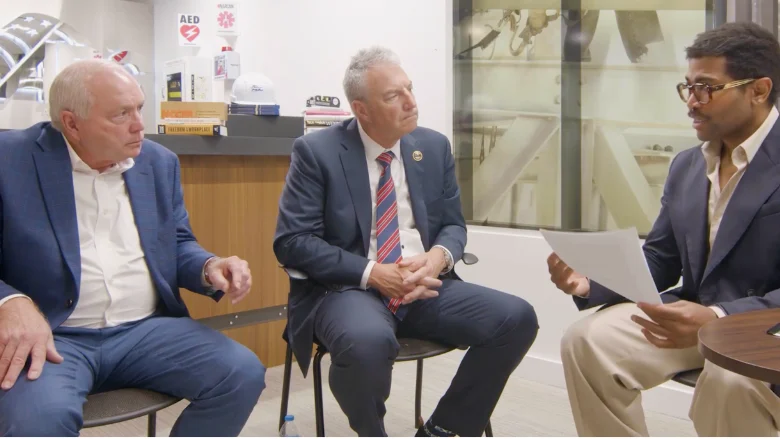
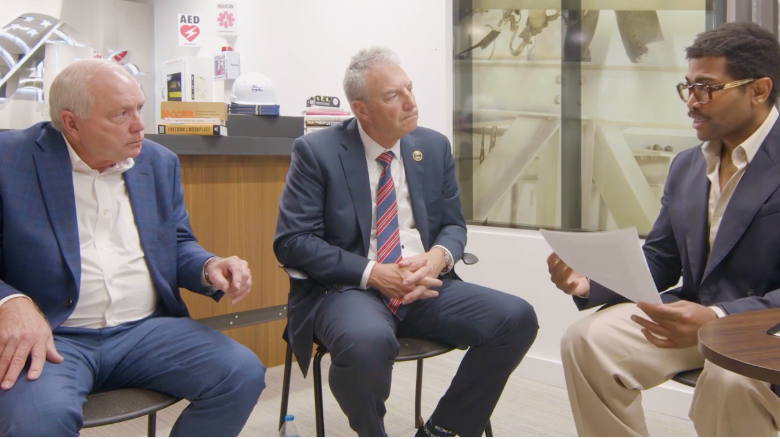
In a recent interview on the ENR Groundbreakers podcast, Bellaman and Boyd Worsham, President and CEO of the National Center for Construction Education and Research (NCCER), discussed how this investment represents a critical alignment between the tech industry’s needs and the necessity of vocational development. The Meta-funded program focuses on high-demand technical trades, including electrical, mechanical, plumbing, welding, and fiber installation—all essential components for the sophisticated infrastructure of a modern data center.
Chronology of a Crisis: From Awareness to Action
The partnership between Meta and the ABC was not a sudden development. It is the result of years of dialogue between tech executives and trade organizations.
- The Lead-Up: Recognizing the mounting labor deficit, Meta reached out to the ABC years ago to identify sustainable pathways for workforce development. The company realized that waiting for the traditional labor market to catch up would result in unacceptable delays for their multi-billion-dollar data center builds.
- The Investment: Meta committed $115 million to create the "America’s Workforce Academy." This initiative is specifically designed to remove barriers to entry for prospective craftworkers.
- The Launch: The program is set to debut in Indiana, Louisiana, Ohio, and Texas. These states serve as the hubs for some of Meta’s most ambitious projects, including a massive $27-billion data center expansion in Louisiana’s Richland Parish.
- The Integration: Participants who complete the training receive a conditional job offer for a Meta construction project and earn formal credentials from the NCCER, ensuring they have a portable, recognized qualification for their future careers.
Breaking Down Barriers: The "America’s Workforce Academy"
One of the primary challenges in attracting new workers to the trades is the upfront cost of training, travel, and basic living expenses. Meta’s initiative is unique because it treats these barriers as solvable logistical hurdles rather than immutable market realities.
The program provides not only the necessary technical training but also financial support in the form of travel assistance, housing, and living stipends. This ensures that the program is accessible to individuals who may have aptitude and drive but lack the initial capital to move or support themselves during the training phase.
"If you think about this, this is not just good for the hyperscaler project. This is good for society," says Boyd Worsham. "This is providing life-changing career opportunities to people that may not get those opportunities elsewhere."
Worsham emphasizes the social mobility aspect of the program, noting that for many participants, this will be their first foray into professional construction. "Some of these people have never been on a construction project," Worsham explains. "Now, they are going to be working on some of the largest, most technologically advanced construction projects in the country."
Data-Driven Demand and Economic Implications
The demand for these workers is not merely a temporary spike; it is a structural shift in the American economy. As data centers become the "factories" of the 21st century, the expertise required to build them is becoming increasingly specialized.
The $6.7 trillion McKinsey forecast highlights the urgency. Every data center project involves thousands of hours of skilled labor, from high-voltage electrical work to precision mechanical cooling systems. Without a consistent pipeline of trained professionals, the "cost of compute" could skyrocket, slowing down the very AI advancements that these companies are racing to deliver.
By financing the pipeline directly, Meta is effectively "de-risking" its own supply chain. It is a model that other hyperscalers are likely to watch closely. If successful, this private-sector intervention could become the standard template for how major corporations address the national skilled labor shortage in the coming decades.
Policy, Immigration, and the Future of the Labor Force
As the program gains momentum, the discussion around labor naturally touches on broader national policy, particularly immigration. With the current political climate—marked by a heightened focus on border security and deportation—the construction industry remains in a precarious position regarding its reliance on migrant labor.
When asked how the ABC intends to ensure workers feel secure in participating in these programs, Michael Bellaman maintains a focus on legal compliance. "I think quite simply, if you are here in the United States, and you are here legally and you’re permitted to work here legally—no problem," he states.
However, Bellaman is quick to point out that the current immigration system is fundamentally ill-equipped to handle the realities of the modern economy. He notes that the ABC is actively pushing for legislative reform, specifically the bipartisan Essential Workers for Economic Advancement Act (H.R. 5494). This legislation seeks to create a nonfarm H-2C temporary worker visa program, which would provide a more robust and predictable legal pathway for workers to enter the construction sector.
"The H-2B visa system, for our industry, just doesn’t work. The numbers don’t make any sense," Bellaman argues. "If it were in place 10 years ago, we wouldn’t have a lot of the issues that we have today. We are in a global competition, and I think this country is finally realizing that a key to the success of this nation—and must be a key—is our labor force."
Long-Term Outlook: A New Blueprint for Infrastructure
The collaboration between Meta, the ABC, and the NCCER signals a shift in how infrastructure development is viewed by major technology firms. It is no longer enough to simply design high-tech hardware; companies must now take an active role in "building the builders."
For the construction industry, this investment provides a much-needed injection of capital and training, but more importantly, it provides a sense of prestige and scale. By connecting the average worker to the transformative, world-changing projects of the AI era, the industry is positioned to attract a new generation of talent that might otherwise gravitate toward office-based tech jobs.
As the "America’s Workforce Academy" begins its operations in the coming months, the results will provide a litmus test for the industry. If the program can successfully scale and produce the thousands of electricians, welders, and plumbers required to keep the AI revolution moving forward, it may well prove to be the most important construction innovation of the decade.
In a world defined by software and algorithms, the physical world—and the people who build it—remains the ultimate bottleneck. With this $115 million bet, Meta is betting that the human element is not just a necessity, but the most vital piece of the infrastructure puzzle.