





In an era defined by digital transformation, the physical storefront is undergoing a profound metamorphosis. While e-commerce continues to command a significant share of global retail spending, brick-and-mortar locations remain the heartbeat of the customer experience. Modern shoppers are not abandoning physical stores; rather, they are demanding that these spaces evolve to mirror the efficiency, personalization, and connectivity of their online counterparts.
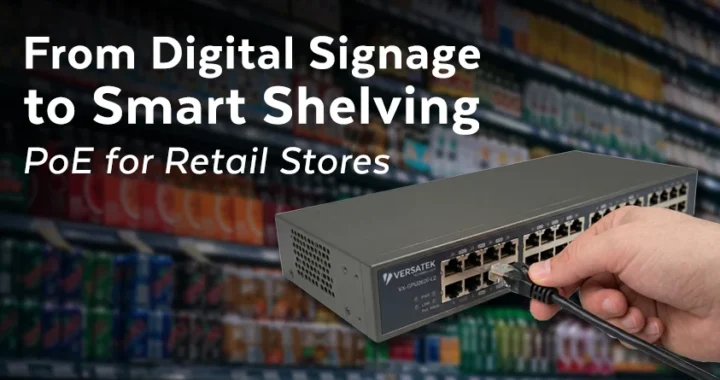
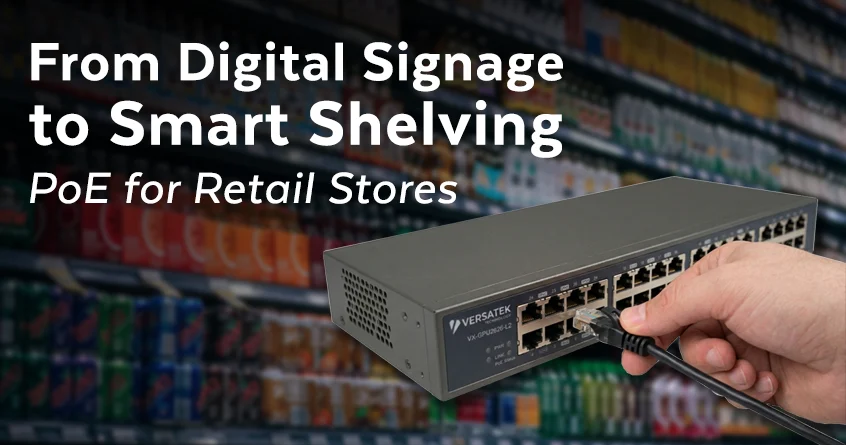
To bridge this gap, retailers are increasingly turning to Power over Ethernet (PoE) infrastructure. By consolidating power and data delivery into a single cable, PoE is becoming the invisible foundation upon which the "Storefront of the Future" is built. From massive retail warehouses to the corner convenience store, this technology is providing the scalability, security, and operational agility necessary to thrive in a hyper-competitive market.
Main Facts: The PoE Revolution
At its core, Power over Ethernet (PoE) is a networking technology that allows electrical power to be transmitted alongside data over standard twisted-pair Ethernet cabling. This eliminates the need for separate electrical drops for every connected device, effectively untethering technology from traditional power outlets.
The primary advantages of this approach include:
- Installation Efficiency: By removing the need for professional electricians to wire every camera, sensor, or kiosk, retailers can slash installation costs and timelines.
- Dynamic Scalability: Retail layouts are fluid. Seasonal shifts and changing consumer traffic patterns require frequent floor-plan adjustments. PoE allows devices to be moved or added with plug-and-play simplicity.
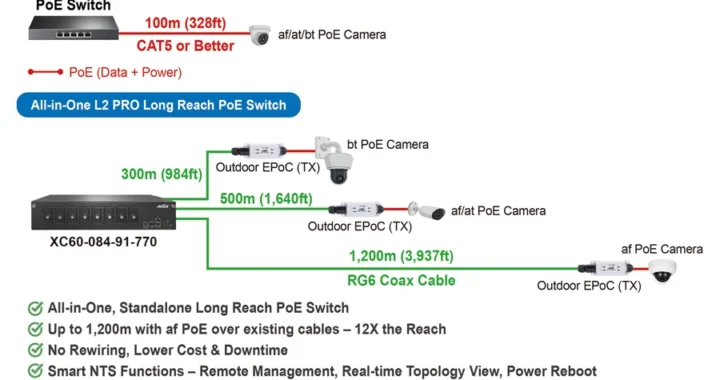
- High-Wattage Capabilities: Modern IEEE 802.3bt standards (PoH/PoE++) now support up to 90 watts of power per port, enabling the operation of sophisticated, power-hungry hardware such as high-definition PTZ cameras, interactive digital kiosks, and integrated point-of-sale (POS) systems.
Chronology of Retail Infrastructure
The evolution of the retail environment has progressed through three distinct phases:
- The Analog Era (Pre-2000s): Infrastructure was siloed. Security cameras used coaxial cables, data networks were limited, and power was managed through rigid, localized electrical grids. Scaling or modifying these systems was a major capital expenditure.
- The Connected Transition (2000s–2015): The rise of the internet forced retailers to integrate Wi-Fi and basic POS connectivity. However, these systems often relied on a "hodge-podge" of power adapters and cabling, leading to "cable clutter" and high maintenance overhead.
- The PoE Integration (2016–Present): Retailers have moved toward unified, intelligent networks. By leveraging PoE, the entire store becomes a single, manageable ecosystem. Data and power are centralized, allowing for remote monitoring, automated alerts, and the integration of IoT devices that communicate in real-time.
Supporting Data: The Case for Efficiency
The pressure on modern retailers is immense. With razor-thin profit margins—often falling below 3% in large-format warehouses and below 2% in grocery sectors—operational efficiency is not just a goal; it is a survival strategy.

- Security Stakes: According to data from the FBI, 15% of all robberies in 2021 occurred in convenience stores and gas stations. The ability to deploy high-resolution, PoE-powered surveillance at perimeters and fuel pumps creates a critical deterrent.
- Customer Retention: A study regarding supermarket safety found that 38% of shoppers have witnessed a crime while shopping, and a staggering 70% of those individuals reported avoiding stores where they felt unsafe.
- Operational Scale: The average retail warehouse spans 146,000 square feet. Managing this scale requires thousands of endpoints. Without a robust PoE infrastructure, tracking inventory via RFID or adjusting environmental sensors for perishable goods would be logistically impossible and financially prohibitive.
Deep Dive: Sector-Specific Implications
Convenience Stores: Speed and Surveillance
In the convenience sector, the trade-off is clear: customers sacrifice selection for speed. Because these stores often operate 24/7, they represent a unique security challenge. PoE enables the deployment of smart security solutions, including license plate recognition (LPR) software and motion-activated surveillance, which can trigger automated alerts to local authorities. By centralizing these systems, store managers can ensure that even in remote or high-risk locations, the store remains a protected environment for both staff and patrons.
Retail Warehouses: Environmental Intelligence
Large-format retailers face the challenge of climate control and inventory precision. In a 146,000-square-foot space, temperature fluctuations can result in massive losses of perishable goods. PoE-enabled sensors provide granular environmental data—monitoring humidity and temperature in real-time. If a freezer unit experiences a spike in temperature, the network automatically alerts the management system, which can then trigger an automated adjustment, saving thousands of dollars in spoiled inventory.
Supermarkets: The Checkout Experience
Efficiency at the checkout is the single greatest driver of customer satisfaction in the grocery sector. PoE-powered POS systems ensure that payment terminals remain online even if local power fluctuates. Furthermore, by connecting personal shopping tablets via PoE-enabled Wi-Fi access points, stores can empower employees to assist customers with online order fulfillment, price checks, and stock inquiries in real-time, effectively blurring the line between digital and physical shopping.
Official Perspectives: The Future-Proofing Strategy
Industry leaders emphasize that retail success is no longer about predicting the future, but about building an infrastructure that can adapt to it. Retailers who invest in proprietary, rigid systems often find themselves trapped when new technologies emerge.
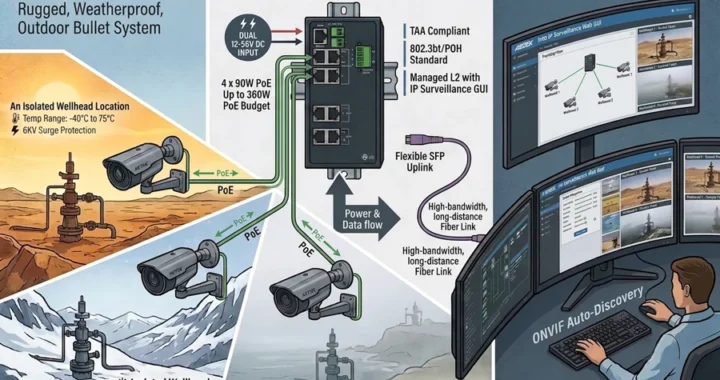
Versa Technology, a leader in industrial networking, advocates for the use of Managed Industrial PoE switches to build resilient environments. Their D60-044 Managed Industrial switch, for instance, is designed to withstand extreme temperatures and power surges, ensuring that the network remains the backbone of the store even under duress. When coupled with an uninterruptible power supply (UPS), these systems offer the redundancy required for modern retail operations.
"The goal," says a lead engineer at Versa, "is to create an infrastructure that is as dynamic as the retail market itself. When you use a managed PoE switch, you aren’t just powering a device; you are gaining visibility into your entire operation. You can monitor power draw, reboot frozen devices remotely, and prioritize traffic for mission-critical applications like security or payment processing."

Implications: Building the Resilient Store
The shift toward PoE-centric architecture has significant long-term implications for the retail industry:
- Reduced Total Cost of Ownership (TCO): While the initial installation of a high-capacity PoE network may represent an investment, the reduction in maintenance, energy costs, and the elimination of ongoing electrical contracting work leads to significant ROI over time.
- Enhanced Data-Driven Decision Making: Every PoE-connected device is an endpoint capable of generating data. This data feeds into central management systems, providing retailers with actionable insights into foot traffic, dwell time, and inventory turnover.
- Future-Readiness: As 5G, AI-driven security, and advanced robotics become standard in retail, the underlying network must be ready to support them. A 90-watt PoE-capable infrastructure is the necessary prerequisite for these next-generation technologies.
Conclusion: The Path Forward
The physical store is not dying; it is being upgraded. The integration of PoE technology represents a fundamental shift in how retailers approach their physical footprint. By moving away from legacy electrical layouts toward a centralized, intelligent, and flexible network, retailers can protect their assets, improve their profit margins, and provide the seamless, high-tech experience that modern consumers demand.
For retailers looking to stay ahead of the curve, the message is clear: the infrastructure you lay today will determine your ability to innovate tomorrow. Whether you are managing a single convenience store or a national chain of warehouses, building a modern, scalable PoE infrastructure is the most effective way to secure your place in the future of commerce.
To learn more about how to future-proof your retail environment with advanced PoE solutions, contact the experts at Versa Technology.