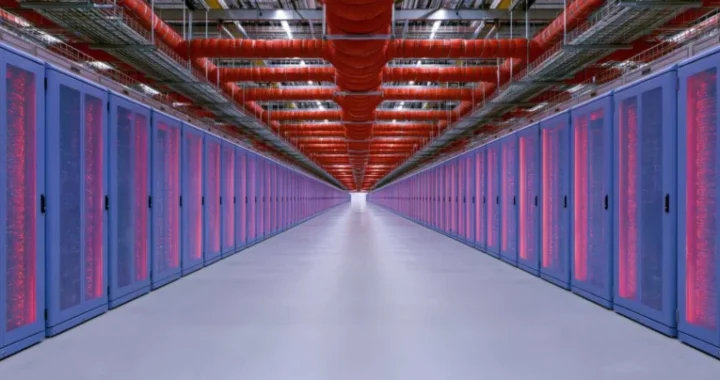








The rapid, unyielding expansion of Artificial Intelligence (AI) is not merely a technological revolution; it is a structural stress test for the global data center industry. As organizations race to build the compute capacity required to support Large Language Models (LLMs) and generative AI, the industry has hit a paradoxical wall: the demand for unprecedented speed is colliding with the absolute requirement for mission-critical reliability.
In a recent industry webinar hosted by the Telecommunications Industry Association (TIA), experts Mike Regan and Google’s Govind Ramu dissected this friction, arguing that the traditional, general-purpose quality frameworks that served the industry for decades are no longer sufficient. As infrastructure scales at a pace never before witnessed, the industry is moving toward a landmark initiative: DCE 9000 (Data Center Excellence 9000), a specialized quality standard designed to harmonize the fragmented requirements of the digital age.
Main Facts: The Scaling Crisis
At the heart of the current crisis is a fundamental mismatch between legacy quality management and modern operational demands. Traditionally, data center operators relied on a mix of internal, bespoke standards and broad, international certifications like ISO 9001. While ISO 9001 provides a stable foundation for general management, it lacks the technical granularity required for the hyper-complex, highly interconnected environments of modern AI data centers.
The primary challenges currently facing the ecosystem include:
- Production vs. Precision: Equipment suppliers are being pressured to scale manufacturing output to meet server rack demand while simultaneously adhering to tighter tolerances for thermal management and power distribution.
- Workforce Volatility: The rapid deployment of data centers has led to a surge in new workforce entrants, often in environments where standardized operational processes have yet to fully mature.
- Supply Chain Fragmentation: Inconsistent customer requirements have forced suppliers to navigate a labyrinth of redundant audits, each with varying criteria, which diverts valuable resources away from innovation and toward compliance paperwork.
Chronology: From Generalization to Specialization
The journey toward a unified data center standard did not happen overnight; it is the culmination of years of industry-wide pain points reaching a boiling point.
- Pre-2020 (The Foundation Era): The industry operated primarily on ISO 9001, supplemented by localized company-specific audits. This was manageable when data center builds were linear and predictable.
- 2021–2023 (The AI Acceleration): The massive surge in AI investment triggered a hyper-growth cycle. Builders began to experience "cascading failures"—minor quality lapses in the supply chain that, at scale, resulted in massive, systemic operational disruptions.
- Early 2024 (The Gap Analysis): Industry leaders identified that the lack of a "common language" for quality was creating a bottleneck. The TIA, alongside key stakeholders from tech giants like Google, began formalizing the need for a sector-specific standard.
- Late 2024 (The DCE 9000 Initiative): The formal development of the Data Center Excellence 9000 framework was announced. Unlike traditional multi-year standards development, the DCE 9000 initiative utilizes an agile, near-real-time development cycle to ensure the standard keeps pace with rapid technological shifts.
Supporting Data and Technical Realities
The need for a shift in strategy is backed by the stark reality of modern infrastructure performance requirements. In a traditional enterprise environment, 99.99% uptime might have been the gold standard. In the age of AI, where training clusters consume megawatts of power and demand constant, ultra-low-latency cooling, the tolerance for error has shrunk toward zero.
Data suggests that "hidden" costs of fragmented quality management include:
- Redundancy Costs: Suppliers spend an estimated 15–20% of their operational budget on redundant quality audits for different clients.
- Risk Exposure: Research indicates that in environments where processes are not standardized, the probability of "human factor" errors increases by nearly 40% during rapid commissioning phases.
- Deployment Velocity: Projects utilizing a unified quality framework report a 25% reduction in commissioning time due to fewer "rework" cycles and higher initial equipment acceptance rates.
These figures illustrate that quality is no longer a "back-office" concern—it is a primary driver of deployment speed and operational ROI.
Official Perspectives: The Case for Change
During the TIA-hosted discussion, Govind Ramu of Google emphasized that the industry is at a crossroads. "We cannot continue to rely on a patchwork of requirements," Ramu stated. "When every operator has a different definition of ‘quality’ for the same piece of hardware, the supply chain becomes inefficient, and the final infrastructure becomes inherently less reliable."
Mike Regan of the TIA echoed these sentiments, highlighting that the intent of DCE 9000 is not to add another layer of bureaucracy, but to "de-clutter" the ecosystem. By establishing a single, certifiable baseline, the industry can stop auditing the same process five different ways and start focusing on innovation.
The Role of ISO 9001
It is important to note that DCE 9000 is not intended to replace ISO 9001. Instead, it acts as a "sector-specific extension." It takes the core tenets of ISO—systematic management, continuous improvement, and leadership commitment—and overlays them with the specific technical, safety, and operational requirements that are unique to the data center environment.
Implications: The Future of Infrastructure
The move toward a unified quality framework has profound implications for the global digital economy.
1. Strengthening the Supply Chain
By creating a common baseline, suppliers will no longer be forced to manage a fractured portfolio of audit requirements. This will allow for greater economies of scale, more predictable product quality, and, crucially, a stronger ability for suppliers to invest in R&D rather than administrative overhead.
2. Operational Resilience at Scale
As AI clusters grow, the complexity of managing power, cooling, and network architecture grows exponentially. A unified quality standard ensures that when an operator scales from a 10MW facility to a 500MW campus, the quality processes scale with them. This creates a "standardized reliability" that protects the massive capital investments currently being poured into the sector.
3. A Catalyst for Innovation
Perhaps the most significant implication is that quality management will become an "enabler" rather than a "constraint." When the baseline for performance is clearly defined and widely accepted, it creates a sandbox for innovation. Companies can iterate on new cooling technologies or power distribution methods with the confidence that the underlying quality framework will support the safe and efficient integration of those technologies.
How to Get Involved: A Call to Collaboration
The development of DCE 9000 is a collaborative effort, and its success is contingent upon the broad participation of the entire value chain. The TIA is actively seeking input from:
- Operators: To define the real-world performance expectations.
- Suppliers: To ensure the standards are achievable and promote efficiency.
- Builders and Integrators: To provide the practical perspective on commissioning and maintenance.
The industry is currently in a "shaping phase," where feedback from the field is being used to refine the standard in real-time. Organizations that engage now have a unique opportunity to influence the standards that will govern the next generation of AI infrastructure.
For those looking to participate, the TIA provides comprehensive resources via their official portal. Engaging in this process is not merely a matter of compliance; it is a strategic move to ensure your organization’s operations are aligned with the future of the global digital economy.
Final Thoughts
The AI boom is not slowing down, and the infrastructure supporting it is becoming the most critical asset in the modern enterprise. In this high-stakes environment, quality cannot be an afterthought. By transitioning from a fragmented, audit-heavy approach to a unified, sector-specific standard, the data center industry can build the resilient, scalable, and high-performance infrastructure required to power the next century of technological progress.
The question is no longer if we need a unified standard, but how quickly the industry can rally around it. The future of AI is being built today—and it must be built on a foundation of excellence.
Learn More:
- Watch the full TIA/Google Webinar: Access the Recording
- Explore DCE 9000 Resources: TIA Official Documentation
- Join the Conversation: Contact the TIA team at [email protected] to participate in the development of the DCE 9000 standard.