







ORLANDO, Florida – From November 17–19, the telecommunications industry converged on Orlando for the annual Broadband Nation Expo, a landmark event that served as a high-stakes strategy session for the future of American digital infrastructure. As the demand for high-bandwidth, low-latency connectivity reaches unprecedented levels, industry leaders, policymakers, and innovators gathered to address the dual challenge of nationwide expansion and the architectural transformation of the modern internet.
At the heart of the event was a clear mandate: broadband is no longer a luxury, but the foundational utility of the 21st century. Dave Stehlin, CEO of the Telecommunications Industry Association (TIA), set the tone in his keynote address, framing the current moment as a critical inflection point where the convergence of AI, fiber-optic expansion, and data center evolution demands a new, unified approach to industry standards.
Main Facts: The State of the Industry
The narrative presented at the Broadband Nation Expo was one of rapid, albeit complex, evolution. The transition from legacy analog and copper-based systems to a sophisticated, multi-modal fabric of fiber, 5G, and satellite connectivity is effectively complete.
The primary takeaway from the conference is that the "network" is no longer just a collection of wires and towers; it is a holistic ecosystem. This ecosystem is currently being re-engineered to accommodate the explosive compute demands of generative AI and cloud-native applications. With 5.5 billion internet users worldwide, the pressure on this infrastructure to remain reliable, secure, and scalable has never been higher.
Chronology of Connectivity: A Rapid Ascent
To understand the urgency of the current infrastructure push, one must look at the unprecedented speed at which modern technology has permeated society. Stehlin’s address highlighted a recurring theme in technological adoption: the "compression of time."
- The Era of Electricity: It took decades for the electrical grid to reach a quarter of the U.S. population.
- The Telephone Age: The rollout of telephonic infrastructure followed a similar, multi-generational trajectory.
- The Broadband Breakthrough: The internet reached that same 25% penetration milestone in a mere seven years.
- The AI Acceleration: Generative AI tools have achieved adoption rates that dwarf even the internet’s initial trajectory, putting immediate, massive strain on the underlying network capacity.
This chronology underscores a fundamental shift in market dynamics: infrastructure is no longer being built in anticipation of a slow-growing user base. Instead, it is being forced to play catch-up to a population that adopts disruptive technology almost instantly.
Supporting Data: The Economics of the Digital Revolution
The financial commitment to this transformation is staggering. Since the mid-1990s, more than $2.2 trillion has been funneled into U.S. communications infrastructure. In 2024 alone, industry investment reached $90 billion, a testament to the ongoing race to improve performance and coverage.
Key Performance Metrics:
- Cost Efficiency: While internet speeds have seen exponential increases, the cost per megabit has plummeted by 98 percent, proving that economies of scale are working in favor of the consumer.
- Traffic Distribution: As of 2024, wireless networks carry over 60 percent of all global internet traffic, highlighting the critical importance of robust radio access and backhaul connectivity.
- Future Investment: According to projections from McKinsey, global investment in data centers is expected to exceed $6 trillion by 2030. This surge is driven by the necessity for higher computing density and energy-intensive AI-centric architectures.
Data Centers as the New Network Core
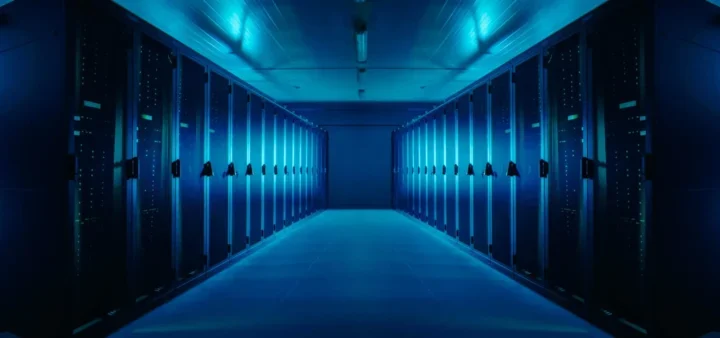
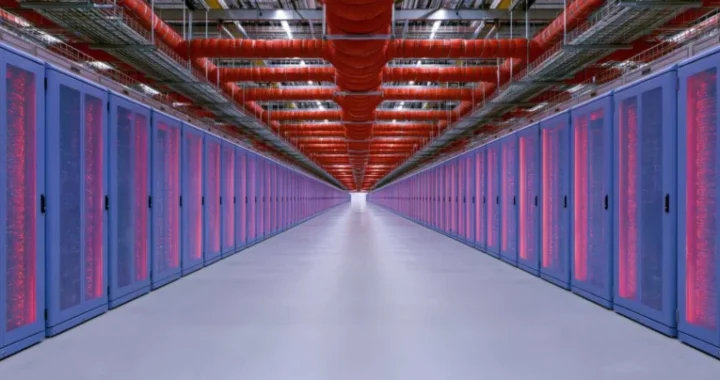
Perhaps the most significant technical shift discussed in Orlando was the redefinition of the "network core." Historically, the core was viewed as the switching centers and long-haul fiber routes. Today, the core is the data center.
As cloud workloads and AI models become the primary drivers of digital traffic, the data center has moved from a peripheral storage facility to the engine room of the economy. However, this shift comes with significant risks. As facilities scale, their architectural complexity grows, meaning that even minor disruptions can have cascading effects across the digital economy.
The TIA Quality Initiative
To mitigate these risks, the TIA and its QuEST Forum community have launched a formal Data Center Quality initiative. This program is designed to move beyond ad-hoc operational practices and toward a standardized global framework based on Total Quality Management (TQM) principles.
The initiative seeks to standardize:
- Reliability: Ensuring uptime in a world where "offline" is no longer an option.
- Security: Protecting the physical and digital perimeters of the data centers that hold the world’s most sensitive information.
- Continuous Improvement: Creating a feedback loop where operational data informs future design standards.
Industry support for this effort is already robust. Major hyperscalers and social media platforms—including Google—have begun collaborating with the TIA to ensure that as the world builds more data centers, it builds them to a universal standard of excellence.
Official Responses and Industry Implications
The Broadband Nation Expo served as a platform for industry leaders to candidly discuss the bottlenecks impeding progress. Despite the massive investment numbers, the "last mile" and "middle mile" challenges remain, alongside structural barriers to entry.
Workforce Development
Stehlin emphasized that hardware is useless without the human capital to install, maintain, and secure it. The current "talent gap" in cybersecurity and network engineering is a primary concern. Educational institutions and state governments are beginning to align their curricula with the needs of the telecommunications sector, but the consensus remains that current efforts must be accelerated to meet the demands of 2030 and beyond.
Regulatory and Permitting Hurdles
The "slow permitting" issue remains a point of frustration for the industry. Whether it is fiber-optic line deployment, the upgrading of subsea cable landing points, or the installation of new towers, administrative delays are frequently cited as the primary cause for project stagnation. These delays often impact well-engineered, fully funded projects, proving that technical readiness is often ahead of political and regulatory readiness.
The Security Imperative
With subsea cable systems acting as the silent arteries of global commerce, the vulnerability of landing points has become a top-tier security issue. Stehlin noted that the industry must move toward more robust, collaborative security protocols that treat these facilities as "critical infrastructure" in the most literal sense of the term.
Conclusion: A United Future
The closing sentiment of the Broadband Nation Expo was one of collective responsibility. The digital ecosystem is now too large and too important for any single entity to manage in isolation.
The TIA’s commitment to expanding the Broadband Nation ecosystem represents a broader shift toward public-private partnerships. By bringing together government partners, technology providers, and network operators, the TIA aims to foster an environment where infrastructure growth is not hindered by outdated processes.
As the industry looks toward the next decade, the roadmap is clear:
- Standardize quality through global frameworks like the Data Center Quality initiative.
- Streamline policy to reduce the friction of infrastructure deployment.
- Cultivate a workforce capable of managing an increasingly complex, AI-driven landscape.
The proceedings in Orlando confirmed that while the technical hurdles are immense, the roadmap for a high-performance, resilient American digital future is being drawn. The task now lies in executing that plan with the same speed and innovation that defined the first thirty years of the broadband revolution.