




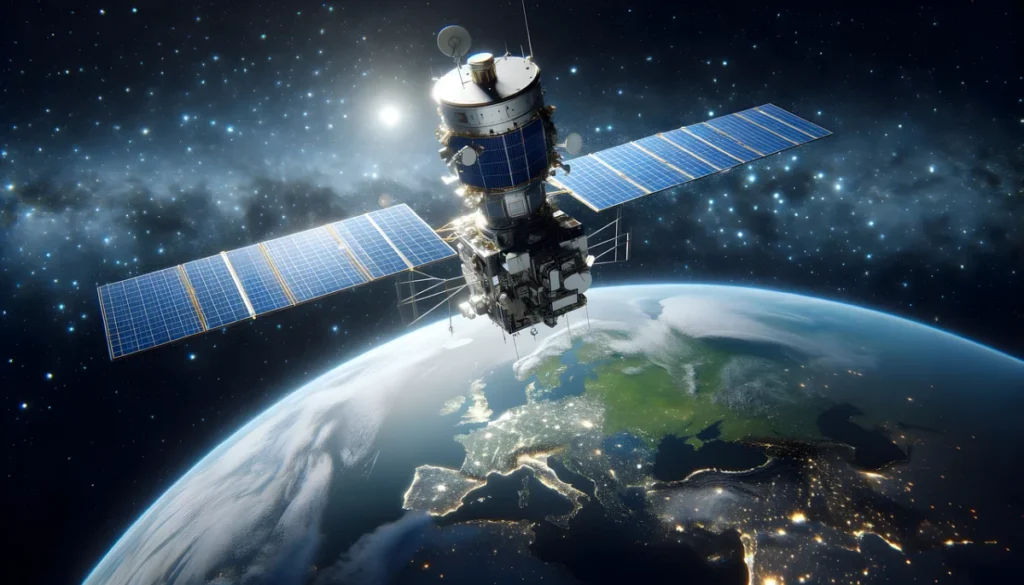
The United Kingdom’s aspirations to become a "science and technology superpower" received a significant boost this week as the UK Space Agency (UKSA) announced a new £42 million funding initiative. This strategic grant call, managed through the Department for Science, Innovation and Technology (DSIT), is specifically designed to catalyze innovation within the rapidly expanding Low Earth Orbit (LEO) satellite sector. By targeting the high-volume manufacturing and technological breakthroughs required for next-generation constellations, the UK government aims to cement the nation’s position as a primary global supplier in an industry currently dominated by a handful of international aerospace giants.
Main Facts: A Strategic Injection into the Orbital Economy
The announcement marks the opening of the third call under the Connectivity in Low Earth Orbit (C-LEO) programme. At its core, the initiative seeks to bridge the gap between experimental research and commercial scalability. The UK government has earmarked £42 million to support projects that can demonstrate not only technical excellence but also a clear pathway to commercial integration within global supply chains.
The grants are substantial, with the UK Space Agency offering between £4 million and £25 million per project. This tier of funding is designed to attract mid-to-large-scale consortia capable of delivering complex engineering solutions. However, the funding comes with a rigorous caveat: applicants must provide a "compelling element of matched funding." This requirement ensures that the private sector maintains "skin in the game," sharing the financial risk while ensuring that the developed technologies have genuine market demand and commercial viability.
The primary focus of this funding call is the development of "high-volume constellation technologies." Unlike traditional satellite missions, which often involve bespoke, one-off builds, modern LEO constellations require the mass production of hundreds or even thousands of interconnected units. The UKSA is specifically looking for innovations in:
- Optical Inter-Satellite Links (OISLs): Utilizing lasers rather than traditional radio frequencies to transfer data between satellites, significantly increasing bandwidth and security.
- Active Antennas: Advanced phased-array systems that allow satellites to steer communication beams electronically without moving the physical hardware.
- Regenerative Processing: On-board digital processing that allows satellites to de-modulate, process, and re-route data in orbit, reducing the reliance on ground stations.
- Advanced User Terminals: The ground-side hardware required to connect end-users to LEO networks, focusing on reducing costs and increasing portability.
Chronology: The Roadmap to 2026 and Beyond
The rollout of the C-LEO Call 3 follows a structured timeline designed to accommodate the complex planning required for aerospace R&D. While the announcement was made this week, the window for application remains open for a significant duration, reflecting the long-lead times inherent in space technology development.
- Launch Phase (Current): The UK Space Agency has officially opened the call for proposals, inviting consortia from academia and industry to begin forming partnerships and drafting technical specifications.
- Application Deadline (September 7, 2026): In a move that underscores the long-term nature of the UK’s space strategy, the first stage of applications will close in late 2026. This extended window allows for the formation of international partnerships and the alignment of private capital with government objectives.
- Review and Notification (December 2026): Following a rigorous peer-review and economic assessment process, successful applicants will be notified of the final outcomes by December 2026.
- Project Commencement (2027 onwards): Funded projects are expected to hit the ground running in early 2027, aligning with the projected surge in global demand for LEO-based broadband and positioning services toward the end of the decade.
Supporting Data: The Rising Tide of the LEO Market
The UK’s decision to double down on LEO technology is backed by a wealth of economic data suggesting that the "New Space" economy is one of the fastest-growing sectors globally. According to industry analysts, the global satellite communication market is projected to reach a valuation exceeding $120 billion by 2030, with LEO constellations accounting for the lion’s share of that growth.
The Shift from GEO to LEO
Traditional Geostationary (GEO) satellites sit 35,786 kilometers above the Earth. While they offer broad coverage, they suffer from high "latency"—the delay in data transmission. LEO satellites, orbiting at altitudes between 500 and 2,000 kilometers, offer latency speeds comparable to fiber-optic cables on the ground. This makes them essential for 5G integration, autonomous vehicle navigation, and high-frequency financial trading.
UK Space Sector Performance
The UK space sector is already a high-performing engine of the national economy. Recent figures from the UK Space Agency indicate:
- Direct Economic Contribution: The sector generates approximately £17.5 billion in annual income.
- Employment: It supports over 48,000 high-skilled jobs, from engineers and data scientists to legal and insurance experts specializing in space law.
- Growth Rate: The industry has seen a consistent growth rate of over 5% annually, outperforming the wider UK economy.
- Export Intensity: Over 30% of the sector’s income is derived from exports, a figure the C-LEO programme intends to increase by making UK-made components the standard for global constellations.
The £42 million investment is viewed as a "force multiplier." By targeting the £4M–£25M range, the government is focusing on the "Valley of Death" in innovation—the phase where a technology is too advanced for basic research grants but still too risky for full-scale commercial bank lending.
Official Responses: A Vision for Sovereign Capability
The Department for Science, Innovation and Technology (DSIT) has been vocal about the strategic necessity of this funding. Officials emphasize that the C-LEO programme is not merely an industrial subsidy but a cornerstone of national security and economic resilience.
A spokesperson for the UK Space Agency noted that the requirement for matched funding is a deliberate policy choice. "By requiring industry to contribute a compelling element of funding, we are ensuring that the projects we back are those with the highest potential for commercial success. We are looking for technologies that will not just sit in a lab, but will be integrated into the next generation of global satellite networks."
Government ministers have also highlighted the role of space in "leveling up" the UK. While London and the South East remain hubs for space finance and insurance, the manufacturing and testing of satellite hardware often take place in clusters across Scotland (Glasgow is a global leader in small-sat manufacturing), the North West, and the Midlands. This grant call is expected to stimulate activity across these regional hubs.
Furthermore, the focus on "optical links" and "active antennas" reflects a strategic pivot. As the radio frequency spectrum becomes increasingly crowded and prone to interference, the UK is positioning itself as the leader in laser-based communication—a field where it already possesses significant academic and industrial expertise.
Implications: Reshaping Connectivity and National Security
The implications of the C-LEO Call 3 extend far beyond the immediate aerospace industry. The success of this programme could fundamentally alter several key areas of modern life:
1. Closing the Digital Divide
While terrestrial fiber is efficient in urban areas, it is prohibitively expensive to lay in remote or mountainous regions. A robust LEO network, powered by UK technology, could provide high-speed internet to every corner of the British Isles and the Commonwealth, facilitating remote education and telemedicine in underserved communities.
2. National Security and Sovereign Data
In an era of geopolitical instability, the ability to maintain secure, jam-resistant communication channels is paramount. By developing "regenerative processing" and "optical links" domestically, the UK ensures it has the sovereign capability to operate its own secure networks without total reliance on foreign-made hardware that could contain vulnerabilities.
3. Environmental Monitoring
Advanced active antennas and better data processing allow for more precise Earth observation. The technologies funded by this grant will likely find secondary applications in monitoring climate change, tracking illegal fishing, and managing natural disasters in real-time.
4. Economic Multipliers
For every £1 invested by the UK Space Agency, historical data suggests a return of nearly £7 in wider economic benefits. The £42 million investment could, therefore, stimulate nearly £300 million in economic activity over the next decade as the supply chain for these technologies matures.
5. Competitive Positioning against SpaceX and Starlink
While Elon Musk’s Starlink currently dominates the LEO landscape, the UK’s strategy is not necessarily to build a competing "sovereign constellation" (though it retains a stake in OneWeb), but rather to become the supplier of choice for all constellations. By mastering the components—the "picks and shovels" of the space race—the UK can profit regardless of which specific satellite network wins the market share.
In conclusion, the £42 million grant call is a calculated gamble on the future of connectivity. By demanding matched funding and focusing on high-volume, high-complexity hardware, the UK Space Agency is attempting to move the British space sector from a niche player into the industrial heart of the new orbital economy. As the September 2026 deadline approaches, the global aerospace community will be watching closely to see which innovations will emerge from this strategic British investment.