






In the hyper-competitive arena of global telecommunications, network stability has transcended its status as a mere technical metric to become a fundamental strategic requirement for corporate survival. As providers race to deploy next-generation optical infrastructures and expand FTTH (Fiber-to-the-Home) footprints, the pressure to maintain "always-on" connectivity has never been higher. Yet, amidst the flurry of investment in marketing and infrastructure expansion, one critical operational indicator remains persistently undervalued: Mean Time to Repair (MTTR).
Often dismissed as a dry, back-office KPI, MTTR is, in reality, the heartbeat of a connectivity provider’s health. It acts as a direct multiplier for customer churn, operational expenditure (OPEX), field team productivity, and brand equity. In this comprehensive analysis, we explore why MTTR is the primary driver of subscriber attrition and how the next generation of predictive technologies is transforming this metric from a reactive burden into a strategic asset.
1. Defining the MTTR Landscape in Optical Networks
At its most fundamental level, MTTR measures the average time elapsed between the occurrence of a network failure and the full restoration of service. In the complex, sprawling topologies of modern fiber-optic networks, this timeline is rarely linear. It is composed of four distinct, often overlapping, phases:
- Detection Latency: The time between the physical failure and the moment the Network Operations Center (NOC) becomes aware of the issue.
- Diagnostic Duration: The interval required to pinpoint the exact location and nature of the fault.
- Dispatch and Mobilization: The time spent triaging the ticket and getting the right field personnel to the site.
- Physical Restoration: The actual time required for the repair, splicing, or component replacement.
The reality of modern telecommunications is that physical repair often accounts for the smallest fraction of total MTTR. The overwhelming majority of downtime is consumed by blind spots in network visibility, sluggish diagnostic protocols, and fragmented communication processes.
2. The Churn Connection: Why Duration Outweighs Outage
There is a common misconception in the industry that customers leave due to the existence of an outage. In reality, modern consumers are remarkably resilient to occasional service interruptions; what they cannot tolerate is the duration of those interruptions.
When a network fails, the customer’s perception of the provider is formed not by the incident itself, but by the "time to recovery." Data consistently shows that as MTTR increases, so does the probability of churn. This correlation is driven by several factors:
- The Trust Gap: Every hour of downtime is an hour of lost productivity or entertainment, which erodes the psychological contract between the user and the provider.
- The Communication Void: Lack of proactive updates during an outage exacerbates customer frustration, turning a technical failure into a customer service crisis.
- The Competitor’s Shadow: In regions with high fiber penetration, a prolonged outage serves as a "trigger event," prompting subscribers to research and switch to a more reliable competitor.
- The "NPS Trap": Net Promoter Scores are heavily weighted by the resolution experience. A swift, professional recovery can turn a detractor into a promoter; a long, unexplained delay guarantees a detractor.
Ultimately, MTTR is not just an engineering metric; it is a direct determinant of Customer Lifetime Value (CLV).
3. The Paradox of Skill: Why High-Performing Teams Fail
Many providers with highly skilled, well-compensated technical teams still struggle with excessive MTTR. This creates a paradox that often leaves management baffled. The root causes are rarely a lack of talent, but rather a lack of systemic integration:
3.1. The Reactive Detection Trap
In many organizations, the "clock" on an outage doesn’t start when the fiber is cut; it starts when the customer calls the support line. By the time a ticket is opened, verified, and prioritized, precious hours have already been lost. Reactive detection is the enemy of efficiency, as it forces the NOC to play "catch-up" with a frustrated customer base.
3.2. Imprecise Diagnostics
Without real-time optical monitoring of the backbone and the "outside plant," technicians are forced to operate in the dark. They are often dispatched based on educated guesses rather than precise data. This leads to:
- Repeated site visits for the same issue.
- The deployment of incorrect equipment or tools.
- Inaccurate fault localization, leading to unnecessary excavation or cabinet access.
3.3. The Lack of Operational Traceability
In the absence of a centralized history of optical degradation, providers often treat every failure as an isolated event. This leads to "Band-Aid" fixes—where a technician restores service without identifying the underlying cause, such as a micro-bend or a failing component. This lack of traceability guarantees that the same failure will recur, leading to a cycle of constant, unpredictable maintenance.
4. Financial Implications: The Hidden Cost Multiplier
When an organization fails to optimize MTTR, the financial impact ripples across the entire balance sheet. The costs are not merely "inconvenient"; they are structural:
- Excessive Field Force OPEX: Rolling a truck costs significantly more than a remote diagnostic. High MTTR leads to redundant site visits, overtime pay for emergency repairs, and inefficient resource allocation.
- SLA Penalties: For B2B and enterprise-grade providers, every minute of downtime past the SLA threshold triggers contractual financial penalties that erode profit margins.
- Revenue Churn: The cumulative effect of customers leaving for more reliable competitors is the most significant "invisible" cost.
- Brand Devaluation: Reputation is hard to build and easy to lose. A brand known for "flaky" internet service faces higher customer acquisition costs (CAC) as the market loses faith in the product.
- Rework Costs: Failure to perform root-cause analysis ensures that the same equipment will break again, creating a perpetual cycle of expenditure that prevents the company from investing in growth.
5. Bridging the Gap: The Technology-Driven Solution
The path to slashing MTTR lies in the transition from reactive maintenance to proactive, data-driven orchestration. This is achieved through two primary pillars:
5.1. Real-Time Optical Visibility
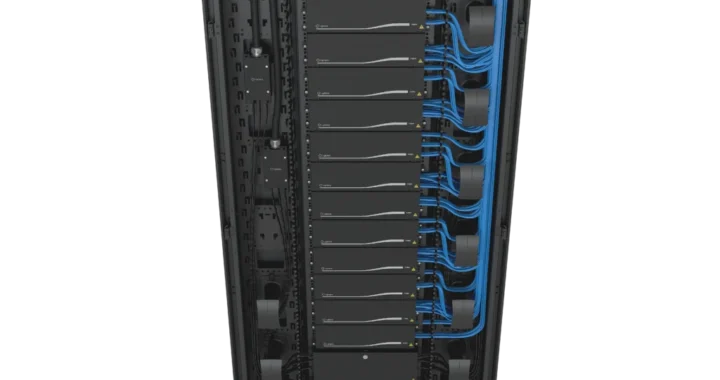
Modern monitoring solutions—such as Automated Optical Time-Domain Reflectometers (OTDRs) and remote fiber test systems—have changed the game. These sensors, installed in outside plant enclosures, provide:
- Immediate Alerts: The NOC is notified of a degradation or break before the first customer call is received.
- Pinpoint Accuracy: Instead of a general zone, the system provides the exact GPS coordinates and distance to the fault.
- Continuous Monitoring: Identifying "slow" degradation (like an encroaching tree branch or a water-damaged cabinet) allows for maintenance to be scheduled before the service goes down.
5.2. Integrated NOC-to-Field Workflows
Visibility is only as valuable as the action it triggers. A modern, integrated platform bridges the gap between the NOC and field technicians by:
- Automated Ticket Generation: When a fiber is cut, the monitoring system automatically creates a work order with the precise fault location attached.
- Dynamic Dispatching: Using real-time location and skill-set matching, the platform dispatches the nearest qualified technician to the exact site.
- Guided Resolution: Mobile applications for technicians provide live data, optical maps, and historical maintenance logs, ensuring they arrive with the right tools and knowledge.
- Automated Validation: Once the repair is complete, the platform performs an automated "ping" or optical test to verify the restoration before the technician leaves the site.
6. Benchmarking Success: The 90% Reduction Target
Technical consulting projects and real-world implementations across the globe show that the potential for improvement is massive. Organizations that move from legacy, manual processes to an automated, visibility-first approach typically observe:
- Detection Time: Reduced from 60+ minutes to under 2 minutes.
- Diagnostic Time: Reduced from hours of testing to instantaneous location reporting.
- Overall MTTR: Reductions of up to 90% are not only possible; they are becoming the industry standard for market leaders.
By shifting the focus from "fixing it fast" to "knowing it before it breaks," these companies have successfully transformed their network operations from a cost center into a competitive weapon.
7. Conclusion: The Strategic Imperative
In the modern optical network, failures are inevitable. Whether due to human error, environmental factors, or hardware aging, the network will eventually face distress. However, how a company responds to these challenges is the ultimate arbiter of its market position.
MTTR is the definitive measure of a connectivity provider’s operational maturity. It acts as a mirror, revealing whether a company operates in a state of chaotic reactivity or structured, proactive resilience. Reducing MTTR is not merely a task for the engineering department; it is a core business imperative.
Companies that master their MTTR lead in service quality, command higher customer loyalty, and, ultimately, dominate their markets. In an era where connectivity is the lifeblood of the digital economy, the providers who treat MTTR as a strategic pillar are the ones who will continue to thrive, while those who ignore it will find themselves left behind in the dark.