







As the global appetite for high-speed data continues to accelerate, the underlying infrastructure—specifically fiber optic networks—is becoming increasingly dense and complex. From the sprawling hyperscale data centers that house the cloud to the intricate "last-mile" telecom infrastructure connecting homes and businesses, the integrity of fiber installations has never been more critical. Ensuring this integrity requires precision testing, a process that has just received a significant boost.
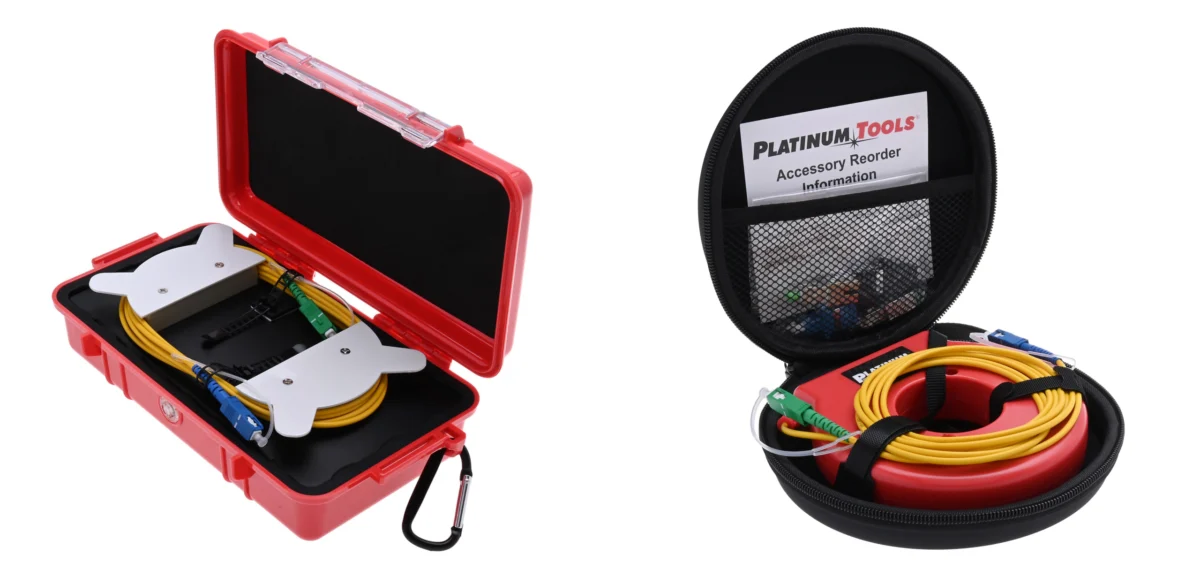
Platinum Tools, a division of NSI Industries and a leader in solutions for the preparation, installation, and testing of wire and cable, has officially announced the immediate availability of its new Fiber Optic Launch Cables for OTDR (Optical Time-Domain Reflectometer) testing. This release marks a strategic expansion of the company’s diagnostic portfolio, aiming to provide field technicians and distribution partners with the high-fidelity tools necessary to navigate the challenges of modern fiber networks.
The Technical Imperative: Eliminating the "Dead Zone"
At the heart of the new product launch is a fundamental physics challenge that has plagued fiber technicians for decades: the "dead zone." When using an OTDR to measure fiber characteristics, the initial high-energy pulse from the test source can saturate the receiver, causing a temporary "blind spot" immediately following the test port. In this zone, the OTDR is unable to distinguish between the test equipment itself and the first connector or splice in the link.
"In OTDR testing, events that occur close to the test source are notoriously difficult to measure accurately," notes the engineering team at Platinum Tools. "By introducing a precisely calibrated buffer length of fiber before the event under test, our new launch cables create the necessary separation between the OTDR and the first connection. This ensures that every critical point in the fiber link—from the initial patch panel to the furthest splice—can be properly evaluated."
By eliminating these dead zones, Platinum Tools is enabling technicians to gain a clearer picture of insertion loss and reflectance at the very beginning of a fiber run, a requirement that is becoming increasingly stringent in high-speed, low-latency network environments.
Chronology of Innovation: A Commitment to Fiber Lifecycle Management
The development of these launch cables is the latest chapter in Platinum Tools’ long-standing commitment to the low-voltage sector. The chronology of the company’s evolution reflects the changing needs of the industry:
- Foundation Phase: Initially recognized for their industry-standard cable preparation tools (strippers, crimpers, and cutters), Platinum Tools established a reputation for "jobsite-ready" durability.
- Expansion Phase: As the industry shifted toward copper-to-fiber transitions, the company integrated testing solutions, beginning with basic continuity testers and moving toward more sophisticated verification equipment.
- The Diagnostic Era: Recognizing that network downtime is prohibitively expensive, the company pivoted toward diagnostic accuracy. The release of the mini-OTDR marked a turning point, providing handheld power to field technicians who previously relied on expensive, laboratory-grade equipment.
- The Launch Cable Milestone: Today’s announcement represents the "final mile" of this evolution. By providing the essential accessories for their own OTDR units, Platinum Tools has completed a comprehensive ecosystem for fiber lifecycle management—from the moment the fiber is cut and terminated to the final certification of the link.
Supporting Data: Why Precision Matters in Modern Infrastructure
The demand for these tools is backed by current industry metrics. Data center throughput is expected to grow by nearly 25% annually through 2030, and the push for 400G and 800G connectivity leaves almost zero margin for error in link loss budgets.
The Physics of the Solution
When a light pulse travels down a fiber, it encounters various "events." A connector or a splice acts as a point of reflection and loss. If these events occur within the OTDR’s dead zone, the software cannot calculate the reflectance or attenuation accurately. The Platinum Tools launch cables act as a physical buffer, effectively shifting the "event" outside of the saturation region of the OTDR’s sensor.
Ruggedization for the Field
Unlike laboratory-grade fiber spools, which are often delicate and prone to damage, the Platinum Tools solution is engineered for the "real world."
- Micro-Armored Fiber: The internal glass is protected by a flexible, micro-armored sheath that resists crushing, kinking, and environmental stress.
- Rugged Exterior Cases: The units are housed in weather-resistant, impact-absorbing cases, ensuring they survive the transit from the van to the server rack or the rooftop cell tower.
- Connector Versatility: Every kit ships with adapters for LC, SC/UPC, and SC/APC, ensuring compatibility with the vast majority of single-mode fiber infrastructure currently deployed globally.
Official Perspectives: Empowering the Technician
The philosophy behind the new product line is rooted in the "technician-first" approach that has defined the Platinum Tools brand. According to company leadership, the goal is to reduce the "tribal knowledge" required to perform complex fiber tests, making advanced diagnostics accessible to a broader range of installers.
"Our goal is to support professional fiber testing from start to finish," a company spokesperson stated. "We understand that if a technician is not confident in their test results, they are not confident in the network they are handing off to the client. By providing tools that ensure accurate, repeatable results, we are helping our partners deliver dependable network performance and long-term reliability."
Industry analysts point out that this "confidence factor" is a major selling point. As the labor market for skilled fiber technicians tightens, companies are increasingly looking for tools that provide "foolproof" results, minimizing the need for re-testing and reducing the likelihood of expensive call-backs.
Implications for the Industry: A Higher Standard of Certification
The release of these launch cables has implications that extend far beyond a single piece of hardware. It represents an industry-wide shift toward mandatory certification.
1. Standardization of Best Practices
For years, the use of launch cables was considered an "optional best practice." However, as network speeds increase, the industry is moving toward a standard where a test without a launch cable is considered invalid. Platinum Tools is positioning its product to be the standard-bearer for this shift.
2. Streamlining the Toolkit
By ensuring that their launch cables are fully compatible with their existing mini-OTDR and copper testing lines, Platinum Tools is promoting the "unified toolkit" concept. This reduces the number of disparate devices a technician must carry, thereby increasing mobility and efficiency in the field.
3. Future-Proofing
While current networks may utilize standard single-mode fiber, the rise of advanced modulation schemes makes the fiber link more sensitive to back-reflections (ORL). The ability to accurately measure these reflections using the new launch cables ensures that today’s installations will not require costly retrofits when networks are upgraded to higher data rates in the future.
Conclusion: A Step Toward Network Reliability
The introduction of the Fiber Optic Launch Cables by Platinum Tools is more than just a product release; it is a vital contribution to the stability of the global digital backbone. As network operators face the dual pressures of increased data volume and higher consumer expectations for uptime, the ability to perform precise, efficient, and accurate testing is the primary defense against failure.
By combining rugged engineering with a deep understanding of the practical limitations of OTDR technology, Platinum Tools has provided a solution that addresses the specific pain points of modern fiber installation. For the technician in the field, this means less time troubleshooting phantom issues and more time delivering high-quality, reliable connections.
For those interested in integrating these tools into their workflow, detailed product sheets, configuration guides, and procurement information are currently available through the Platinum Tools brand page. As fiber continues to serve as the critical foundation of modern communication, tools that prioritize precision—like these new launch cables—will remain the most valuable assets in any professional technician’s kit.