






As North America undergoes a massive transformation in its electrical landscape—driven by the rapid expansion of hyperscale data centers, the integration of renewable energy, and the widespread modernization of utility grids—the stakes for project delivery have never been higher. In this high-velocity environment, the traditional metrics of product quality and technical performance are increasingly being balanced against a critical new variable: supply chain reliability.
For distributors, contractors, and project engineers, the "availability gap" has emerged as a significant operational bottleneck. With construction schedules tightening and labor shortages persisting, the inability to source essential components like compression connectors can translate into massive financial losses and reputational damage. Recognizing this paradigm shift, Polaris Compression has embarked on a strategic, large-scale expansion of its manufacturing capacity, aiming to redefine how the industry approaches supply chain security.
The Electrical Infrastructure Boom: A Contextual Analysis
To understand why product availability is currently the industry’s most pressing concern, one must first examine the unprecedented demand shaping the electrical market.
The Drivers of Unprecedented Demand
- Hyperscale Data Centers: The digital economy’s insatiable hunger for processing power has led to a surge in massive, power-intensive data center construction. These facilities require specialized, high-reliability electrical distribution systems.
- Utility Modernization: Aging infrastructure is being replaced or retrofitted with "smart" technology, requiring massive amounts of new hardware to ensure grid resilience against climate volatility and increased load.
- Renewable Energy Integration: The transition toward solar, wind, and battery energy storage systems (BESS) requires complex electrical terminations capable of managing variable loads and outdoor environmental stressors.
- Commercial and Industrial Growth: From electric vehicle (EV) charging hubs to high-tech manufacturing facilities, the demand for robust power distribution hardware is at an all-time high.
These sectors do not merely require "any" connector; they require code-compliant, high-performance solutions that can be installed efficiently. When these projects—often valued in the hundreds of millions—are stalled because of a missing box of compression lugs, the economic ripple effects are profound.
Chronology of the Supply Chain Shift
The necessity for this manufacturing expansion did not emerge overnight. It is the result of several years of market evolution.
Phase 1: The Volatility Era (2020–2022)
Global supply chains faced unprecedented disruptions, leading to lead times that stretched from weeks to months. During this period, the electrical industry learned a hard lesson: "Just-in-time" inventory models were fragile in the face of global instability.
Phase 2: The Demand Surge (2023)
As infrastructure investment bills began to mobilize funding, the sudden influx of projects overwhelmed existing manufacturing pipelines. Contractors found themselves in a "bidding war" for components, and distributors faced immense pressure to maintain stock levels.
Phase 3: The Strategic Pivot (2024–Present)
Industry leaders, including Polaris Compression, recognized that the high-demand environment was not a temporary spike, but a new baseline. This led to the decision to move beyond reactive manufacturing and toward proactive capacity expansion. By investing in localized production and enhanced logistics, Polaris has positioned itself to absorb the volatility that previously crippled project timelines.
Supporting Data: The High Cost of Waiting
The impact of material delays on electrical construction is well-documented and severe. According to industry surveys, material shortages are consistently cited as the primary cause of project schedule overruns.
- Labor Inefficiency: When crews arrive at a site and find critical components missing, labor costs continue to accrue even as productivity grinds to a halt.
- Budget Inflation: Stalled projects are subject to "escalation clauses" and price volatility. A delay of one month can sometimes result in significant cost increases for other materials and specialized labor.
- Contractual Penalties: Many large-scale infrastructure contracts include "liquidated damages"—hefty daily fines for failing to meet project completion milestones. For a major data center or utility project, these fines can reach tens of thousands of dollars per day.
For a distributor, the availability of product is a trust-building asset. By providing a steady, reliable flow of inventory, distributors can insulate their contractor clients from these risks, effectively becoming an indispensable partner rather than just a supplier.
Official Responses: The Polaris Strategy
"Success today depends on more than simply choosing the right compression connector," says the leadership at Polaris. "It means having the absolute confidence that the product you specify, stock, or install will be there when the shovel hits the dirt."
Polaris Compression has responded to these market realities through a multi-pronged manufacturing strategy:
- Capacity Scaling: Polaris has significantly increased its manufacturing footprint, utilizing advanced automation to boost throughput without sacrificing the rigorous quality standards that have defined the brand for over four decades.
- Portfolio Availability: The expansion is not limited to a few SKUs; it covers the entire breadth of the compression connector portfolio, ensuring that whether a contractor needs a standard lug or a specialized termination, the supply is there.
- Strategic Inventory Management: By aligning manufacturing output with predictive market analytics, Polaris is ensuring that distributors have the right stock at the right time, minimizing the risk of "stock-outs" during critical project phases.
Technical Implications: Performance Meets Productivity
While availability is the foundation, the product itself must still meet the highest technical standards. The modern electrical professional demands a product that is not only available but also inherently easy to use.
The "Universal" Advantage
One of the most significant hurdles in the field is the proprietary nature of some tool-connector pairings. If a contractor is required to purchase a specific brand of crimp tool for every different type of connector, productivity suffers.
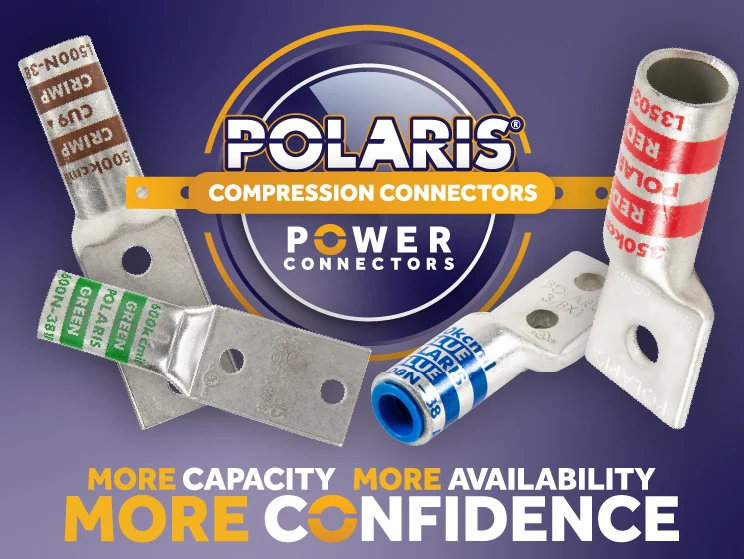
Polaris has addressed this by focusing on UL-listed tooling compatibility. By ensuring their connectors are compatible with over 35 major crimp tool models—including industry staples like Milwaukee®—Polaris allows contractors to leverage the tools already present in their inventory. This approach offers:
- Reduced Capital Expenditure: No need for contractors to buy redundant or specialized tooling.
- Enhanced Speed: Electricians can use the tools they are most familiar with, leading to faster, safer, and more reliable connections.
- Simplified Inspections: With code-compliant, tested compatibility, the path to an approved inspection is significantly shorter.
Implications for the Supply Chain Ecosystem
The decision to expand manufacturing capacity has implications that reverberate across the entire electrical supply chain.
For the Distributor
Reliable inventory serves as a cornerstone for growth. When a distributor can guarantee that they have the necessary components to support a major contractor’s timeline, they secure their position as a preferred partner. This reduces the administrative burden of managing backorders and enhances the distributor’s reputation as a reliable problem-solver.
For the Contractor
For the boots-on-the-ground, reliability is synonymous with profitability. A consistent supply of Polaris connectors means crews remain active, schedules remain intact, and the "unknowns" that plague modern construction are minimized.
For the Engineer and Specifier
Engineers are tasked with designing systems that are both resilient and feasible. By specifying products from manufacturers with demonstrated supply chain stability, engineers reduce the risk of "value engineering" (where products are swapped out for inferior, available alternatives) that can compromise the integrity of a system.
Future-Proofing Electrical Infrastructure
As we look toward the remainder of the decade, the focus of the electrical industry will remain on resilience. The transition to a more electrified, digitized world is irreversible, and the hardware that connects this world must be as reliable as the power it conducts.
The commitment shown by Polaris to expand its manufacturing capacity is more than a business decision—it is an acknowledgment of the critical role that electrical components play in modern society. When an infrastructure project is completed on time and within budget, it is the result of thousands of small decisions, starting with the reliability of a single connector.
By bridging the gap between product innovation and supply chain security, Polaris is helping to ensure that the electrical industry is not just prepared for the challenges of today, but fully equipped for the massive, complex infrastructure projects of tomorrow.
For more information on how Polaris Compression is supporting the next generation of electrical infrastructure, visit their official portal to explore their full range of tools and connectors. Connect with confidence, knowing that the products you need are ready for the task at hand.