






Technology is often lauded as the harbinger of a frictionless future, yet its reliability remains a persistent paradox. For the average consumer, a frozen smartphone is a mere inconvenience—a moment of annoyance that necessitates a simple reboot. However, when the "device" in question is an autonomous transportation system, the stakes shift dramatically from inconvenience to life-and-death safety.
In the realm of autonomous vehicles (AVs), rail systems, and smart trucking, the margin for error is measured in nanoseconds. If a train’s sensor suite fails to identify an obstacle on the tracks due to a momentary network lag, or if a centralized traffic management system fails to adjust signals for approaching first responders, the consequences are catastrophic. As our world moves toward a future defined by AI-driven transit, we must confront an uncomfortable truth: digital solutions are only as reliable as the physical infrastructure that anchors them.
Main Facts: The Fragility of Digital Transit
The evolution of autonomous transportation—spanning passenger vehicles, heavy-duty freight, and mass transit rail—relies on a complex ecosystem of interconnected hardware. These machines operate through a symphony of Artificial Intelligence (AI), edge computing, 5G cellular networks, and the Internet of Things (IoT).
The core premise of these systems is the optimization of movement: reducing traffic congestion, minimizing human-error-related accidents, and slashing operational costs. Yet, beneath the hood of this high-tech revolution lies a requirement for constant, uninterrupted power and data flow. Cameras, LiDAR sensors, wireless access points, and edge computing nodes require a "hardened" network. Without this foundation, the "self-driving" label becomes a liability. A brief connectivity outage can compromise critical decision-making processes, leading to stalled operations or, in worst-case scenarios, physical collisions.
Chronology: The Rapid Ascent of Automation
The trajectory of autonomous transportation has accelerated significantly over the last decade, moving from experimental prototypes to real-world deployment:

- 2015–2020: The Prototyping Phase. During this era, companies like Waymo and various automotive OEMs began moving from closed-track testing to public road trials. The focus was on software intelligence and sensor perception.
- 2021–2023: Commercial Expansion. Robotaxi services in cities like Phoenix and San Francisco began offering commercial rides. Simultaneously, the trucking industry began testing autonomous long-haul freight in states like Texas and Arizona.
- 2024–Present: Legislative Normalization. Regulatory bodies are beginning to lift restrictions on driverless operations. California’s recent move to permit fully autonomous, Level 5 trucks marks a significant milestone, signaling that the industry is transitioning from "safety-driver" requirements to true autonomy.
- 2026 Milestone: The rail industry is looking toward 2026, with projects like the Bosch Engineering Automated Train initiative aimed at fully autonomous operations, including self-managed shutdowns and obstacle avoidance, setting the stage for a new standard in public transit.
Supporting Data: Infrastructure Requirements
Building an integrated, autonomous transportation network requires a shift in how we perceive roadway infrastructure. It is no longer just concrete and asphalt; it is a digital nervous system.
The Role of Edge Computing
To achieve the sub-millisecond response times necessary for safety, data processing cannot rely solely on the cloud. Edge computing—placing processing power at the periphery of the network, such as in traffic signal cabinets or railyards—is essential. By segmenting network traffic and processing information closer to the source, transportation systems can respond to hazards before a signal can even travel to a central data center.
Sensor Fusion and V2X Connectivity
Autonomous systems rely on "Sensor Fusion"—the integration of data from LiDAR, high-resolution cameras, GPS, ultrasound, and RADAR. These devices must communicate via Vehicle-to-Everything (V2X) protocols. This communication requires a network backbone capable of handling gigabits of data per second.
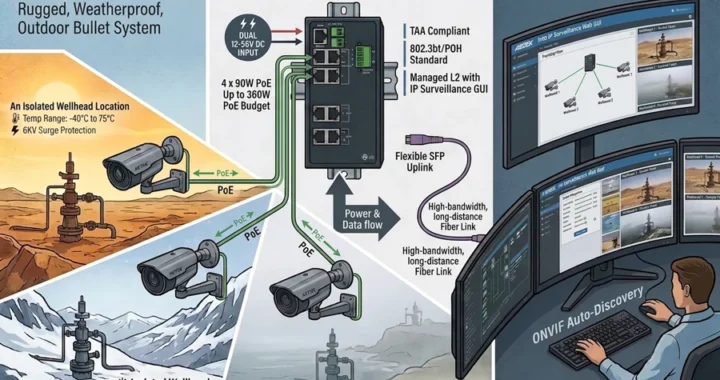
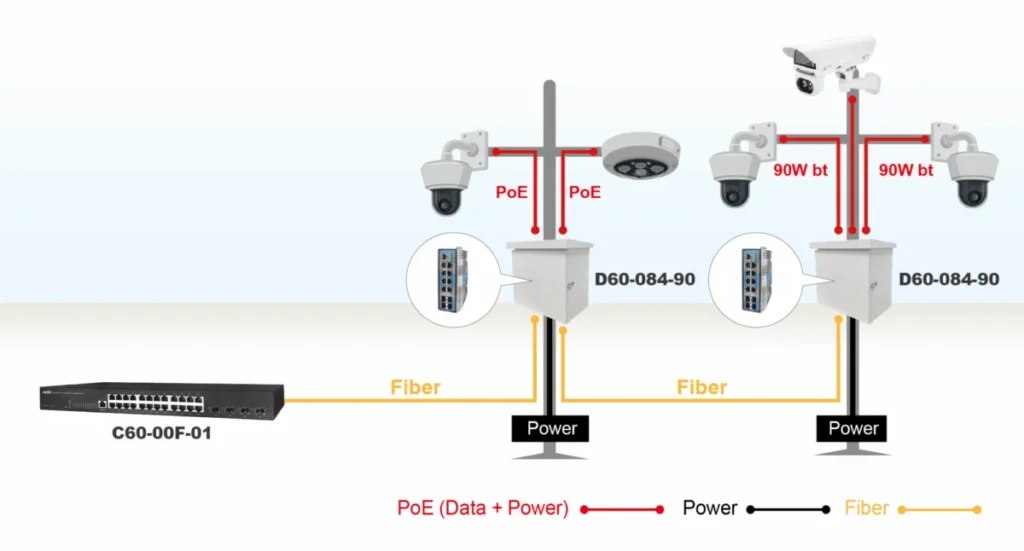
According to industry benchmarks, the physical network must withstand extreme vibrations, thermal fluctuations (often ranging from -40°C to 75°C), and potential power surges. Standard consumer-grade networking equipment is wholly insufficient for these demands. Instead, industrial-grade Power over Ethernet (PoE) switches, such as Versa Technology’s D60 series, provide the necessary ruggedization and surge protection to ensure that sensors remain powered and connected regardless of environmental stressors.
Official Responses and Industry Standards
Industry leaders and engineers are increasingly vocal about the "Infrastructure Gap." While automotive manufacturers have poured billions into vehicle AI, the municipal and industrial infrastructure has lagged.

"We are building the brain, but the nervous system—the network—is still being laid down," says a spokesperson for industrial network providers. The consensus among network engineers is that PoE technology is the most viable backbone for this transition. By delivering both electrical power and high-speed data over a single Ethernet cable, PoE reduces the physical footprint of the network, simplifies troubleshooting, and minimizes points of failure. When paired with Uninterruptible Power Supplies (UPS), these switches ensure that even during grid failures, critical infrastructure remains functional, preventing the "blackout-induced" accidents that critics fear.
Implications: The Path Toward Resilience
The shift to autonomous transportation carries profound implications for urban planning and public safety.
Enhanced Safety vs. Systemic Risk
The primary argument for autonomy is the reduction of human error, which accounts for the vast majority of traffic accidents. However, by removing the human, we create a system that is entirely dependent on the uptime of its sensors. If the infrastructure fails, there is no "driver" to take the wheel. Therefore, the reliability of the network is now synonymous with the safety of the public.
The Cost of Complexity
Autonomous networks introduce a new level of complexity. With hundreds of sensors per mile of roadway, managing the network becomes a data-heavy task. Remote PoE management, network topology mapping, and automated cable diagnostics are no longer "nice-to-have" features; they are essential tools for facility managers. As Versa Technology demonstrates with their D60-044-91 and D60-084-90 series, the ability to manage high-density sensor deployments from a remote, secure interface is what will differentiate successful, scalable transport networks from those plagued by downtime.
Economic and Logistical Efficiency
From a logistics standpoint, the implications are staggering. Autonomous freight trucking promises to optimize supply chains, enabling 24/7 operations that are not limited by human fatigue. Yet, this efficiency depends on the ability of trucks to communicate seamlessly with logistics centers and roadway infrastructure. If a truck loses connectivity in a remote area, the economic gains of autonomy are wiped out by the costs of recovery and delays.

Conclusion: Engineering a Sustainable Future
As we look toward a future of self-driving cars, automated freight, and intelligent rail, the narrative must evolve. We must stop viewing transportation as a mechanical endeavor and start viewing it as a massive, distributed computing challenge.
Reliability is the currency of the autonomous age. Whether it is through the deployment of industrial-grade PoE switches that can survive the harsh elements of an outdoor railyard, or the integration of fiber and 5G uplinks into a single, manageable device, the focus must remain on resiliency.
The transition to autonomous transportation will not be defined solely by the software running in the vehicle’s computer, but by the strength, speed, and reliability of the infrastructure that surrounds it. By prioritizing robust, industrial-grade network foundations today, we lay the groundwork for a safer, more efficient, and truly autonomous tomorrow. Companies that leverage hardened, scalable networking solutions are not just building hardware; they are securing the future of global mobility.