





The stability of New Hampshire’s transportation network has taken center stage this week as two vital arteries—the Queen City Bridge in Manchester and the Veterans Memorial Bridge in Hudson—underwent emergency structural assessments. These closures, occurring nearly simultaneously, have sparked a broader conversation regarding the state’s aging infrastructure, the efficacy of routine inspections, and the critical role of federal funding in preventing catastrophic failure.
The Queen City Bridge: A Vital Link Restored
After a tense four-day closure that disrupted the daily routines of nearly 30,000 motorists, Manchester’s Queen City Bridge has reopened to traffic. The closure, initiated on September 21 by the New Hampshire Department of Transportation (NHDOT) following a routine inspection, was a precautionary measure that highlighted the vulnerability of the state’s legacy infrastructure.
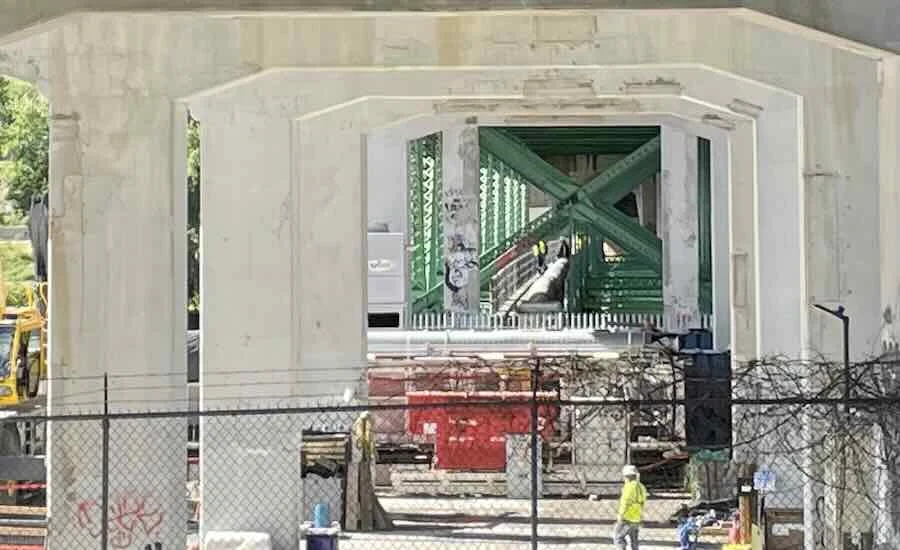
The Queen City Bridge is no minor crossing; it is a 1,175-foot-long, 14-span structure that serves as a primary link between the east and west sides of Manchester. Originally constructed over a century ago and significantly reconstructed in 1992, the bridge carries Route 3 traffic over both the Merrimack River and an active CSX railroad corridor.
Tim Clougherty, director of the Manchester Department of Public Works (DPW), emphasized that the decision to close the bridge was born out of an abundance of caution. "The additional inspection and testing were conducted to ensure the condition of the bridge was fully understood before it was returned to service," Clougherty stated. The inspection revealed localized concerns, specifically signs of rust buildup and a "potential crack" in a structural truss. While the discovery was alarming, officials were quick to clarify that the structural issues were not linked to recent nearby construction, such as the $360 million Cemetery Brook Drain Tunnel project, which has been proceeding as planned with its massive 281-ton tunnel boring machine.
Veterans Memorial Bridge: A Longer Road to Recovery
While Manchester breathes a sigh of relief, the situation 22 miles to the south in Hudson remains precarious. The Veterans Memorial Bridge, which carries approximately 37,000 vehicles daily between Hudson and Nashua, remains partially restricted.
Following a routine NHDOT inspection just one day after the Manchester discovery, engineers identified a cracked girder on the westbound side of the structure. The severity of the finding prompted an immediate lane closure to protect the traveling public while repairs are engineered.
Hudson Town Engineer Elvis Dhima has moved quickly to secure the necessary resources for remediation. In a recent update to the Hudson Board of Selectmen, Dhima requested and received authorization for approximately $100,000 in emergency funding to address the girder failure. Unlike the Queen City Bridge, which reopened relatively quickly, the Veterans Memorial Bridge is expected to remain under restrictions for four to six weeks as crews perform specialized structural repairs.
A Chronology of the Inspections
The timeline of these events underscores the critical importance of New Hampshire’s biennial inspection schedule.
- August 31: The Cemetery Brook Drain Tunnel project in Manchester successfully launches its tunnel boring machine, a milestone that officials confirm is entirely independent of the bridge’s structural status.
- September 20-21: A routine NHDOT inspection of the Queen City Bridge identifies "structural deficiencies," specifically localized corrosion and potential truss integrity issues. The bridge is closed immediately to facilitate a deeper, non-destructive testing phase.
- September 22: Inspections shift to the Veterans Memorial Bridge. Inspectors discover a compromised girder, leading to the immediate closure of a westbound lane.
- September 25: Following comprehensive testing and engineering analysis, Manchester officials determine that the Queen City Bridge is safe for regular traffic flow, and the barriers are removed.
- Current Status: The Veterans Memorial Bridge remains under repair, with town officials coordinating with NHDOT to expedite a return to full capacity by late October or early November.
Supporting Data: The State of New Hampshire’s Bridges
The recent closures serve as a microcosm of a larger, systemic challenge. According to the American Road & Transportation Builders Association (ARTBA), New Hampshire manages 2,549 bridges. Of these, 192—or approximately 8%—are currently classified as "structurally deficient."
While this represents a slight improvement from 194 deficient bridges in 2021, the broader picture is one of mounting pressure. The number of bridges identified as being in need of some form of repair has risen to 2,498, up from 2,473 just three years ago. This data suggests that while the state is successfully addressing its most critical "deficient" cases, the backlog of preventative maintenance and minor repair needs is growing faster than the current budget and labor force can accommodate.
The Queen City Bridge, in particular, has been under a microscope for some time. A 2024 inspection report noted multiple areas of pitting and surface-level corrosion, though it stopped short of identifying active steel cracks. The rapid progression from "corrosion" to a "potential crack" in a single year highlights the unpredictable nature of metal fatigue in century-old structures exposed to the harsh New England climate.
The Federal Connection: The IIJA and Beyond
These incidents come at a politically sensitive time. The Infrastructure Investment and Jobs Act (IIJA), signed into law in 2021, is approaching a major milestone, with key funding provisions set to expire on September 30.
New Hampshire has been a significant beneficiary of the IIJA’s Bridge Formula Program, which has earmarked $225 million for the state between fiscal years 2022 and 2026. This federal support is transformative for local municipalities. Under the guidelines of the Federal Highway Administration (FHWA), states are encouraged to reserve 15% of their allotment for "off-system bridges"—smaller, locally owned structures that often fall through the cracks of state-level oversight. For many of these municipally owned bridges, the federal government can cover up to 100% of the cost of necessary repairs, providing a vital lifeline to towns with limited tax bases.
Jennifer Lane, a spokeswoman for NHDOT, highlighted the collaborative nature of these repairs. "NHDOT works closely with the communities to provide expertise and guidance," Lane explained. She noted that the department remains in communication with the Governor’s office to evaluate requests for state financial assistance, ensuring that local towns are not left to shoulder the financial burden of unexpected structural failures alone.
Implications for the Future
The events in Manchester and Hudson have triggered a renewed debate among transportation experts about the sustainability of current maintenance models.
- Increased Frequency of Inspections: While the biennial schedule is the industry standard, some engineers are calling for more frequent, sensor-based monitoring for high-traffic bridges that have surpassed their original design lifespan.
- Proactive vs. Reactive Spending: The $100,000 emergency repair in Hudson serves as a reminder that waiting for a "crack" to appear is significantly more expensive—and disruptive—than preventative maintenance. There is a growing push to prioritize the "in-need-of-repair" list before those structures migrate to the "structurally deficient" category.
- The Political Will for Infrastructure: With the expiration of the IIJA provisions, the pressure is on state and federal lawmakers to renew or replace funding streams. The public’s experience with the recent closures has turned abstract policy discussions into a tangible reality for thousands of commuters, creating a new sense of urgency.
As Manchester resumes its normal traffic patterns and Hudson begins its month-long repair project, the message from the engineering community is clear: New Hampshire’s infrastructure is a living system that requires constant, dedicated attention. The success of the recent inspections—in identifying problems before they led to failures—is a testament to the vigilance of the state’s inspectors, but it also serves as a warning that the window for meaningful investment in the Granite State’s bridge network is rapidly narrowing.
For the residents of Manchester and Hudson, these bridges are more than steel and concrete; they are the literal foundations of their economic and social lives. As the state moves forward, the focus will inevitably shift from emergency response to the long-term, comprehensive strategy needed to ensure that these links to the future do not become symbols of the past.