




Technology is often lauded as a miracle of modern innovation until the moment it falters. When a personal smartphone freezes, the result is mere inconvenience—a brief, frustrated reboot. However, when an autonomous transportation system stumbles for even a nanosecond, the implications shift from annoying to catastrophic. In an era where artificial intelligence (AI) and edge computing steer the future of mobility, the question is no longer just about the software—it is about the physical, hardened infrastructure required to support it.
What happens when a high-speed, driverless train fails to register an obstacle on the tracks due to a dropped data packet? What occurs when a smart traffic control center loses connectivity, preventing a signal change for approaching first responders? The shift toward autonomous systems—ranging from passenger robotaxis to long-haul freight and automated rail—demands a level of network reliability that current legacy systems are struggling to provide. As we stand on the precipice of a fully automated transportation revolution, it is becoming increasingly clear that digital solutions are only as reliable as the physical backbone supporting them.
Main Facts: The Intersection of Digital Intelligence and Physical Reality
Autonomous transportation networks are essentially massive, interconnected systems of self-driving machines that operate with minimal human intervention. They rely on a symphony of advanced technologies: artificial intelligence (AI), edge computing, 5G cellular networks, and the Internet of Things (IoT).
The primary goal of these systems is to optimize traffic flow, drastically reduce human-error accidents, enhance mobility efficiency, and lower operational costs. However, the "intelligence" of these vehicles is not isolated; it is distributed. An autonomous vehicle is in a constant state of communication, exchanging information with cloud platforms, high-precision mapping systems, roadside sensors, and other vehicles (V2X connectivity).
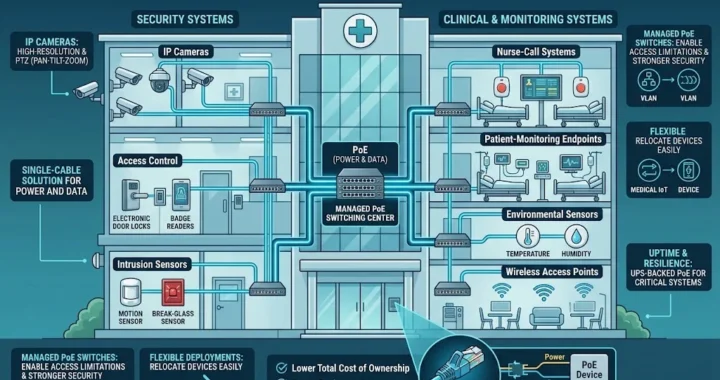
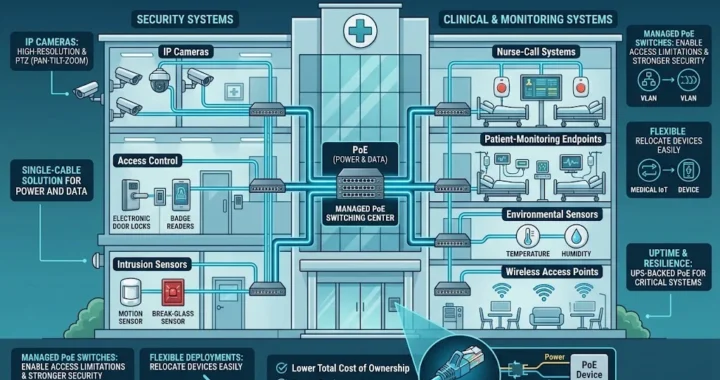
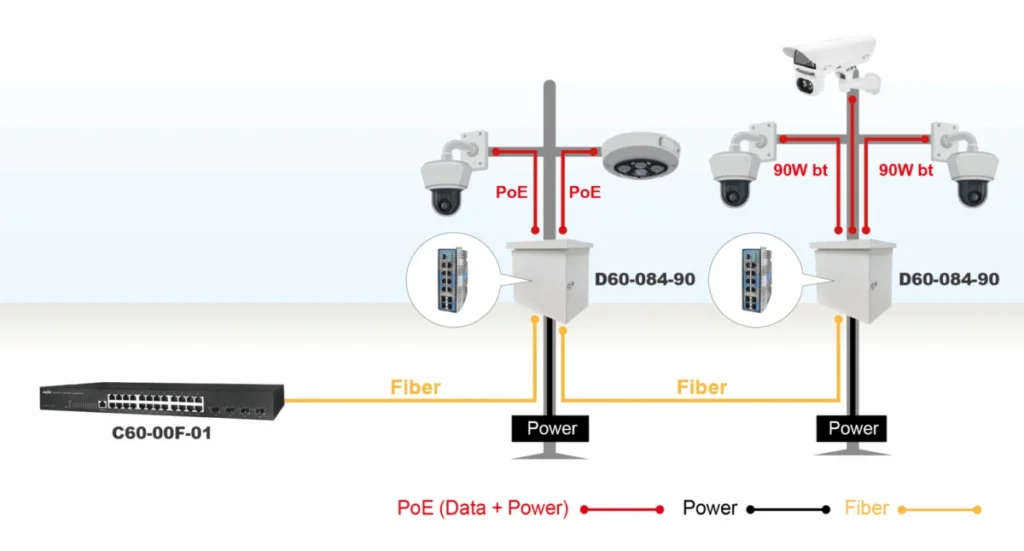
The central challenge is that these systems require continuous, uninterrupted power and data flow. Cameras, LiDAR sensors, wireless access points, and traffic signals are the "eyes and ears" of the network. If the underlying network infrastructure—the switches, cabling, and power distribution systems—fails, the vehicle becomes blind. Power over Ethernet (PoE) technology has emerged as a critical solution here, allowing both power and high-speed data to be transmitted over a single Ethernet cable, simplifying the complex web of wiring that would otherwise be required.
Chronology: The Evolution of Autonomous Systems
The trajectory of autonomous transportation has accelerated significantly over the past decade, moving from speculative prototypes to active commercial deployment.

- 2014–2018 (The Testing Phase): Early testing of autonomous passenger vehicles began in earnest, with companies like Waymo and Tesla pushing the boundaries of machine learning in real-world scenarios.
- 2019–2021 (The Infrastructure Awakening): As pilot programs scaled, the industry realized that software alone could not handle the "edge cases." This period saw the integration of 5G and smart city infrastructure.
- 2022–2024 (Regulatory Shifts and Commercialization): States such as California, Texas, and Arizona began removing legal restrictions on fully autonomous freight trucks, marking a transition toward commercial, driverless logistics.
- 2025–2026 (The Rail and Smart City Milestone): Projects like the Bosch Engineering Automated Train initiative have set the stage for 2026, targeting the implementation of fully autonomous rail operations that can manage everything from routine movement to emergency shutdown procedures without human interference.
Supporting Data: The Technical Demands of Autonomy
The transition to autonomous systems is not just a shift in policy; it is a shift in data consumption. A single autonomous vehicle can generate terabytes of data per day. When scaled to a fleet, or an entire metropolitan traffic network, the throughput requirements become astronomical.
The Role of Edge Computing
To minimize latency—the time it takes for a signal to travel from a sensor to a processor—transportation networks are moving toward "edge computing." By processing data closer to where it is collected (e.g., at the railyard or a traffic signal pole), the system achieves the sub-millisecond response times required to avoid collisions.
Environmental Hardening
Traditional networking hardware is built for climate-controlled server rooms. However, the "edge" of a transportation network includes high-heat asphalt, freezing mountain passes, and high-vibration railyards. Industrial-grade PoE switches, such as Versa Technology’s D60 series, are designed to operate in temperatures ranging from -40°C to 75°C. These devices are built with surge protection and hardened housings to ensure that even during extreme weather or electrical fluctuations, the network remains online.
Power Resilience
The integration of Uninterruptible Power Supplies (UPS) with PoE switches ensures that even during a grid failure, critical safety infrastructure—like traffic signals and surveillance cameras—remains operational. This creates a "failsafe" layer that prevents the entire network from going dark during a power surge or blackout.
Official Perspectives: Industry Standards and Reliability
Industry leaders emphasize that the "autonomous" label is somewhat of a misnomer. These systems are not isolated; they are "collaborative."
"Reliable network infrastructure is just as important as the autonomous driving software itself," states engineering documentation from firms specializing in industrial connectivity. The consensus among logistics providers and municipal planners is that without a "hardened" network, the risks of deployment outweigh the benefits.

The shift toward Gigabit-per-second (Gbps) transmission speeds has necessitated a move toward managed PoE switches. These devices allow for network segmentation, meaning that even if one segment of a traffic light system encounters an issue, the rest of the network remains isolated and functional, preventing a "domino effect" of system-wide failures.
Implications: The Safety and Economic Stakes
The implications of failing to secure this infrastructure are profound.
Public Safety
In the event of a network outage, the consequences are immediate. If an autonomous truck loses its V2X connection, it may not receive the signal that a construction zone is ahead. If a train’s automated braking system loses its connection to the central control center, it may fail to react to an obstacle. The integration of high-reliability, industrial-grade PoE switches acts as a safety net, ensuring that these systems have a redundant, high-speed path for critical decision-making.
Economic Efficiency
Autonomous transportation is a massive economic engine, promising to lower shipping costs and reduce the time lost in urban traffic congestion. However, downtime is the enemy of efficiency. A single hour of network-related downtime in a major logistics hub can cost millions in delayed freight and lost productivity. By investing in robust, manageable, and resilient networking hardware, the transportation industry is essentially insuring its future against the high costs of system failure.
The Path Forward
As we move toward 2026 and beyond, the focus will continue to shift toward "intelligence at the edge." This means more cameras, more sensors, and more data points along every mile of road and track. The companies that will thrive in this environment are those that prioritize the "unseen" parts of the puzzle—the cabling, the power, and the switches that keep the data flowing.
Versa Technology’s portfolio, including the D60 and H60 series of switches, illustrates the specific requirements of this new era: support for high-wattage devices (up to 90W), multi-port configurations for high-density sensor deployments, and the ability to daisy-chain devices for wide-area coverage.

Conclusion: The Future is Connected
The transition to autonomous transportation is an inevitable technological leap, but its success depends on a foundational truth: Reliability is the prerequisite for autonomy.
Whether it is a robotaxi navigating a crowded downtown intersection or an automated freight truck crossing state lines, the vehicle is only as smart as the network it communicates with. We are building a world where the physical road meets the digital cloud. To ensure that this world is safe, efficient, and resilient, we must treat our network infrastructure with the same engineering rigor as we do the vehicles themselves.
As industry stakeholders continue to refine AI algorithms and sensor suites, the conversation must remain firmly centered on the "backbone." By deploying industrial-grade PoE solutions and hardening the infrastructure at the edge, we can ensure that when the future of transportation arrives, it is not just autonomous—it is unbreakable.
For those tasked with building these networks, the message is clear: The most important part of the autonomous journey happens before the vehicle even moves. It starts with a stable connection, a steady power supply, and the confidence that the infrastructure will hold, no matter what the road throws its way.