






XI’AN, CHINA – In the heart of Shaanxi province lies Xi’an, a city where the echoes of thirteen imperial dynasties resonate through the modern bustle of one of China’s most significant urban centers. Historically known as Chang’an, the eastern terminus of the Silk Road and home to the world-renowned Terracotta Army, Xi’an attracts a staggering 330 million visitors annually. However, as the digital age matures, the challenge for city officials and historians has been to bridge the gap between ancient heritage and the expectations of a tech-savvy generation of travelers.
The solution has arrived in the form of BoGuan, the world’s first commercial multimodal Large Language Model (LLM) specifically dedicated to cultural tourism. Developed through a strategic partnership between technology giant Huawei and the Shaanxi Culture Industry Investment Group (SCG), BoGuan is not merely a chatbot; it is a sophisticated AI ecosystem designed to ensure that the "Great Tang" spirit is communicated with both historical precision and modern flair.
Main Facts: A New Frontier for Vertical AI
The BoGuan LLM represents a significant departure from general-purpose AI models like GPT-4 or Claude. While general models are adept at broad conversation, they frequently struggle with "hallucinations" when tasked with specific historical, archaeological, or museological queries. BoGuan was engineered to eliminate these inaccuracies by grounding its intelligence in a massive, specialized dataset.
Key Pillars of the BoGuan Initiative:
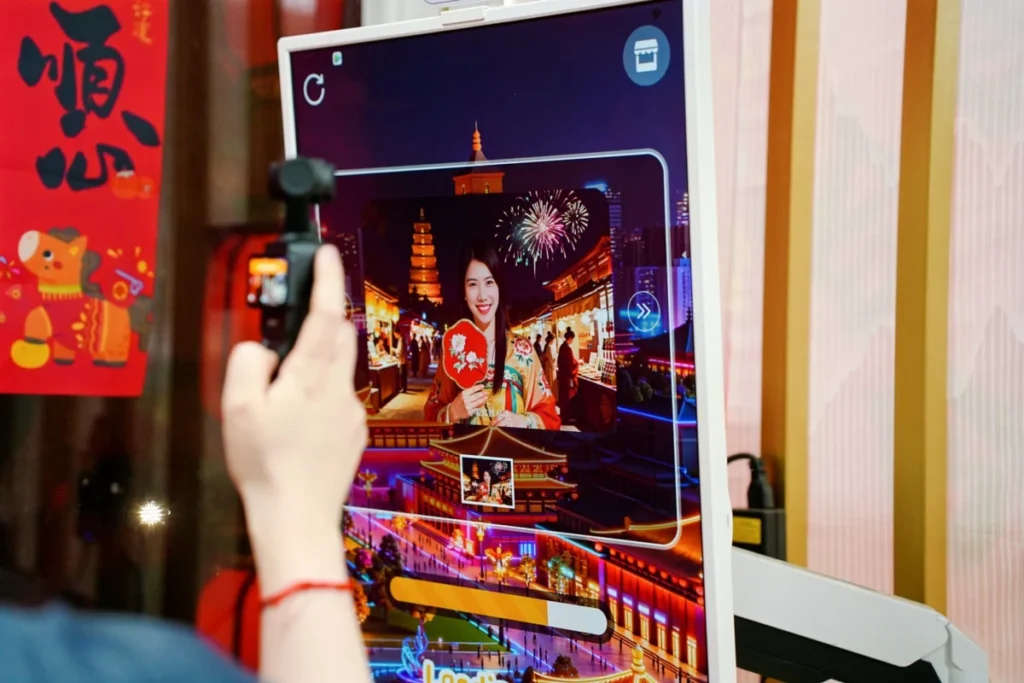
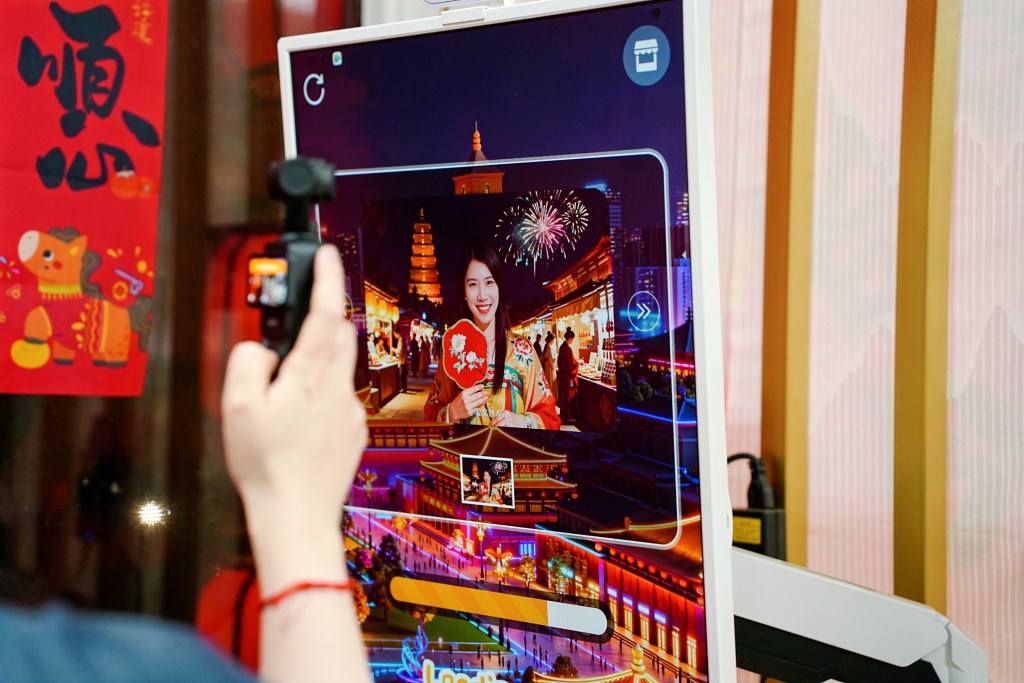
- Multimodal Capability: Unlike text-only models, BoGuan processes and generates text, images, audio, and video, allowing for immersive experiences such as AI-generated short dramas and instant historical photo-merging.
- Massive Specialized Data: The model is built upon a 1.2 Petabyte dataset, including nearly a billion pieces of structured text and millions of minutes of historical video footage.
- Economic Impact: Since its pilot phase, the model has driven a 30–40% increase in revenue for SCG without increasing staff size, demonstrating the efficiency of AI-driven tourism.
- Infrastructure Synergy: The project utilizes "5G-Advanced" (5.5G) networking and Huawei’s SuperPoD computing architecture to handle tens of thousands of concurrent AI interactions in high-traffic areas like the Grand Tang Mall.
Chronology: From Data Engineering to Nationwide Expansion
The journey to BoGuan’s deployment was a multi-year endeavor that required a fundamental rethinking of how cultural data is stored and utilized.
2022–2023: The Foundation Phase
Huawei and SCG spent two years in an intensive data-gathering and cleaning phase. The primary hurdle was not just the volume of data, but its quality. Historical records are often fragmented or stored in incompatible formats. Using Huawei Cloud Data Engineering, the team processed 31 million images and 960 million pieces of structured text, labeling them specifically for cultural and archaeological nuances.
September 2023: The Pilot Launch
BoGuan was introduced in a pilot phase across key Shaanxi heritage sites. This period tested the "Xiaoqi" AI travel companion on the GO-SHAANXI app, allowing real tourists to interact with the model in a live environment. The focus was on "interpretation"—ensuring the AI could explain the significance of a Tang Dynasty artifact as accurately as a human scholar.
Early 2024: Infrastructure and Scaling
To support the massive compute requirements of the LLM, SCG deployed an on-premise 48P computing platform. Simultaneously, China Telecom Shaanxi blanketed Xi’an’s tourist hotspots with 5G-Advanced infrastructure to ensure the AI services remained responsive during peak holiday seasons.
Present and Future: Replicating the Success
Following the success in Shaanxi, SCG has begun collaborating with tourism authorities in Xinjiang and Guizhou. The goal is to export the "BoGuan framework" to other provinces, creating a nationwide network of culturally-aware AI models that can preserve and promote China’s diverse regional histories.
Supporting Data: The Architecture of an AI Revolution
The scale of the BoGuan project is best understood through the technical and economic metrics that underpin its operation.
Data and Computing Power
The model acts as a unified gateway aggregating 10 different open and closed-source models, including Huawei’s proprietary PanGu model. This "model of models" approach allows it to select the best engine for specific tasks, whether it be image generation or complex historical reasoning.
- Storage: 1.2 Petabytes of dedicated cultural data.
- Compute: 48P computing platform utilizing Huawei’s SuperPoD architecture.
- Interconnectivity: The use of "UnifiedBus" technology allows physical servers to function as a single logical entity, reducing latency during complex reasoning tasks.
Network Performance
In the Grand Tang Mall—a high-density pedestrian zone—the network requirements are extreme. China Telecom Shaanxi deployed 46 base stations in a compact area to support the "5G-Advanced" standard.
- Downlink Speed: 3.5 Gbps.
- Uplink Speed: 600 Mbps.
- Concurrency: The network supports 23,000 concurrent users, essential for "high-concurrency" scenarios like the Lunar New Year.
Financial and User Growth
The commercial viability of BoGuan has been proven through direct revenue streams:
- User Reach: Over 4 million users since the pilot.
- Revenue Growth: 30–40% increase for SCG’s digital and intelligent culture group.
- Digital Assets: Over 2 million CNY ($300,000 USD) generated from AI-related digital collectibles and creative products in less than a year.
Official Responses: Insights from the Architects
The leaders behind the project emphasize that BoGuan is more than a technological feat; it is a solution to a professional deficit in the heritage sector.
Edric Chu, General Manager of Huawei’s Shaanxi Rep Office, highlighted the limitations of standard AI:
"General large models lack specialized knowledge in museology, archaeology, and history, making it difficult to meet the nuanced demands of niche scenarios. We transformed raw data resources into data assets with verifiable ownership. This ensures that when a tourist asks about a specific relic, the answer is grounded in verified scholarship, not AI guesswork."
Jin Yan, Chairman of the Digital and Intelligent Culture Technology Group at SCG, focused on the economic transformation:
"With the same team size, thanks to these technologies, our revenue has increased significantly. The AI ‘Video Factory’ alone has revolutionized how we produce marketing content, allowing us to automate the production of short dramas and advertisements that previously took weeks of manual labor."
Wang Hao, Director of Mobile Communications Network Business at China Telecom Shaanxi, addressed the "invisible" foundation:
"The Grand Tang Mall is a textbook example of a high-traffic scenario. We have deployed base stations with a density that far exceeds standard regions. These stations use embedded AI to dynamically allocate resources. If the system detects many users are using the Zhiying Camera to generate AI photos, it triggers service acceleration protocols in real-time."
Implications: The Blueprint for the "Techco" Transition
The success of the BoGuan LLM carries profound implications for the global tourism industry and the telecommunications sector.
1. The Vertical AI Paradigm
BoGuan serves as a proof of concept for "Vertical AI." While the world has been captivated by general AI, the real economic value for industries like healthcare, law, and tourism lies in specialized models. By combining connectivity, cloud computing, and industry-specific data, operators can move beyond being "dumb pipes" (providing only bandwidth) to becoming "Techcos" (technology companies) that offer high-value managed services.
2. Bridging the Talent Gap
Perhaps the most critical implication is the human element. Edric Chu noted a staggering "talent gap" of 30,000 to 50,000 professionals in Shaanxi alone who understand both AI and cultural tourism. Nationally, this gap is expected to hit 1 million by 2030.
To combat this, Huawei and SCG have established a talent training base to align vocational certificates with AI certifications. This suggests that the future of AI deployment is as much about education and "micro-majors" in universities as it is about coding and hardware.
3. Digital Preservation and Monetization
BoGuan offers a path toward the digital "immortality" of cultural heritage. By converting physical history into 1.2 PB of high-quality data, China is ensuring that its history is preserved in a format that can be interacted with by future generations. Furthermore, the monetization of this data through digital collectibles and AI-assisted retail provides a sustainable funding model for further archaeological preservation.
4. A Global Blueprint for Telecom Operators
For telecom operators worldwide facing stagnating ARPU (Average Revenue Per User), the Xi’an model offers a way forward. By integrating 5G-Advanced with edge computing and industry-specific LLMs, operators can charge for "outcomes" (such as increased tourism revenue or automated content production) rather than just data gigabytes.
Conclusion
As Xi’an continues to welcome millions of visitors, the BoGuan LLM ensures that the city’s ancient stories are not lost in translation. By synthesizing the depth of human history with the speed of artificial intelligence, Huawei, SCG, and China Telecom have created a living, breathing digital heritage.
As Edric Chu concluded, artificial intelligence in Shaanxi has become the "key enabler that can activate thousands of years of cultural heritage." The BoGuan model now stands as a beacon for how other historic cities across the globe might one day use the silicon of the future to polish the gold of the past.