






In an era defined by the relentless expansion of digital transformation, the backbone of global commerce, communication, and industry relies increasingly on sophisticated physical infrastructure. From the hyperscale data centers processing petabytes of information to the industrial networks governing automated manufacturing, the demand for high-performance connectivity solutions has never been higher. This report examines the current state of network infrastructure, focusing on the critical hardware and systems—ranging from optical fiber networks to copper cabling and advanced rack systems—that power our modern world.
The Pillars of Modern Infrastructure: Main Facts
The current technological landscape is governed by a requirement for speed, reliability, and scalability. Modern network architecture is no longer a monolithic entity; it is a complex ecosystem comprised of several vital components. The industry is currently shifting toward a holistic approach where "For Your Business" solutions are tailored to specific operational needs, whether that involves high-density data centers or ruggedized industrial communication networks.
The primary hardware segments driving this growth include:
- Optical Networks: Utilizing advanced fiber optics for high-bandwidth, low-latency transmission.
- Copper Networks: Maintaining relevance through CAT.6 and CAT.6A standards, essential for short-to-medium distance high-speed data transmission in enterprise environments.
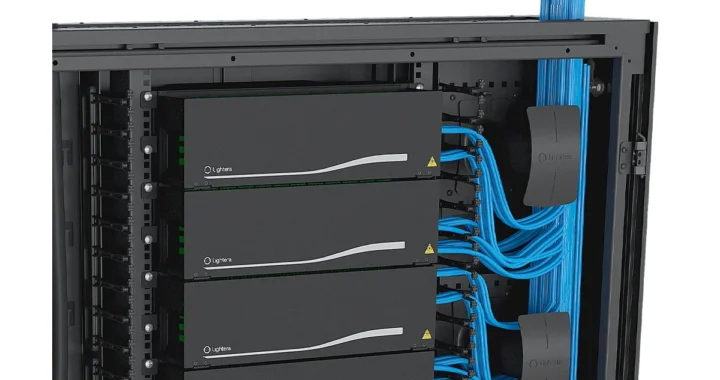
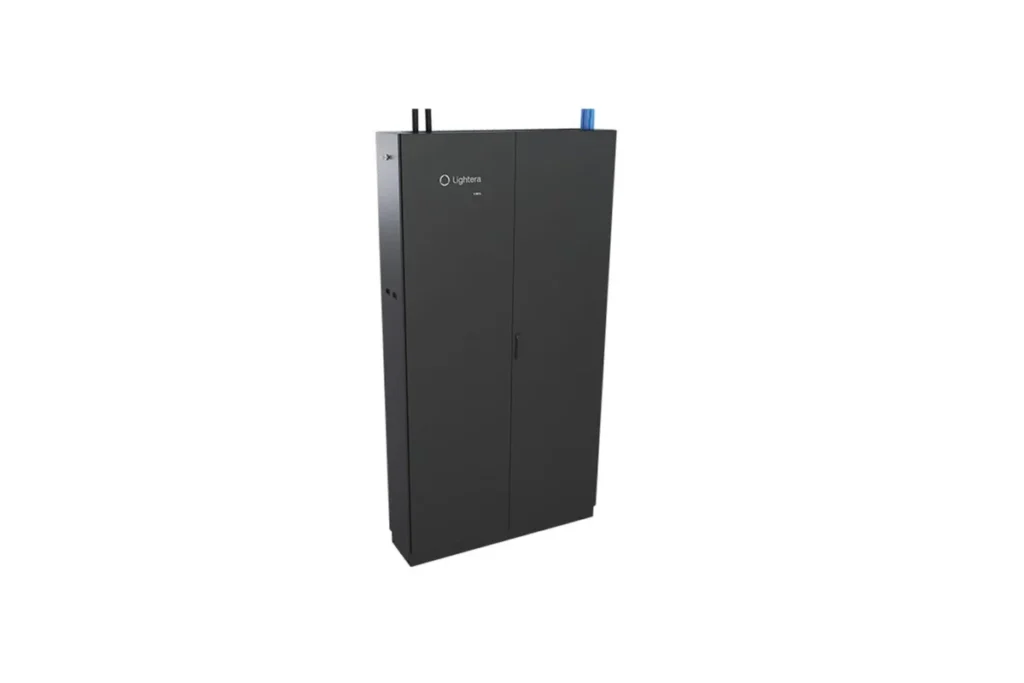
- Infrastructure Management: Including racks, cabinets, and modular patch panels that provide the physical organization necessary for complex server rooms.
- Specialty Solutions: Such as the InvisiLight® systems, designed to bring fiber connectivity into aesthetic-conscious or constrained environments without compromising structural integrity.
As companies digitize their supply chains and adopt cloud-native strategies, the integration of these components has become a strategic priority. The ability to manage both fiber-optic and copper pathways within a single facility is now a standard requirement for robust IT operations.
Chronology of Development: From Legacy Systems to Fiber-First
The evolution of network connectivity has been marked by a transition from localized, low-speed copper to global, high-speed fiber-optic interconnectedness.
Phase 1: The Copper Era (1990s–Early 2000s)
During this period, copper cabling (Category 5 and later Category 6) defined office connectivity. Local Area Networks (LANs) were the limit of most business operations, and infrastructure was primarily localized within individual buildings.
Phase 2: The Data Center Expansion (2005–2015)
The explosion of web services necessitated a shift toward centralized storage. This era saw the introduction of high-density MDF (Main Distribution Frame) and ODF (Optical Distribution Frame) systems. The focus shifted to cable management, rack density, and cooling efficiency.
Phase 3: The Fiber Revolution (2015–Present)
With the advent of cloud computing, IoT, and high-definition streaming, copper reached its bandwidth limits for backhaul. The industry pivoted to fiber-optic cables as the primary medium. Innovations such as InvisiLight®—which allows for the installation of nearly invisible fiber optic strands—have revolutionized how connectivity is deployed in multi-dwelling units and historical buildings.
Phase 4: Industrial and Edge Integration (Present and Beyond)
Today, the focus is on "Industrial Networks." As factories integrate AI and machine learning into the assembly line, the network must now be as robust as the machinery it connects. This requires specialty enclosures, industrial-grade patch panels, and hardened cabling that can withstand harsh environments.
Supporting Data: The Complexity of Modern Networks
The sheer scale of modern deployment is staggering. According to industry benchmarks for enterprise networking, the transition to CAT.6A for copper backbones has seen a 40% increase in power-over-ethernet (PoE) efficiency, supporting the deployment of smart sensors and high-definition security cameras.
In the optical segment, the adoption of pre-terminated optical cables has reduced onsite deployment time by approximately 60%. This shift is vital for data centers, where "time-to-market" for new server racks is a competitive metric. Furthermore, the standardization of rack and cabinet systems has allowed for a modular growth pattern; businesses can now scale their infrastructure in increments rather than undergoing complete overhauls.
Connectivity Breakdown:
| Category | Primary Usage | Growth Driver |
|---|---|---|
| Fiber Optic | Long-haul & High-speed Backbone | 5G and Cloud Computing |
| CAT.6/6A | Workstation & PoE Devices | Smart Building Technology |
| Racks/Cabinets | Hardware Protection & Cooling | Increased Rack Density |
| Specialty | Architectural Integration | Aesthetics & Retrofitting |
Official Industry Perspectives
Industry leaders emphasize that the future of connectivity is not just about the cable itself, but the systemic integration of hardware.
"The goal is to move from passive components to intelligent infrastructure," states a representative from a leading connectivity manufacturer. "When a client asks for a data center solution, they aren’t just buying copper or fiber. They are buying a ecosystem of ODFs, closures, and rack add-ons that ensure uptime. Our focus on ‘Specialty Solutions’ like InvisiLight is a direct response to the market’s need for connectivity that is both invisible and high-performing."
Another key insight provided by network engineers is the necessity of "Future-Proofing." By installing high-capacity optical closures and terminals today, organizations prevent the need for costly "rip and replace" projects in the future. The emphasis remains on modularity—ensuring that as technology evolves, the physical infrastructure can be upgraded by simply swapping out patch panels or modules rather than re-cabling the entire facility.
Implications for Future Business Operations
The implications of this infrastructural evolution are profound. Businesses that ignore their physical network layer will inevitably face bottlenecks in the age of AI and real-time analytics.
1. Enhanced Industrial Productivity
By deploying robust Industrial Networks, manufacturing firms can achieve lower latency in their automation loops. This means more precise robotics, better safety monitoring, and the ability to run predictive maintenance algorithms that require massive amounts of real-time sensor data.
2. Data Center Scalability
Modern data centers are no longer just storage lockers; they are the engines of the digital economy. The use of high-density MDF and ODF systems allows for more efficient air circulation and easier maintenance. This reduces cooling costs—a significant portion of OPEX for any large-scale data center—and improves the overall carbon footprint of the facility.
3. The Aesthetic of Connectivity
With solutions like InvisiLight, businesses are no longer forced to choose between aesthetics and speed. This is particularly important for commercial real estate and hospitality sectors, where providing fiber-grade internet to tenants or guests is a requirement, but bulky, visible cables are unacceptable.
4. Security and Reliability
Physical layer security is often overlooked, but in high-stakes environments, the integrity of the cabling is paramount. Pre-terminated optical cables and high-security rack enclosures provide a tamper-resistant environment that protects against both environmental degradation and unauthorized physical access.
Conclusion: Investing in the Physical Layer
As we look toward a future dominated by 5G, the Internet of Things (IoT), and hyper-connected industrial environments, the importance of the "physical layer" cannot be overstated. While software and cloud services often dominate the conversation, they are entirely dependent on the quality of the optical and copper networks that facilitate the movement of data.
The industry is currently in a phase of hyper-specialization. From the precision of fiber optic terminals to the ruggedness of industrial network hardware, every component serves a specific, vital role. For businesses aiming to stay competitive, the strategy must be clear: prioritize the infrastructure. By investing in modular, scalable, and high-performance network solutions today, organizations ensure they are prepared for the technological demands of tomorrow.
The transition from standard cabling to sophisticated, integrated infrastructure is the silent revolution of the 21st century. It is the invisible backbone upon which all digital progress is built, and it will continue to be the fundamental determinant of success in a world where speed is the ultimate currency.