






For more than a dozen years, Engineering News-Record (ENR) has served as the definitive arbiter of international construction excellence. Through its annual Global Best Projects competition, the organization celebrates the industry’s most daring feats, inviting teams from every corner of the globe to showcase their contributions to the built environment. As the industry grapples with climate change, urbanization, and the need for resilient infrastructure, the 2025 iteration of the awards provides a vivid snapshot of how the global design and construction community is navigating these complex challenges.
This year, the competition reached new heights in terms of both participation and complexity. A panel of esteemed industry veterans meticulously vetted 111 submissions—one of the highest counts in the contest’s history. From the bustling metropolises of the Middle East to the remote landscapes of Africa and the Asia-Pacific region, the 32 winning projects, spanning 21 countries across six continents, represent the pinnacle of modern engineering.
A Legacy of Excellence: The Selection Process
The road to recognition in the ENR Global Best Projects competition is arduous by design. To ensure that only the most exemplary projects are honored, the competition mandates a strict safety criterion: no entry is eligible for consideration if it experienced a single construction-related fatality. This non-negotiable threshold reinforces the industry’s commitment to "Safety First," ensuring that the honors go to teams that prioritize the well-being of their workforce as much as the structural integrity of their designs.
The panel of judges evaluated each of the 111 entries based on four pillars: safety performance, technical innovation, teamwork, and overall design excellence. The judges possessed the discretion to designate "Best Project" status to top-tier entries, while also awarding "Awards of Merit" to projects that demonstrated exceptional execution in specific facets of development.
The Chronology of Achievement: A Global Timeline
The eligibility window for this year’s competition required that all projects reach substantial completion between January 2025 and May 2026. This timeframe highlights the accelerated pace at which the global construction sector has moved following the disruptions of the early 2020s.
The culmination of this cycle will take place on December 14, when ENR releases a special edition of its magazine detailing the winners. This issue will serve as the definitive record of the year’s achievements and will finally reveal which of the "Best Project" winners will be crowned the coveted "Global Project of the Year." The celebration continues on December 17 with a virtual awards ceremony, an inclusive event designed to allow teams from around the world to gather—virtually and at no cost—to celebrate their collective progress.
Sector-by-Sector: 2025 Global Best Projects Winners
The breadth of this year’s winners underscores the diverse needs of a modernizing world, ranging from sustainable religious architecture to critical transit infrastructure.
Airport & Port Infrastructure
Connectivity remains a priority for the global economy.
- Best Project: Velana International Airport (VIA) Expansion, Maldives (China Harbour Engineering Co. Ltd.).
- Awards of Merit: YVR North Runway Rehabilitation (Canada) and YYC West Runway Rehabilitation (Canada).
Bridges & Tunnels
Engineering in challenging terrains remains a test of technical prowess.
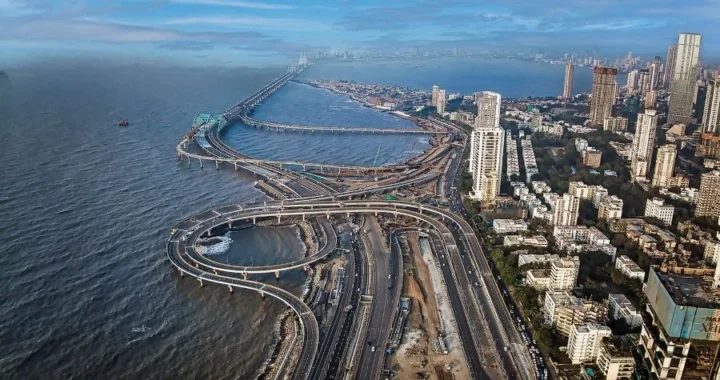
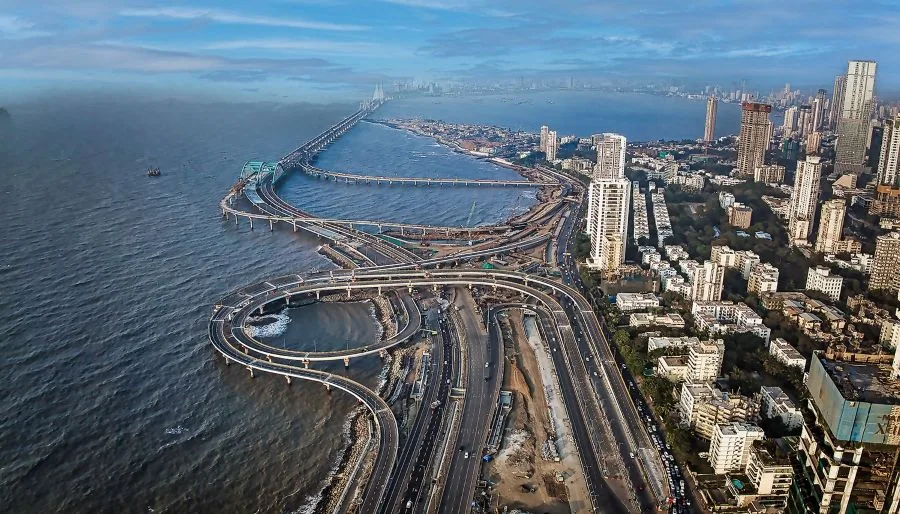
- Best Project: Mumbai Coastal Road Project (Package II), India (Hindustan Construction Co.).
- Award of Merit: Grade Separated interchange, Bahrain (Ministry of Works, Kingdom of Bahrain | AECOM | Nass Contracting).
Cultural & Educational Milestones
Buildings that define the spirit of a community saw significant innovation this year.
- Best Project (Cultural): Masdar City Net Zero Energy Mosque, UAE (Mubadala and AECOM).
- Best Project (Education/Research): KAUST Coral Reef Initiative, Saudi Arabia (Hassan Allam Construction).
Government & Diplomatic Facilities
The U.S. State Department’s presence was notable this year, with BL Harbert International securing multiple honors for its work in Honduras, Thailand, and Morocco.
- Best Project: New U.S. Embassy Tegucigalpa, Honduras.
Health Care & Science
The post-pandemic landscape has spurred a revolution in medical facility design.
- Best Project: Magdi Yacoub Global Heart Center, Egypt (Orascom Construction).
- Award of Merit: Cleopatra El Tagamoa Hospital, Egypt (The Arab Contractors).
Power, Industrial & Water
Sustainable energy and essential resource management remain the backbone of global development.
- Best Project (Power/Industrial): Julius Nyerere Hydropower Project, Tanzania (Elsewedy Electric).
- Best Project (Water/Wastewater): 6th of October Purification Plant, Egypt (Hassan Allam Construction).
The Human Element: Implications for the Industry
The sheer geographical diversity of these winners reflects a fundamental shift in the industry: the decentralization of architectural and engineering expertise. While Western firms continue to play a pivotal role, firms based in the Middle East, North Africa, and the Asia-Pacific region are increasingly leading the charge in sustainable construction and large-scale infrastructure deployment.
The emphasis on projects like the Masdar City Net Zero Energy Mosque and the KAUST Coral Reef Initiative signals that the industry is moving beyond mere functional requirements. There is a concerted effort to integrate sustainability into the core of project design. These projects serve as laboratories for the rest of the world, demonstrating how to achieve carbon neutrality in high-heat environments or how to conduct massive construction projects while preserving delicate marine ecosystems.
Furthermore, the prevalence of multinational collaborations—where firms from North America, Europe, and Asia join forces with local contractors—suggests that the future of global construction is inherently collaborative. The complex logistical hurdles of building in diverse regulatory environments, such as the Maldives or the mountainous terrain of Cambodia, have fostered a new generation of project managers capable of navigating international supply chains and cross-cultural teams.
Official Perspectives: The Value of Recognition
Industry leaders have long viewed the ENR Global Best Projects awards not merely as a trophy, but as a benchmark for professional standards. For the firms involved, winning an award provides a tangible testament to their ability to manage risk.
"The criteria for these awards force us to look at our projects through the lens of safety and innovation simultaneously," noted a representative from one of this year’s winning teams. "When you are working on a project as sensitive as a global heart center or a major transit hub, you cannot afford to separate the ethics of safety from the quality of the engineering. They are one and the same."
The decision to make the virtual awards event free for all to attend is also a strategic choice by ENR. By removing the financial barrier to entry for the awards ceremony, the organization is fostering a global community of practice. It allows junior engineers in developing nations to hear from the project leads of the world’s most advanced infrastructure projects, potentially sparking the next wave of innovation.
Looking Ahead: The Future of Global Construction
As the world prepares for the December 17th awards ceremony, the industry is already looking toward the next cycle. The 2025 winners have set a high bar, particularly regarding the intersection of digitalization and physical construction. Many of this year’s submissions utilized advanced Building Information Modeling (BIM) and AI-driven logistical planning to overcome the supply chain volatility that characterized the 2024-2025 period.
The success of the Mumbai Coastal Road or the Riyadh Metro lines serves as a reminder that large-scale infrastructure remains the primary engine for economic development in emerging markets. However, the focus is shifting. It is no longer just about building faster; it is about building smarter, more safely, and with a lower environmental footprint.
As we await the unveiling of the "Global Project of the Year" in the December 14 issue, one thing is certain: the projects recognized this year are more than just steel, glass, and concrete. They are the physical embodiments of human ingenuity, resilience, and the relentless drive to improve the conditions of life across the globe.
For those interested in exploring the technical details, the full list of winners, and the profiles of the judges, visit www.enr.com/global-best-projects. Be sure to tune into the virtual ceremony on December 17 to witness the global engineering community come together to honor these monumental achievements.