






Executive Summary: A New Framework for Rivalry
Following a high-stakes, three-day summit in Washington, D.C., President Donald Trump and President Xi Jinping have emerged with a series of incremental, yet structurally significant, agreements aimed at stabilizing the volatile U.S.-China relationship. While the summit produced no seismic shifts in the fundamental geopolitical rivalry between the two superpowers, it successfully established institutional channels for crisis management, particularly regarding artificial intelligence (AI) and military communication.
The core of the summit centered on "managed competition." By establishing formal working groups and communication mechanisms, both administrations signaled a desire to prevent the current trade and technological friction from spiraling into an unintended kinetic or economic catastrophe. Despite the public displays of diplomatic warmth, the underlying reality of a fierce technological race—particularly in the realm of AI—remains unchanged, with the United States maintaining a firm stance on protecting its domestic innovation ecosystem.
Chronology of the Summit
The three-day engagement followed a period of intensified bilateral friction, marked by retaliatory tariffs and export controls.
- Day 1: Setting the Stage: The arrival of President Xi in Washington was met with a degree of diplomatic hospitality that surprised many observers, given the aggressive trade rhetoric that characterized the previous year. Discussions focused on the establishment of a "Board of Trade," a new consultative body tasked with de-escalating specific bilateral trade irritants.
- Day 2: The Security Nexus: The second day saw intensive closed-door negotiations between cabinet-level officials and military advisors. The primary outcome was a memorandum of understanding (MOU) focused on crisis communication, specifically aimed at preventing misunderstandings between the two nations’ armed forces.
- Day 3: AI Guardrails and Departure: The final day was dominated by the announcement of a communication mechanism for AI-related incidents. As President Xi departed for Beijing, both governments issued readouts outlining the framework for future cooperation, including a scheduled high-level dialogue on AI risks and benefits slated for November.
Supporting Data and Policy Specifics
The summit produced a roadmap that balances limited cooperation with strategic autonomy. Key areas of agreement include:
Trade and Economic Measures
- Tariff Truce: The two leaders agreed to extend the existing trade truce by an additional two months, providing a cooling-off period for global markets.
- Commodity Commitments: In a move to balance the trade ledger, China has committed to importing at least 10 million metric tons of U.S. coal annually during 2027 and 2028.
- Rare Earth Supply Chains: The White House confirmed that both sides are negotiating the restoration of "appropriate" shipment levels for rare earth elements, which had been restricted by Beijing last year as a retaliatory measure against U.S. tariffs.
- Non-Sensitive Goods: The current tariff reduction efforts are being prioritized for non-sensitive sectors, such as agricultural products and consumer holiday goods, to mitigate inflationary pressures on citizens in both nations.
The Artificial Intelligence Frontier
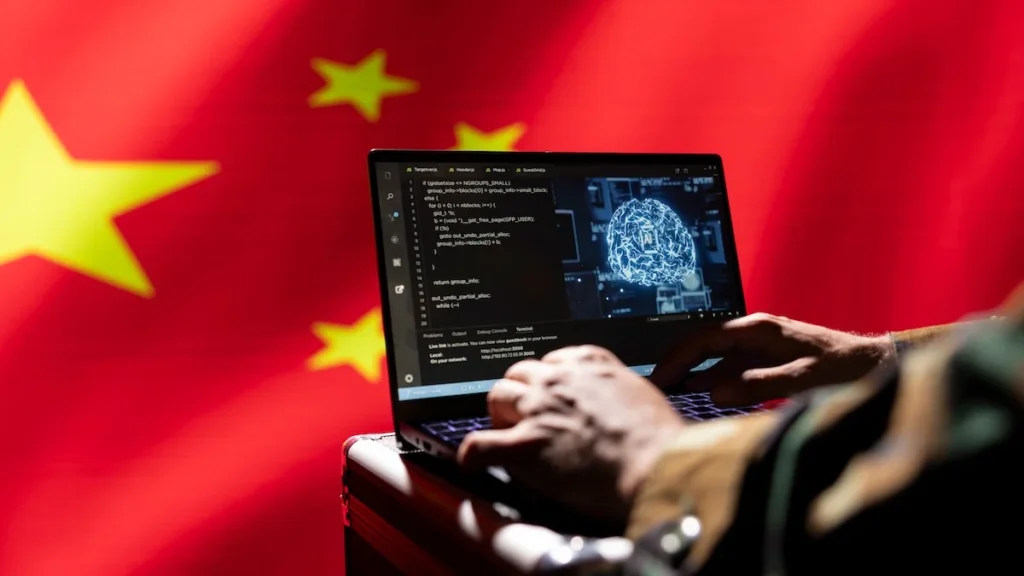
The most forward-looking aspect of the summit was the agreement to set up a dedicated communication channel for AI-related incidents. This is designed to serve as a "hotline" for potential technological mishaps, such as algorithmic malfunctions or misinterpretations of automated security systems.
However, President Trump was unequivocal regarding the limits of this cooperation. During a post-summit press conference, he explicitly rejected the notion of technology integration or sharing, emphasizing that the U.S. maintains a lead of "a year to two years" in AI development. "The United States is not going to be putting on the brakes," Trump stated, signaling that while the U.S. is willing to manage risks, it will not slow its momentum to accommodate Chinese progress.
Global Security and Law Enforcement
- Fentanyl Controls: The U.S. welcomed China’s decision to implement tighter export controls on two specific precursor chemicals used in the illicit production of fentanyl, a move viewed as a significant win for U.S. domestic law enforcement.
- Geopolitical Stability: Both nations issued a joint statement urging Iran to adhere to its commitments regarding nuclear non-proliferation. Furthermore, they signaled a consensus on the importance of free navigation in international waterways, specifically addressing the instability in the Strait of Hormuz.
Official Responses and Diplomatic Commentary
The rhetoric following the summit reflected a careful balance between domestic posturing and international statesmanship.
The White House Perspective:
President Trump characterized the engagement as a success of personal diplomacy, while maintaining a firm line on national interest. His comments regarding AI development made it clear that the administration views the technological landscape as a zero-sum game. "I would rather not integrate," the President noted. "When you’re leading, you don’t open it up to each other."
The Beijing Perspective:
The state-run Xinhua News Agency emphasized the importance of the communication mechanisms, framing the summit as a necessary step to prevent "strategic miscalculations." The Chinese Foreign Ministry’s readout was notably concise, emphasizing the MOU on military-to-military crisis prevention as the primary achievement of the trip.
Analytical Consensus:
Experts suggest that the value of the summit lies not in the specific trade outcomes, but in the institutionalization of dialogue. Wang Zichen, deputy secretary-general of the Beijing-based Center for China and Globalization, remarked: "Personal diplomacy between the two leaders is important, but the emphasis on working-level engagement, military-to-military dialogue, and crisis-management mechanisms suggests an effort to make that stability more durable and institutionalized."
Implications: The Future of the "Great Power" Competition
The Washington summit marks a transition from a period of chaotic, reactive policy to a phase of "structured containment." By creating working groups and official channels for AI and military crises, both nations have acknowledged that while their fundamental interests are divergent, they share a mutual interest in avoiding an uncontrolled escalation.
Institutionalizing the Rivalry
The decision to meet again at the Asia-Pacific Economic Cooperation (APEC) summit in Shenzhen and the G20 in Florida suggests a commitment to a sustained diplomatic cadence. By setting these future milestones, both administrations are signaling to global markets and domestic stakeholders that the U.S.-China relationship is entering a phase of predictable, albeit intense, management.
The AI Arms Race
Despite the collaborative communication channels for AI, the summit underscored that technology remains the central theater of the rivalry. The U.S. government’s refusal to share AI breakthroughs, combined with its ongoing scrutiny of Chinese companies suspected of exploiting U.S.-made AI models, indicates that the "digital iron curtain" is likely to thicken. The November dialogue will be a critical litmus test: can the two nations successfully separate "safety cooperation" from "technological competition"?
Global Consequences
The move to stabilize the relationship provides a much-needed respite for the global economy. By addressing the volatility of rare earth supplies and the broader trade truce, the summit has likely reduced the immediate risk of a global recession caused by decoupling. However, the reliance on coal imports and the focus on non-sensitive trade goods suggest that the structural problems—such as industrial subsidies, intellectual property theft, and long-term tech dominance—remain unaddressed.
Ultimately, the summit suggests that both Washington and Beijing have accepted a "long game" strategy. The goal is no longer to resolve the fundamental ideological or systemic differences, but to build enough "guardrails" to ensure that the competition remains within the bounds of a manageable, if tense, geopolitical status quo. Whether these guardrails will hold when the next inevitable crisis arises remains the defining question of the decade.