




By [Your Name/Journalistic Staff], with reporting from Engineering News-Record
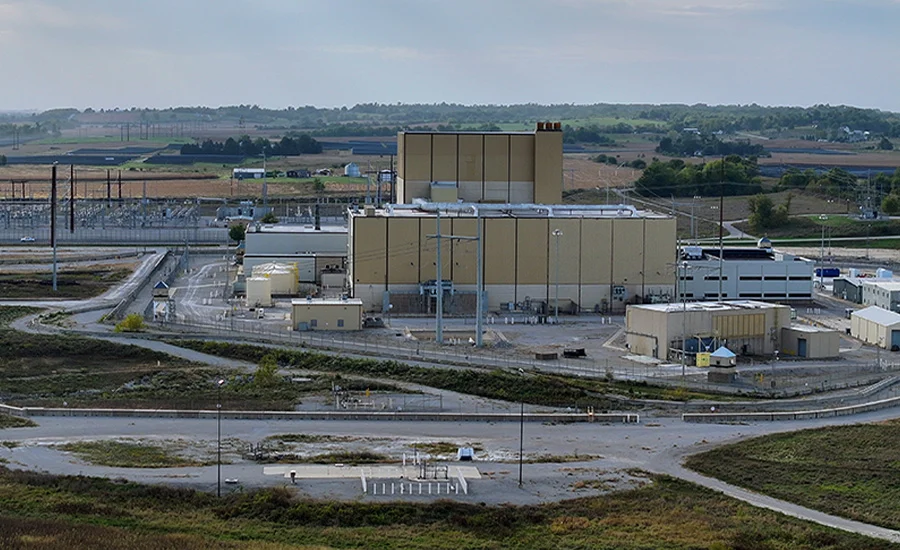
The landscape of American energy is undergoing a seismic shift, characterized by a renewed federal commitment to nuclear power as a bedrock of the nation’s decarbonization strategy. On September 8, 2026, the U.S. Department of Energy (DOE) finalized a monumental $1.9 billion loan to NextEra Energy, providing the necessary financial architecture to breathe new life into the Duane Arnold Energy Center in Linn County, Iowa.
This facility, which ceased operations in 2020, is now the focal point of a complex, multi-year engineering and regulatory undertaking. With this latest injection of federal capital, the project moves from a theoretical possibility to a high-priority infrastructure reality, signaling a broader trend of recommissioning shuttered nuclear assets to meet the voracious power demands of the digital age.
The Strategic Imperative: Why Restart Now?
The decision to restart the 615-MW Duane Arnold plant is not merely an operational choice; it is a calculated response to the explosive growth of artificial intelligence and cloud computing. In late 2025, NextEra Energy announced a pivotal 25-year power purchase agreement (PPA) with Google. Under this arrangement, the tech giant will anchor the plant’s output to support its burgeoning data center infrastructure in Iowa.
For Google, which has set aggressive carbon-neutral goals, the Duane Arnold facility provides a rare combination of high-capacity, carbon-free, and baseload power—an essential requirement for the 24/7 demands of AI infrastructure. By locking in this capacity, NextEra has successfully de-risked the massive capital expenditure required to bring the dormant facility back online.
The $1.9 billion DOE loan, administered by the Office of Energy Dominance Financing, serves as the ultimate catalyst. It ensures that the engineering, procurement, and construction (EPC) phases are fully funded, insulating the project from market volatility and ensuring that the ambitious target of a Q1 2029 restart remains attainable.
A Chronology of the Recommissioning Effort
The road to revival for Duane Arnold has been a methodical process involving multiple stakeholders, from federal regulators to regional energy planners.
- 2020: The Duane Arnold Energy Center officially ceases commercial operation after years of shifting market conditions and the retirement of long-term power contracts.
- Late 2024: After a thorough evaluation of the facility’s condition, NextEra Energy begins the process of reversing the decommissioning efforts, signaling a shift in corporate strategy toward nuclear retention.
- October 2025: The formal announcement of the plant’s restart is made, coupled with the landmark PPA with Google. Simultaneously, initial economic impact analyses suggest a minimum of $1 billion in direct construction investment is required.
- February–April 2026: The DOE initiates a rigorous environmental and technical review process. The April 3 completion letter from the DOE confirms that the project is viable, identifying key work streams including facility modernization, equipment maintenance, and total reactor refueling.
- September 8, 2026: The DOE closes the loan, transitioning the project into a state of "combined conditional commitment and financial close," providing the financial security needed to accelerate onsite work.
Engineering and Construction: Rebuilding a Powerhouse
The technical scope of the project is massive. Restarting a nuclear plant is not as simple as flipping a switch; it requires a complete forensic overhaul of the existing infrastructure. According to the economic impact analysis provided by NextEra, the project involves a significant investment in engineering, design, and physical installation.

Key focus areas include:
- Structural Refurbishment: Inspection and repair of existing piping, steam generators, and electrical wiring that have been in a dormant state for over half a decade.
- Modernization: Integrating modern control systems and digital monitoring technology to meet contemporary regulatory safety standards.
- Refueling: Coordinating the logistics of nuclear fuel procurement and loading, a process governed by strict federal safety protocols.
- Site Preparation: Upgrading site security and auxiliary infrastructure to support a workforce that has already begun the transition to active operational status.
The construction program is expected to be a major economic driver for Linn County, creating hundreds of specialized jobs in the engineering and construction trades as the site transitions from a decommissioning project to an active, high-tech energy facility.
A Broader National Strategy
Duane Arnold is not an isolated case. It is part of a larger, coordinated push by the federal government to revitalize the U.S. nuclear fleet. The administration, under the guidance of Deputy Energy Secretary James Danly, has been explicit about its goals: "The administration is pursuing a comprehensive nuclear strategy, restarting existing reactors, increasing the output of our nuclear fleet and accelerating new construction."
This strategy has been bolstered by a May 2025 executive order that prioritized DOE loan office activity toward nuclear restarts. The trend is evident in similar projects across the country:
- Palisades Nuclear Plant (Michigan): A $1.52-billion loan to Holtec International to bring the facility back into service.
- Crane Clean Energy Center (Pennsylvania): A $1-billion loan to Constellation Energy to restart the former Three Mile Island unit.
These projects share a common DNA: they utilize existing, high-value transmission interconnections and nuclear-hardened sites, allowing for a faster return to service compared to the decade-plus timeline required for building new, greenfield nuclear plants.
Regulatory Hurdles and Oversight
Despite the financial backing, the project remains subject to the stringent oversight of the U.S. Nuclear Regulatory Commission (NRC). The path to restart is contingent upon successful licensing actions that demonstrate the plant can operate at current, rigorous safety levels.
As of March 2026, NextEra had submitted the required licensing documentation. The NRC has indicated that it anticipates final decisions on these actions by January 2028. This leaves a narrow, one-year window between the anticipated regulatory approval and the target restart date of Q1 2029—a timeline that industry experts describe as tight but achievable, provided no significant technical deviations arise during the inspection process.
Implications: The Economic and Environmental Landscape
The implications of the Duane Arnold restart extend far beyond the borders of Iowa.

Economic Impact
The infusion of $1.9 billion in federal financing—supported by over $1 billion in direct construction investment—provides a significant stimulus to the local economy. The project demonstrates the viability of "re-powering" aging industrial sites, offering a blueprint for other regions struggling with the transition away from coal and legacy energy sources.
Energy Security and Reliability
In an era where power grids are increasingly strained by extreme weather and the electrification of the economy, the return of 615 MW of baseload, carbon-free energy is a major win for regional grid reliability. Unlike solar or wind, which require substantial battery storage to provide round-the-clock power, the Duane Arnold restart offers a consistent, predictable energy supply that stabilizes the MISO (Midcontinent Independent System Operator) grid.
The Google Connection
The partnership with Google highlights a growing trend: the emergence of "tech-as-anchor-tenant" in energy infrastructure. As AI continues to scale, large tech firms are moving away from passive carbon-offset purchasing and toward direct investment in energy generation. This shift ensures that the most power-hungry industries in the world are directly underwriting the decarbonization of the grid.
Looking Forward: Questions and Challenges
While the financial and regulatory framework appears solid, several questions remain. Industry analysts and the public alike are watching closely to see if the project can adhere to its timeline without cost overruns. The history of nuclear construction in the U.S. is often marked by complexity, and restarting a plant that has been dark for nearly a decade presents unique "unknowns."
Furthermore, while the DOE and NextEra have not explicitly detailed how the loan will change the internal financial structure of the project, the move suggests that the federal government is prioritizing the reduction of project finance costs to ensure such massive undertakings remain competitive in the long run.
As 2029 approaches, the Duane Arnold Energy Center will serve as a bellwether for the American nuclear revival. If successful, it will prove that the nation’s decommissioned assets are not just waste, but a strategic reserve of energy potential waiting to be tapped to power the digital, AI-driven future.
For more information on the ongoing progress of the Duane Arnold Energy Center, stay tuned to our continued coverage of the nuclear energy sector.