




In the modern retail landscape, store owners are navigating a precarious paradox: the urgent need to harden physical assets against rising criminal activity while simultaneously curating a frictionless, high-tech experience for shoppers. As profit margins tighten under the weight of economic uncertainty and surging retail theft, traditional security models are proving too costly and cumbersome. The solution is increasingly found in the convergence of data and power: Power over Ethernet (PoE) technology.
By consolidating power and data delivery into a single infrastructure, PoE is transforming from a simple cabling convenience into the backbone of the "intelligent store." This shift is not merely about plugging in cameras; it is about creating a scalable, manageable, and highly responsive ecosystem that protects the bottom line while enhancing the customer journey.
Main Facts: The PoE Advantage
At its core, PoE technology enables electrical power and network data to travel over a single Category 5e or Category 6 Ethernet cable. This fundamental innovation removes the requirement for specialized electrical wiring at every device location, drastically reducing installation time and infrastructure overhead.

Modern PoE standards have evolved significantly to support the high-performance demands of contemporary retail. The latest protocols can deliver up to 90W of power—sufficient for high-definition pan-tilt-zoom (PTZ) cameras, advanced multi-sensor surveillance, IP-based public address systems, and high-density wireless access points. Furthermore, the ability to transmit gigabits of data alongside this power provides the necessary bandwidth for artificial intelligence (AI) applications, such as real-time loss prevention analytics and behavioral monitoring.
Chronology: The Shift Toward Integrated Security
The evolution of retail security has moved through distinct phases over the last decade:
- 2015–2019: The Analog Era. Security was largely reactive. CCTV systems were siloed, requiring dedicated power outlets and localized storage, making them difficult to scale and maintain.
- 2020–2022: The Pandemic Disruption. Supply chain volatility and shifts in shopping habits forced retailers to digitize quickly. The need for remote monitoring became paramount as store hours fluctuated and labor shortages hit.
- 2023–Present: The Rise of Integrated Infrastructure. Driven by a 93% increase in shoplifting incidents since 2019, retailers have moved toward "total store visibility." Today, the focus is on unified networks where access control, surveillance, and customer service kiosks operate on a single, managed PoE fabric.
Supporting Data: The Cost of Inaction
The urgency for this technological upgrade is backed by sobering industry data. According to the 2024 National Retail Federation (NRF) survey, the retail sector is facing an unprecedented crisis regarding organized retail crime (ORC).

- The Financial Impact: ORC currently costs the retail industry an estimated $100 billion annually.
- The Violence Factor: It is not just the loss of inventory; it is the physical threat. Approximately 90% of retailers report an increase in violence associated with theft since 2019.
- The Prevalence of ORC: With 62% of stores reporting an uptick in multi-person, organized theft rings, reactive security—such as simple cameras—is no longer sufficient.
- Operational Demand: Nearly 73% of store managers are actively seeking cost-effective ways to strengthen security without alienating the average, law-abiding customer.
The Versa Technology Approach: Engineering Resilience
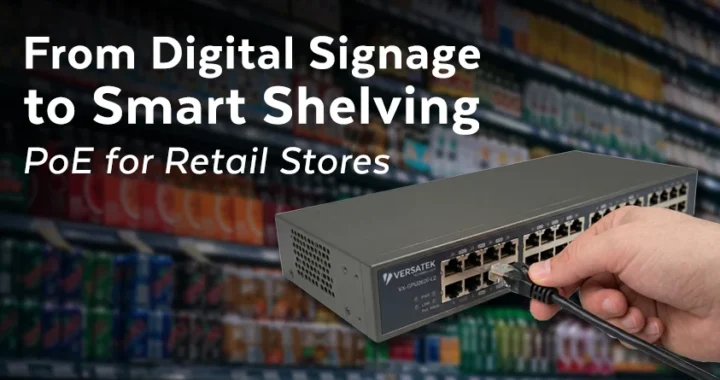
Central to implementing this vision is the selection of industrial-grade hardware. The Versa D62-084-MX-DCP managed PoE switch serves as a prime example of the hardware required to bridge this gap. As an industrial-grade solution, it provides the robust power delivery needed for the next generation of security hardware.
Intelligent Management Features
The D62-084-MX-DCP does more than move power; it acts as an intelligent controller for the entire store network:
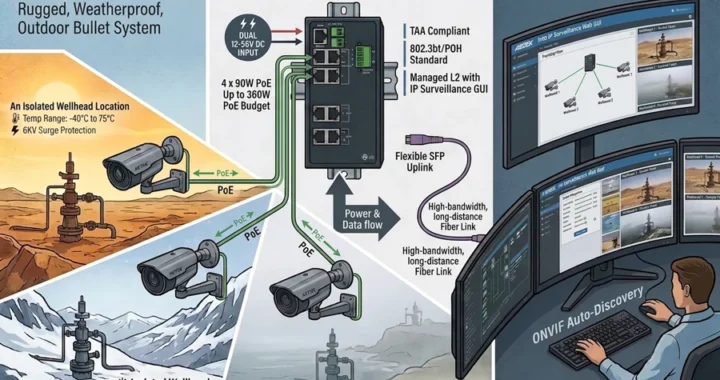
- Auto Discovery (ONVIF): Utilizing the Open Network Video Interface Forum protocol, the switch automatically identifies and classifies cameras and sensors, ensuring that complex AI software and hardware connect without manual configuration errors.
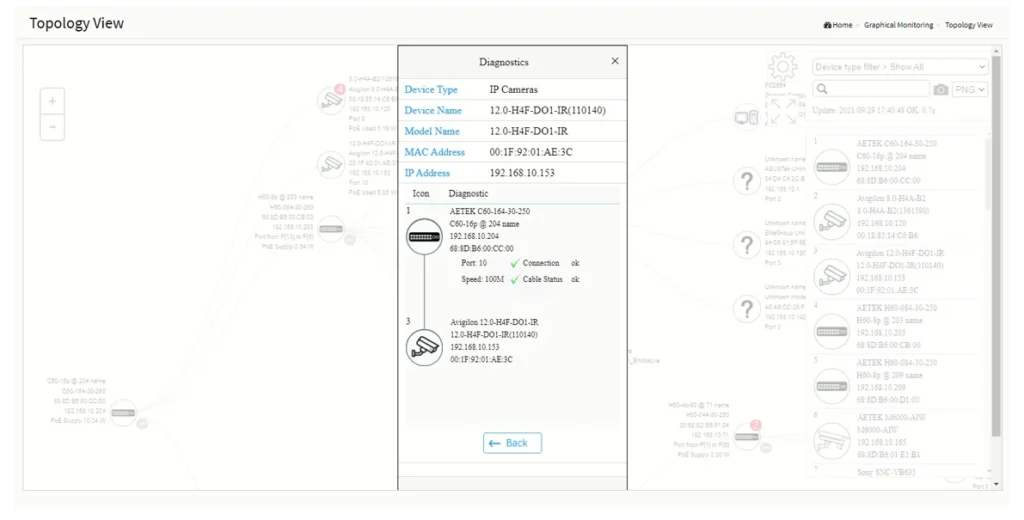
- Electronic Mapping (E-MAP): Retailers can overlay their surveillance network onto digital floor plans. This allows security teams to visualize the entire store at a glance, identifying coverage gaps and optimizing camera placement for maximum effectiveness.
- Remote Device Management: Through a web-based interface, store managers can reboot cameras, monitor power consumption, and cycle ports remotely. This minimizes the need for on-site technician visits, significantly lowering long-term maintenance costs.
- Cable Diagnostics: When a security feed goes dark, time is of the essence. The D62’s diagnostic tools immediately report whether the fault lies within the hardware or the cabling, allowing for rapid repair and minimal downtime.
Implications: Beyond Loss Prevention
While the primary driver for PoE adoption is security, the secondary implications for the customer experience are profound. A store that is efficiently monitored is a store that is better managed.

Transforming the Customer Journey
Retailers are leveraging their PoE infrastructure to deploy customer-facing technologies that were previously too expensive to wire:
- Dynamic Price Checking: PoE-powered scanners placed strategically throughout the store eliminate the "I don’t know the price" friction point, building trust with the customer.
- Inventory Transparency: PoE-powered kiosks allow shoppers to check real-time stock levels. If an item is missing, these kiosks can suggest alternatives or trigger an order to be shipped directly to the customer’s home, ensuring that a "no stock" situation doesn’t mean a "lost sale."
- Personalized Experiences: High-end kiosks can now offer customization interfaces where shoppers can view product variants (colors, fabrics, configurations) in real-time. By integrating these kiosks into the same network as the security system, retailers can keep the hardware footprint small and the operational costs low.
The Future of the Intelligent Retailer
The retail sector is currently at a turning point. As organized crime becomes more sophisticated, the traditional approach of "locking things up" is no longer a viable business strategy—it creates a hostile environment that drives away legitimate shoppers.
The integration of PoE security systems offers a path forward that is both defensive and service-oriented. By installing a high-bandwidth, power-efficient network, retailers can simultaneously deter theft, protect staff, and provide the high-tech, seamless service that modern consumers demand.

When coupled with Uninterruptible Power Supplies (UPS), these PoE systems ensure that security remains fully operational even during power outages, a time when stores are historically at their most vulnerable. As retailers continue to evaluate their infrastructure, the shift toward a unified, PoE-managed environment is not just an IT upgrade—it is a foundational component of the future of retail.
Versa Technology remains at the forefront of this transition, providing the managed industrial switches necessary to build these resilient environments. For retailers looking to modernize their security and customer experience, the path is clear: build a network that is as smart as the customers you serve.
For more information on upgrading your retail security infrastructure, contact the experts at Versa Technology to request a consultation or a custom quote.