





In a significant leap forward for rural connectivity, the United Kingdom has announced that more than 150 4G mast upgrades are now operational across the nation’s most iconic landscapes. This development, part of the multi-million-pound Shared Rural Network (SRN) initiative, marks a pivotal moment for residents, businesses, and the millions of tourists who visit the UK’s National Parks annually. By transforming "not-spots" into high-speed data zones, the government and the UK’s four major mobile network operators (MNOs) are rewriting the narrative of rural isolation.
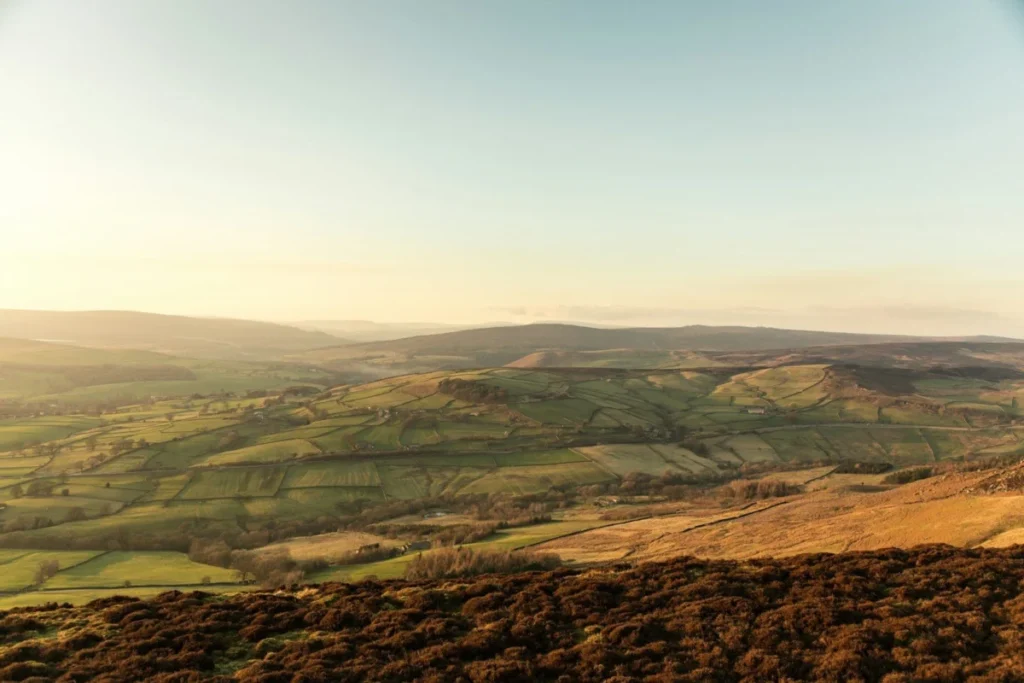
The latest phase of the rollout focuses heavily on ecologically sensitive and topographically challenging areas, including the Yorkshire Dales in England and Eryri (Snowdonia) in Wales. With the activation of these masts, over 5,684 square kilometers of land—previously hindered by patchy or non-existent signal—now enjoy robust 4G coverage. This expansion is not merely about social media access; it represents a fundamental shift in how public services, emergency responses, and rural economies function in the 21st century.
Main Facts: A Quantitative Leap in Rural Access
The core of this announcement lies in the sheer scale of the infrastructure deployment. The activation of these 150 masts serves as the backbone of a broader strategy to ensure that geographic location does not dictate digital opportunity.
Key Statistics of the Rollout:
- Total Masts: Over 150 upgrades are now live.
- Geographic Reach: 5,684 square kilometers of newly covered or significantly improved terrain.
- National Park Footprint: 42 specific SRN sites are now active within National Park boundaries.
- England: 25 sites (including the Lake District and Yorkshire Dales).
- Wales: 16 sites (including Eryri/Snowdonia).
- Scotland: 1 site (Loch Lomond and The Trossachs).
- Operator Synergy: The upgrades bring together coverage from EE, Virgin Media O2 (VMO2), Vodafone, and Three UK.
- National Milestone: The SRN programme has officially reached its target of 95% UK landmass coverage a full year ahead of the original schedule.
This initiative is funded through a unique partnership model. The UK government has provided substantial capital to address "total not-spots" (areas with no coverage at all), while the mobile network operators have invested heavily to eliminate "partial not-spots" (areas where only one or two operators provide signal). By utilizing existing infrastructure to host equipment from all four major providers, the programme minimizes the environmental impact on protected landscapes while maximizing consumer choice and reliability.
Chronology: The Road to 95% Coverage
The journey toward 95% landmass coverage has been a complex undertaking involving years of legislative planning, environmental assessments, and engineering feats.
2020: The Inception
The Shared Rural Network was officially launched in March 2020. It was conceived as a £1 billion deal between the UK government and the four mobile network operators. The objective was clear: to end the "postcode lottery" of mobile connectivity. At the time, large swaths of the Highlands, the Welsh valleys, and the English moors were digital deserts.
2021–2022: Planning and Environmental Hurdles
Deploying masts in National Parks required a delicate balance. Engineers had to work closely with National Park Authorities to ensure that masts were either hidden, designed to blend into the landscape, or placed on existing structures to avoid "visual pollution." During this period, the focus was on identifying the 150+ sites that would provide the most significant uplift in coverage per square kilometer.
2023: Accelerating the Rollout
By mid-2023, the momentum of the SRN began to yield visible results. The "Partial Not-Spot" element of the programme, led by the operators, saw rapid progress. By sharing masts, operators were able to reduce the time required for site acquisition and power connection.
2024: Beating the Deadline
The current announcement confirms that the 95% landmass target has been achieved ahead of the 2025 deadline. The activation of the 150 masts in the National Parks represents the "last mile" of this phase, tackling some of the most difficult terrains in the British Isles.
Supporting Data: Infrastructure and Technical Logistics
The technical achievement of the SRN lies in its collaborative infrastructure model. Traditionally, mobile operators competed for site locations, leading to a duplication of masts in some areas and a total lack of them in others. The SRN flipped this script.
The "Shared" Component
The 150 masts mentioned in the rollout utilize Multi-Operator Core Network (MOCN) or Mast Sharing agreements. This allows a single physical pole to host the radio equipment for EE, VMO2, Vodafone, and Three. In the Yorkshire Dales, for example, a single upgraded mast now broadcasts signals for all four networks, whereas previously it might have only served EE customers. This efficiency is what allowed the programme to cover 5,684 square kilometers with relatively few new physical footprints.
Connectivity Tiers
The data suggests that the upgrades have addressed two specific types of connectivity gaps:
- Total Not-Spots (TNS): Areas where no operator provided a signal. These are largely government-funded.
- Partial Not-Spots (PNS): Areas where at least one, but not all, operators provided signal. These are largely operator-funded.
By addressing both, the government has ensured that emergency roaming—where a phone can jump onto any available network to make a 999 call—is now more reliable than ever across the UK’s mountainous regions.
Official Responses: Industry and Government Perspectives
The success of the rollout has been met with praise from both the technical architects of the network and the advocates for digital inclusion.
The Government’s Stance
Ian Murray, Minister of State for the Department for Digital, Culture, Media and Sport, emphasized the human element of the project. He noted that the goal was to provide safety and convenience without destroying the essence of rural life.
“You should be able to switch off in the countryside without being cut off from the help and services you need. These 150 masts are helping change that—giving walkers, visitors and rural communities better access to signal when they are checking a route, contacting family, running a business or calling for help.”
The Technical Perspective
Mike Hellers, Product Development Manager at the London Internet Exchange (LINX), highlighted how this connectivity feeds into the broader national ambition for growth and AI integration.
“Strengthening connectivity in rural areas is a key aspect of the UK’s growth ambition, providing greater access to digital services, AI tools and streaming in hard-to-reach locations like the Yorkshire Dales and Eryri. As more communities gain access to reliable 4G coverage… efficient traffic exchange and keeping data as local as possible will become increasingly important in delivering the low-latency, resilient services people expect.”
The Social Impact Perspective
Elizabeth Anderson, CEO of the Digital Poverty Alliance, provided a sobering reminder that signal is only the first step in a longer journey toward equality.
“Connectivity continues to get taken for granted across the UK despite being something we all rely on so heavily. Rural communities, in particular, have long faced challenges as essential digital services such as healthcare, banking and education shift online. The next step is ensuring people in Yorkshire have affordable and suitable devices for work and school, alongside the digital skills to use them effectively.”
Implications: A New Era for the British Countryside
The activation of 150 masts across National Parks carries profound implications for the economy, public safety, and the environment.
1. Economic Revitalization of Rural Hubs
For local firms in the Yorkshire Dales or the Lake District, 4G is an economic lifeline. Many small businesses—from boutique B&Bs to hill farms—have struggled with payment processing. In an increasingly cashless society, the ability to run mobile card readers is essential. Furthermore, the "work from anywhere" trend can now realistically extend to rural villages, potentially reversing the "brain drain" where young professionals leave the countryside for better-connected urban centers.
2. Enhanced Public Safety and Tourism
The National Parks see millions of visitors who are often unprepared for rapid weather changes. Improved 4G coverage means that hikers can access real-time GPS data and weather warnings. More importantly, in the event of an accident, the ability to provide emergency services with precise "What3Words" coordinates via a data connection can be the difference between life and death. The "1 site" in Scotland’s Loch Lomond and The Trossachs, for instance, covers a high-traffic tourist route where emergency communication was previously notoriously difficult.
3. Bridging the Healthcare and Education Gap
As the NHS moves toward more digital-first consultations and schools increasingly rely on cloud-based assignments, rural residents have been at a disadvantage. The 4G rollout mitigates this "rural penalty." Families in remote parts of Eryri can now access telehealth services, reducing the need for multi-hour round trips to the nearest hospital for routine check-ups.
4. Environmental Monitoring and Agriculture
The implications extend to the land itself. 4G connectivity allows for the deployment of Internet of Things (IoT) sensors. Farmers can monitor livestock movement and soil moisture levels in real-time. Environmental agencies can use connected sensors to monitor water quality in National Park rivers or track the effects of climate change on sensitive flora, all thanks to the data backbone provided by these 150 masts.
5. The "Inclusivity Tone"
As Elizabeth Anderson noted, this project sets the tone for inclusivity. By reaching 95% coverage, the UK is signaling that digital access is a right, not a privilege reserved for city dwellers. However, the challenge remains to ensure that the hardware and the "digital literacy" follow the signal into these remote valleys.
Conclusion
The completion of this phase of the Shared Rural Network is a landmark achievement in British infrastructure. By successfully navigating the complexities of National Park preservation and multi-operator collaboration, the programme has delivered high-speed 4G to some of the most beautiful—and previously most isolated—parts of the UK. As the nation looks toward a 5G future, the foundation laid by these 150 masts ensures that the rural heartlands are not left behind in the digital age. The focus now shifts from "getting signal" to "using signal" to drive growth, safety, and social cohesion across the four nations.