






[City, State] – [Date] – In an era defined by unprecedented digital transformation and the escalating sophistication of cyber threats, Palo Alto Networks has today announced a significant advancement in enterprise security with the launch of PAN-OS 12.2 Ceres. This landmark release represents a fundamental redefinition of cybersecurity architecture, designed to equip organizations with the resilience needed to navigate the complexities of today’s threat landscape and secure their future against emerging challenges. The announcement comes at a critical juncture, where Chief Information Officers (CIOs) and Chief Information Security Officers (CISOs) are facing a confluence of disruptive forces, demanding a proactive and intelligent approach to defense.
The modern enterprise security environment is at a crossroads, necessitating a strategic overhaul rather than incremental adjustments. PAN-OS 12.2 Ceres introduces over 55 innovations, with a particular focus on three core capabilities engineered to decisively shift the balance of power back into the hands of defenders. These innovations are a direct response to three critical dimensions that are reshaping the cybersecurity battleground: the accelerating velocity and novelty of Frontier AI-driven threats, the overwhelming surge in network traffic driven by AI workloads, and a sweeping "cryptographic reset" poised to undermine the foundations of digital communication.
The Evolving Threat Landscape: A Triad of Disruptors
The impetus behind PAN-OS 12.2 Ceres lies in the recognition of profound shifts that are fundamentally altering the nature of cyber warfare.
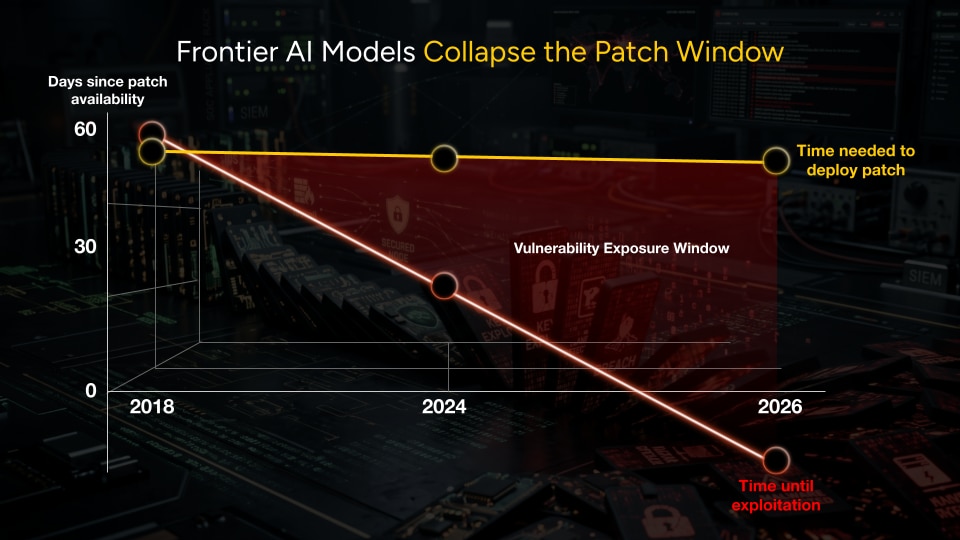
1. Frontier AI: Accelerating Threat Velocity and Novelty: The advent of Frontier AI has ushered in an era where the entire attack lifecycle is being automated at machine speed. Adversaries are no longer merely compressing exploit windows; they are actively generating novel, highly evasive threats that bypass traditional signature-based defenses and often precede the availability of patches. This rapid evolution means that exploits can be deployed and executed long before organizations have the opportunity to respond, creating a critical window of vulnerability.
2. The AI Data Deluge: Overwhelming Network Defenses: The insatiable demand for AI workloads is driving a dramatic surge in network traffic. Projections indicate that inter-datacenter traffic will nearly triple over the next decade. This exponential growth in data volume places immense pressure on existing security infrastructure, demanding solutions capable of inspecting and securing a vastly expanded digital footprint without compromising performance. Traditional defenses, built for a less data-intensive era, are struggling to keep pace.
3. The Cryptographic Reset: Undermining Digital Trust: A confluence of factors is forcing a significant "cryptographic reset." Shrinking certificate lifecycles, widespread internet-scale distrust events, and the looming threat of quantum computers capable of breaking current public-key cryptography are collectively shaking the very foundations of secure digital communication. This necessitates a fundamental re-evaluation of encryption and authentication mechanisms to ensure continued data integrity and privacy.
PAN-OS 12.2 Ceres: A New Era of Proactive Defense
In direct response to these formidable challenges, Palo Alto Networks has developed PAN-OS 12.2 Ceres, a release that embodies a significant leap forward in network security. This advanced operating system is not merely an iterative update; it is a comprehensive reimagining of how enterprises can defend themselves against the most sophisticated and rapidly evolving threats.
Frontier Virtual Patching: Preemptive Defense Against Frontier AI Exploits
Perhaps the most groundbreaking innovation within PAN-OS 12.2 Ceres is Frontier Virtual Patching. This capability empowers defenders with an unprecedented advantage by leveraging Frontier AI to discover unknown vulnerabilities and deploy protections within hours, effectively collapsing the industry-average 55-day exposure window for traditional patches down to a near-zero timeframe.
"Today, Palo Alto Networks is giving defenders the ultimate advantage with the launch of Frontier Virtual Patching," stated a representative from Palo Alto Networks. "By harnessing Frontier AI to discover unknown vulnerabilities, and deploying protections in hours, we are collapsing the exposure window from the industry-average 55 days it takes to deploy a traditional patch down into a near-zero window of exposure. This isn’t just about faster patching; it’s about eliminating the attacker’s chance by neutralizing exploits before they ever reach your network."

This revolutionary approach moves beyond reactive patching by proactively neutralizing exploits before they can impact an organization’s network. The effectiveness of Frontier Virtual Patching is amplified through a collaborative, force-multiplying ecosystem. Palo Alto Networks is forging strategic partnerships across the enterprise software and Operational Technology (OT) vendor landscape to accelerate vulnerability disclosure, remediation, and customer protection. This includes collaborations with initiatives like Project Lightwell, which integrates rapid network-level protection with software remediation to significantly reduce exposure to emerging threats. Furthermore, partnerships with vulnerability clearinghouses, software maintainers, and industry initiatives are continuously expanding a real-time pool of protected vulnerabilities.
This ecosystem approach is directly informed by recent research from Unit 42, Palo Alto Networks’ threat intelligence arm. Their autonomous AI system, NOVA, identified over 14,000 previously unknown vulnerabilities in just two months, underscoring the urgent need for AI-powered discovery coupled with equally rapid and coordinated protection.
The underlying technology powering Frontier Virtual Patching is an all-new detection engine, termed "vaulted protection." This engine enables the safe and responsible delivery of rapid protections. When one participant in the ecosystem identifies a threat, the entire network of protected entities is instantly secured. This transforms individual discovery into global protection, a critical advantage in today’s interconnected world.
The implications for industries with legacy systems or critical infrastructure are profound. For Operational Technology (OT), critical infrastructure, healthcare, and IoT environments, where systems cannot be taken offline for patching, and where patch cycles can extend for months, a single unpatched device can jeopardize an entire network. Frontier Virtual Patching addresses this critical gap by blocking exploits at the network level without requiring system reboots or causing any downtime to essential operations.
Will Townsend, Chief Analyst at LoneStar Advisory & Research, commented on the significance of this development: "Bad actors will lean into Frontier AI to reduce the attack lifecycle from months to minutes. To keep pace, organizations require security partners to match that machine speed. To this end, Palo Alto Networks is raising the bar with its Frontier Virtual Patching, moving beyond compensating controls. By safely and efficiently discovering undisclosed vulnerabilities and deploying protection long before traditional patches can be rolled out, Palo Alto Networks deep security capabilities are flipping network defense from a reactive to proactive operational model."
For existing Palo Alto Networks network security customers, adopting Frontier Virtual Patching is seamless. It is available as a PAN-OS software upgrade with persistent, automatic content updates, ensuring continuous protection against new threats without requiring new hardware or manual intervention. This highlights the commitment to delivering evolving security solutions that adapt to the dynamic threat landscape.
Advanced IP Defense: Blocking Attacker Infrastructure Before They Can Strike
In parallel, Palo Alto Networks is introducing Advanced IP Defense, a new preventative solution designed to counter the increasing sophistication of threat actors who are actively working to hide their attacks and evade existing controls. Modern adversaries are leveraging direct-to-IP connection techniques, bypassing traditional DNS and URL inspection, and weaponizing massive proxy networks and hundreds of thousands of residential IP addresses to conduct stealthy, large-scale attacks. These methods often bypass traditional defenses like IP reputation and blocklists.
Advanced IP Defense addresses this threat vector with three powerful new capabilities that focus on blocking attacker infrastructure before it can be effectively utilized. This proactive approach aims to dismantle the operational backbone of cybercriminal enterprises before they can launch their attacks.
Varinder Singh, CIO of NXP Semiconductors, emphasized the urgency of this shift: "The transition to the Frontier AI era isn’t a distant future. It’s happening right now. The organizations that thrive won’t be those trying to run old, reactive playbooks faster; they have to scale their defenses to match a whole new velocity of risk. When threats occur at machine speed, relying on human-scale operations is no longer an option. That is why AI and automation are becoming essential tools to meet these challenges head-on."
Network Security Agents: Empowering Administrators with AI Superpowers
Recognizing that human operators can become a bottleneck when threats execute in minutes, Palo Alto Networks is launching an elite suite of AI agents designed to augment the capabilities of network administrators. These Network Security Agents, available through Strata Cloud Manager, are six specialized, AI-powered agents trained on enterprise context and operational workflows.
From onboarding and configuration to threat assessment and troubleshooting, these agents automate hundreds of routine, repetitive tasks that consume an administrator’s valuable time. Crucially, organizations retain control, with customizable oversight levels for each workflow – allowing for human-in-the-loop, human-on-the-loop, or human-out-of-the-loop operations based on risk tolerance. This empowers administrators to focus on strategic initiatives rather than being bogged down by manual processes.
Expanding Platform Protection Across Every Edge
The vision for PAN-OS 12.2 Ceres extends beyond these flagship innovations to encompass a comprehensive expansion of platform protection across every facet of the modern enterprise. Securing today’s distributed and complex IT environments requires extending AI-powered capabilities from the data center core to remote industrial sites, from custom AI applications to the web browser.
PAN-OS 12.2 Ceres introduces advancements across five additional key areas, further fortifying the platform’s ability to secure the entire digital perimeter:
- [Specific Area 1 of Expansion]
- [Specific Area 2 of Expansion]
- [Specific Area 3 of Expansion]
- [Specific Area 4 of Expansion]
- [Specific Area 5 of Expansion]
These expansions underscore Palo Alto Networks’ commitment to delivering a holistic and integrated security platform that can adapt to the evolving needs of the enterprise.
The Path Forward: A Prevention-First Architecture
The launch of PAN-OS 12.2 Ceres signifies Palo Alto Networks’ deep commitment to investing in the innovations necessary to defeat contemporary threats while future-proofing enterprise security. The transition to the Frontier AI era demands a bold and proactive strategy. Organizations that embrace a prevention-first architecture, capable of stopping threats long before they reach the weaponization stage, will be the ones that not only survive but thrive in this new paradigm.
With PAN-OS 12.2 Ceres, Palo Alto Networks is providing defenders with the speed, scale, and foundational platform necessary to fundamentally alter the dynamics of cyber defense and regain the upper hand against modern adversaries.
Forward-Looking Statements: This article contains forward-looking statements that involve risks, uncertainties, and assumptions. These statements relate to the potential benefits, impact, or performance of Palo Alto Networks’ products and technologies. Any unreleased services or features referenced are not currently generally available to customers and may not be delivered as expected or at all. Customers should base their purchasing decisions on services and features that are currently generally available.
Sources:
- Nokia Artificial Intelligence: Explainer: Network traffic is fundamentally changing in the AI supercycle.
- Verizon 2024 Data Breach Investigations Report.